By Ebrima Mbaye
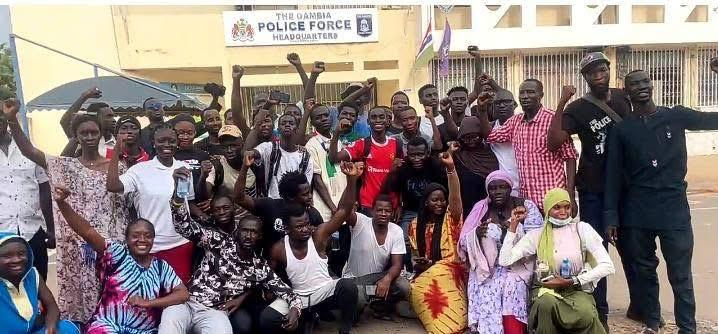
In a dramatic turn of events, 22 youths arrested on Monday during a peaceful march toward the National Assembly in Banjul have been released on bail after over seven hours of intense negotiations between their legal team and police authorities. The group, comprising both male and female protesters, was apprehended by the Police Intervention Unit (PIU) while attempting to engage lawmakers on pressing governance issues. Meanwhile, 23 other youths detained during last week’s protests remain in custody at Mile Two Central Prison, intensifying public concern.
The released individuals, including Lamin Biyaye, Omar Sanyang, Abou Camara, Lamin Jammeh, Saffie Lowe, Kemo Fatty, Amadou Saho, Abuabacarr Makalo, Hawa Susso, Hon. Fatoumatta Kaba, Rohey M. Bah, Maimuna A. Bah, Mariama B. Mbye, Omar Sanneh, Tijan Jallow, Salim M. Jabbie, Ebrima Sarr, Ousman Bojang, and Amadou Suwareh, initially rejected police bail, asserting they had committed no crime. “They told officers they were only walking to the National Assembly to speak with their representatives,” a source close to the group stated. However, following consultations with their legal team, led by senior lawyers Assan Martin and Right Advocate Nfamara Jawneh, the youths accepted bail, advised that their activism would be more effective outside of detention.
The arrests have sparked widespread debate, with civil society groups urging security forces to exercise restraint and respect due process. The youths’ demonstration was part of a broader movement addressing governance and economic concerns, including recent protests at the Public Utilities Regulatory Authority (PURA) over the data hike policy.
Meanwhile, in a significant development, President Adama Barrow announced the formation of a High-Level Committee to review price regulations in the telecommunications sector, a key grievance fueling the protests. Many view this as a direct response to the youths’ activism, validating their call for reform.
Meanwhile, the 23 detainees still held at Mile Two Central Prison, including prominent activists, Rapactivist Ali Cham, widely known as Killa Ace, Lamin Sey, Yusuf Taylor, Tumani Colley, and Ebrima Jallow (alias The Ghetto Pen), have escalated their protest by launching a hunger strike.
According to Citizen Journalist and activist Kexx Sanneh, the detainees are protesting what they describe as unlawful detention and violations of their constitutional right to peaceful assembly. Despite the notoriously harsh conditions at Mile Two, Sanneh reported that the detainees remain in “high spirits.” Heavy security, including armed prison guards and soldiers, has been deployed around the facility, raising concerns about the treatment of those inside.
At Kairaba Police Station, where some of the recently released youths were briefly held, detainees described the officers as “kind and respectful.” However, concerns were raised about cell conditions and the mixing of male and female detainees, which activists argue violates standard protocols.
The ongoing detentions and hunger strike have heightened tensions, with young Gambians and civil society groups closely monitoring the situation. The 23 detainees’ resolve to continue their struggle for justice has galvanized support, with calls for their immediate release growing louder.
As the nation awaits further developments, the contrast between the 22 who were freed on bail and the 23 who remain behind bars underscores the challenges facing Gambia’s youth in their quest for accountability and reform.
The establishment of the High-Level Committee offers a glimmer of hope, but for now, the fate of the detained activists remains uncertain. Their hunger strike has raised the stakes, drawing significant public attention to the broader issues of governance and civic rights in The Gambia.