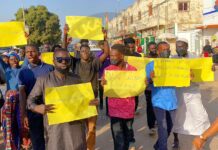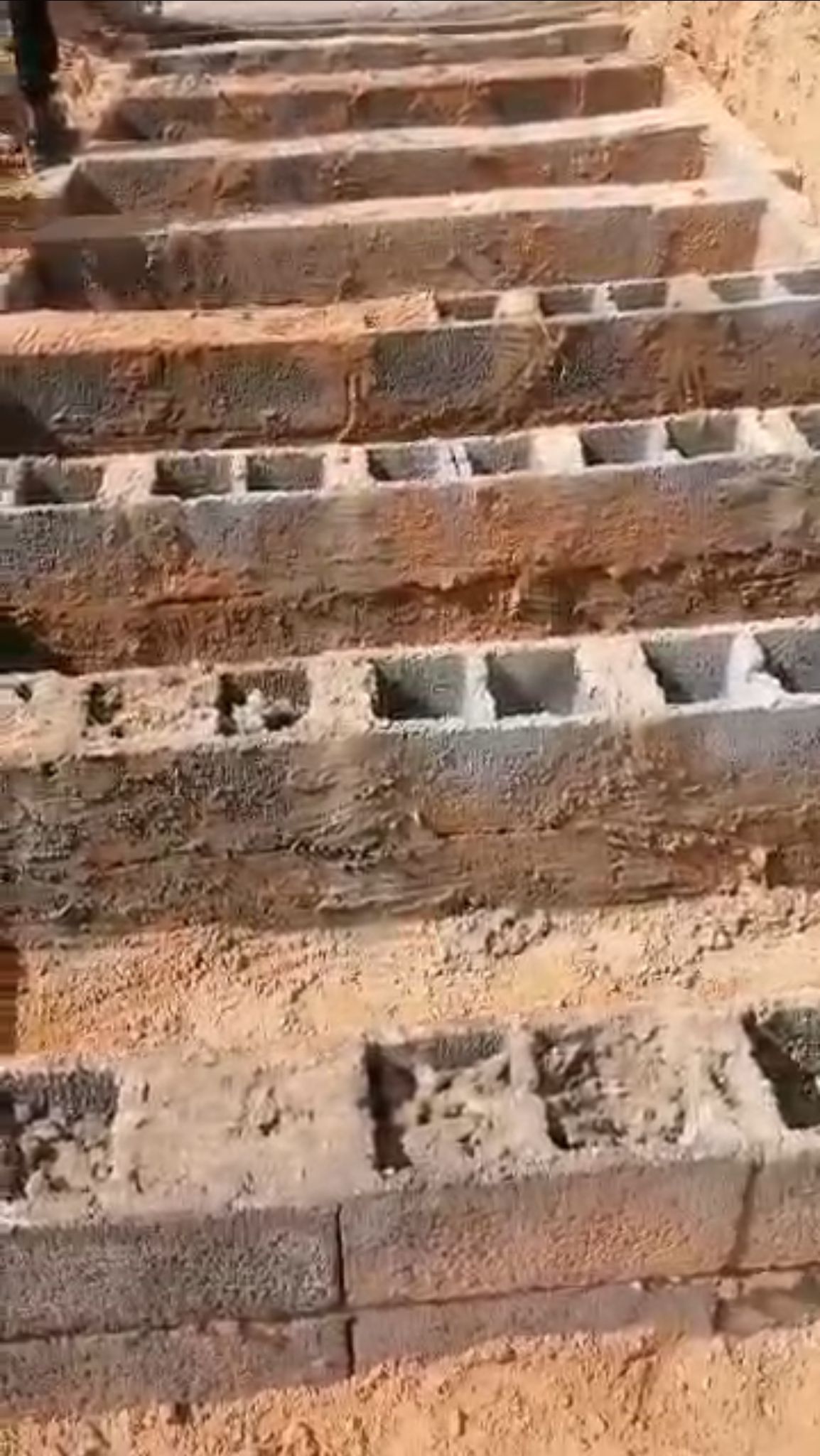
In a somber ceremony following Friday prayers, three Gambian migrants—Baboucarr Touray, Adama Cham, and Muhammad Damba—were finally laid to rest in a Tripoli cemetery today, marking a poignant end to months of waiting for families shattered by a deadly gas explosion.
Their burials, delayed by bureaucratic hurdles, come as part of a broader wave of funerals for Gambian lives lost in Libya’s unforgiving migrant landscape, including three additional deaths unrelated to the blaze and three unidentified bodies still languishing in mortuaries.
The trio’s interment revives the harrowing memory of the May 30 catastrophe in Tripoli’s Arada neighborhood, where a gas cylinder explosion—sparked by gasoline deployed against a bedbug infestation—ripped through a crowded building sheltering around 35 Gambian workers.
The inferno claimed eight lives and injured 15, three critically, in one of the year’s most devastating blows to the Gambian community in Libya. Libyan emergency teams and the International Organization for Migration (IOM) mounted a rapid response, but the incident exposed the razor-thin margins of safety for migrants navigating Tripoli’s volatile mix of economic desperation and militia skirmishes.
The Gambian Liaison Office in Tripoli confirmed the identities of the full eight victims: Bubacarr Touray, Muhammed Darboe, Alieu Darboe, Bakary Saidykhan, Saidou Jallow, Ousainou Sow, Adama Cham, and Muhammed Damba. Earlier last month, five others—Muhammed Darboe, Alieu Darboe, Bakary Saidykhan, Saidou Jallow, and Ousainou Sow—were buried after documentation snags were resolved.
Today’s rites for Touray, Cham, and Damba, held under the midday sun amid chants from local imams, drew a small crowd of expatriates and liaison staff, their voices cracking with shared grief.
Yet the day’s solemnity was overshadowed by fresh revelations of loss. Among those interred today were three more Gambians who perished not in flames, but in the relentless grind of their European odyssey. One unidentified man fell fatally from a high-rise construction site in Misrata, his body crumpling on concrete after a safety harness failed during a grueling shift. The other two succumbed to severe illnesses en route to the Mediterranean coast: one to untreated pneumonia after days without medical aid in a smuggling camp, and another to dehydration and organ failure amid scorching desert treks. These burials, conducted quietly at the same site, underscore the hidden toll of Libya’s migrant corridor—where dreams of crossing to Europe often dissolve into isolation and despair.
Compounding the sorrow, three unidentified Gambian corpses remain in Libyan mortuaries, victims of assorted ailments like tuberculosis and malaria contracted in overcrowded transit points. Gambian officials, hampered by incomplete records and Libya’s fractured bureaucracy, are racing to match DNA samples and family testimonies for repatriation or local burial. “These delays aren’t just paperwork—they’re a second death for our brothers,” said a relative of one victim reached in Banjul. “Families back home deserve closure, not endless waiting.”
The Gambian government expressed regret over the five-month limbo through its foreign ministry, blaming the complexity of Libyan verification protocols and repatriation logistics for the delay. Negotiations involving diplomats, IOM mediators, and grieving kin stretched on, exacerbated by Tripoli’s recent flare-ups of factional violence that snarled aid routes.
As the diaspora mourns, activists are calling for urgent reforms, including expanded consular support, anti-exploitation hotlines, and EU-funded safe passage. The IOM reports over 1,200 Gambian returns from Libya this year alone, many fleeing similar perils. For the families of Touray, Cham, Damba, and the nameless three, today’s prayers offer fleeting solace. But in Libya’s shadow economy, where hope flickers like a faulty gas line, the cycle of loss grinds on—awaiting not just burials, but justice.