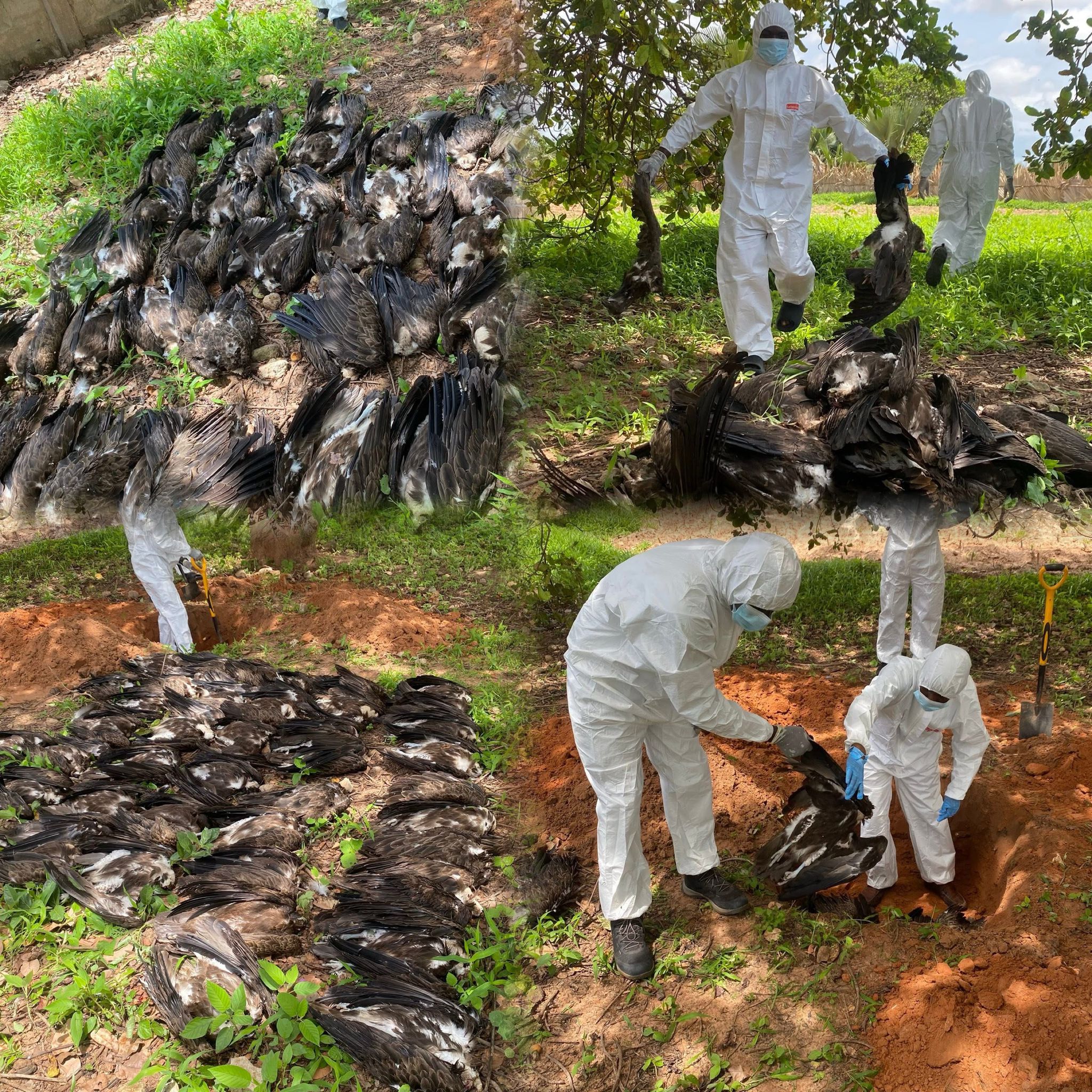
The Department of Parks and Wildlife Management received a distressing report on July 29, 2025, of a mass death of hooded vultures in Burufut, Titintu, marking the third such incident in the region. A team comprising officials from the Department and the West African Bird Study Association (WABSa) was swiftly dispatched to investigate the alarming scene. Upon arrival at a local orchard, they discovered 44 hooded vultures, all decapitated, sparking concerns about a disturbing pattern tied to local beliefs.
The gruesome discovery has heightened fears about the safety of the critically endangered hooded vulture population in The Gambia. Initial findings suggest the killings may be linked to a traditional belief that vulture parts, particularly heads, possess spiritual or medicinal properties. While authorities have not yet identified the perpetrators, the incident mirrors two prior mass killings in Gunjur and Bonton, where dozens of vultures were similarly mutilated.
In Gunjur, last month, over 30 hooded vultures were found dead, their heads removed, in a case that shocked conservationists. The Bonton incident, occurring later that year, saw a similar fate befall another group of vultures, with local superstitions suspected as the motive. These recurring events have raised urgent questions about the intersection of cultural practices and wildlife conservation, prompting calls for increased community engagement and education.
The Department of Parks and Wildlife Management, in collaboration with WABSa, is now intensifying efforts to investigate the Burufut killings. “This is a tragic loss for an already vulnerable species,” said a WABSa in an update about the incident. “We’re working to understand the root causes and prevent further incidents.” The team is conducting forensic analyses to determine if poisoning or other methods were used alongside decapitation.
Conservationists urge local leaders to address harmful beliefs and promote coexistence with wildlife. Community awareness campaigns are being planned to highlight the ecological importance of vultures, which play a critical role in cleaning up carrion and preventing disease spread. Authorities are also considering stricter enforcement of wildlife protection laws to deter future killings.
As investigations continue, the Burufut incident underscores the need for a balanced approach to preserving cultural traditions while safeguarding The Gambia’s biodiversity. Conservationists warn that the hooded vulture could face further declines without swift action, threatening the region’s ecological balance.