By Fatou Dahaba
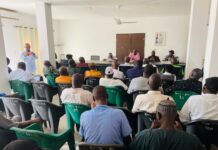
Omar Jabang, Sheriff of the Gambia Sheriff Division, appeared before the Special Select Committee to clarify the mandate, processes, and procedures governing the sale and disposal of assets, particularly those identified by the Janneh Commission. His testimony provided a detailed overview of the division’s operations, shedding light on the steps involved in executing court-ordered sales and addressing concerns about transparency and record-keeping.
Sheriff Jabang explained that the division’s authority stems from the Civil Processes Act in Volume 3 of the Laws of The Gambia. The division is tasked with enforcing judgments and orders from courts across the judicial spectrum, from the District Tribunal to the Supreme Court. A key responsibility includes managing the sale of assets, such as those seized under court orders, including the livestock of the former president, sold under a High Court order issued on January 3, 2018.
Detailing the sales process, Jabang outlined distinct procedures for movable and immovable properties. For movable items, such as vehicles, the process begins with the issuance of a warrant, followed by a Title 5A in cases of monetary judgments. The Sheriff Division then notifies the judgment debtor, granting a 70-day period to comply. If unresolved, the attached property is advertised in a widely circulated newspaper, specifying the date and place of the sale. A bailiff, responsible for the execution of the specific case, conducts the sale via public auction. Post-sale, the bailiff prepares a sales return documenting the amount received for the sold property.
For immovable properties, such as real estate, the process extends over a longer timeline. After issuing a notice, the Sheriff allows three months before commissioning a valuation of the property. The property is then advertised, and a public auction follows, ensuring transparency in the disposal process.
Jabang emphasized that all sales under the Sheriff Division are conducted through public auctions, with the highest bidder securing the asset. A significant policy shift in 2022 introduced stricter financial protocols. Payments exceeding D100 are no longer accepted in cash on-site; instead, buyers must deposit funds directly into a designated bank account. Before this policy, cash payments were permissible, collected by bailiffs at the point of sale.
When lead counsel Kah inquired about records of sales conducted before the 2022 policy, Jabang acknowledged challenges in documentation. For transparency and accountability, payments should ideally be recorded in the Sheriff’s office files. However, when pressed about the availability of sales returns for past transactions, Jabang revealed that critical documents, including valuation reports and buyer lists, were missing. He noted that he had requested these records from his predecessor, Tabally, but found none in the files. “When we went through the file, nothing of that nature was found,” Jabang stated, adding that the absence of these records was unexplained.
The testimony also addressed concerns raised by the committee regarding the completeness of the records presented. While Jabang produced original files from his office, the absence of sales returns in these documents sparked questions about prior record-keeping practices. Jabang’s responses aimed to clarify the division’s efforts to maintain accountability, despite gaps inherited from previous administrations.
Jabang’s appearance before the committee was intended to establish a foundational understanding of the Sheriff Division’s mandate and procedures. His testimony sets the stage for subsequent witnesses, providing committee members with critical context for evaluating the division’s role in asset sales, particularly those linked to the Janneh Commission’s findings.
As the committee continues its work, Jabang’s explanations highlight both the structured processes governing the division’s operations and the challenges in ensuring comprehensive documentation for past transactions.