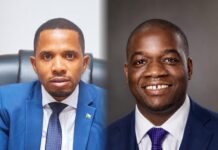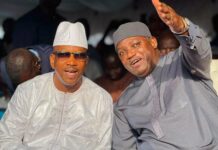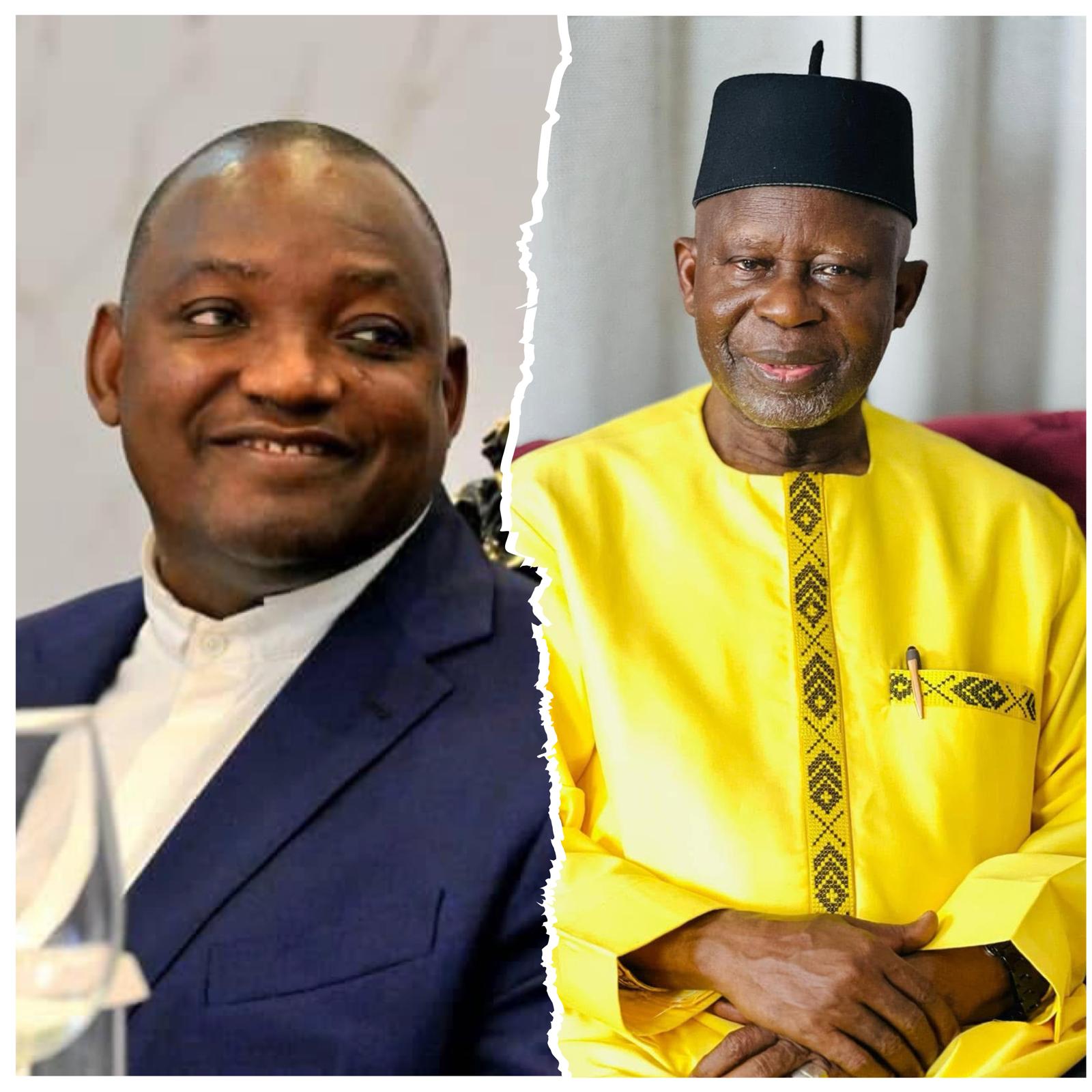
The nation stands at a critical juncture as The Gambia approaches the 2026 presidential election. The political landscape, long dominated by familiar faces, is ripe for transformation.
President Adama Barrow, the incumbent leader of the National People’s Party (NPP), and Ousainou Darboe, the veteran opposition leader of the United Democratic Party (UDP), have played significant roles in shaping The Gambia’s democratic journey. However, their continued participation in the presidential race risks stifling the nation’s progress, entrenching division, and delaying the emergence of fresh leadership capable of addressing the country’s pressing challenges. For the sake of The Gambia’s future, both leaders should step aside and allow a new generation to take the helm.
The Case Against Barrow’s Third Term Bid
President Adama Barrow’s tenure since 2017 has been a mixed bag of achievements and unfulfilled promises. His historic victory over Yahya Jammeh in 2016, as a coalition candidate backed by the UDP, marked a turning point for Gambian democracy, ending over two decades of authoritarian rule. Barrow’s leadership in those early days inspired hope, with promises of transitional governance, constitutional reform, and socioeconomic development. However, eight years into his presidency, the sheen of that victory has dulled, and his decision to pursue a third term in 2026 raises serious concerns about his commitment to democratic principles and the nation’s long-term interests.
One of Barrow’s most significant betrayals was his refusal to honor the 2016 Coalition agreement, which stipulated a three-year transitional presidency to pave the way for free and fair elections. Instead, Barrow consolidated power, formed the NPP, and sacked key UDP allies, including Ousainou Darboe, who served as Vice President and Foreign Minister. This rift, rooted in Barrow’s ambition to extend his rule, fractured the coalition that brought him to power and sowed distrust among Gambians who believed in the coalition’s vision of a “New Gambia.” His insistence on a third term, as announced in 2023, further undermines the spirit of democratic renewal, echoing the very tendencies of power entrenchment that Gambians rejected in 2016.
Barrow’s governance record also leaves much to be desired. While his administration has overseen infrastructure projects like the Senegambia Bridge, the economy remains fragile, with tourism—Gambia’s economic lifeline—still recovering from the COVID-19 pandemic. According to the World Bank, about half of Gambia’s population lives on less than $1.90 per day, and the falling value of the dalasi has exacerbated economic hardship. Barrow’s National Development Plan promised good governance and economic transformation, but critics, including Darboe, have labeled his State of the Nation Addresses as “propaganda agendas” lacking substance. Issues like unreliable electricity supply, inadequate agricultural investment, and allegations of corruption within his administration have eroded public confidence.
Perhaps most troubling is Barrow’s recent rhetoric, which has taken a dangerous turn. In July 2024, during a political rally in Brikama, Barrow made inflammatory remarks, vowing to remain president until Darboe’s death—a statement that drew widespread condemnation from political figures, civil society, and ordinary Gambians. Such language, unbecoming of a head of state, undermines national unity and fuels political tension, particularly in a country still healing from the wounds of Jammeh’s dictatorship. These remarks, coupled with allegations of vote-buying in the 2021 election, as raised by the UDP, cast a shadow over Barrow’s democratic credentials. For a nation striving to uphold civility and unity, Barrow’s continued leadership risks perpetuating division and stagnation.
Why Darboe Should Step Down
Ousainou Darboe, a towering figure in Gambian politics, has dedicated decades to the fight for democracy and human rights. As a human rights lawyer, he defended countless Gambians against the excesses of the Jawara and Jammeh regimes, earning him respect as a principled advocate. His leadership of the UDP since its founding in 1996 has made the party a formidable force, and his role in the 2016 coalition victory was pivotal, even though he was imprisoned during the election itself. However, at 77 years old by the time of the 2026 election, and with a long history of electoral defeats, Darboe’s insistence on running again risks diminishing his legacy and hindering the UDP’s ability to evolve.
Darboe’s tenure as a political leader has not been without flaws. His fallout with Barrow, culminating in his dismissal as Vice President in 2019, exposed internal divisions within the UDP and the broader opposition. While Darboe’s criticism of Barrow’s betrayal of the coalition agreement was justified, his subsequent focus on personal rivalry has overshadowed substantive policy discussions. In the 2021 election, Darboe’s campaign centered heavily on anti-corruption and socioeconomic transformation, but his inability to connect with younger voters and counter Barrow’s narrative of “retiring his father” resulted in a distant second-place finish, with 27.7% of the vote compared to Barrow’s 53%.
Moreover, Darboe’s age and health raise legitimate concerns about his capacity to lead a nation facing complex challenges. At 73, he was already described in 2021 as unlikely to contest future elections, yet rumors persist that he remains interested in the presidency. As highlighted in recent media reports, the UDP’s internal dynamics show signs of strain, with divisions over the 2026 flagbearer selection between Darboe and younger leaders like Talib Ahmed Bensouda. Darboe himself has acknowledged the need for a succession plan, pledging to give “at least two years’ notice” before stepping down. This commitment is commendable, but it would be far more impactful for him to step aside now, allowing the UDP to rally behind a new leader who can unify the party and appeal to a broader electorate.
Darboe’s continued candidacy also risks perpetuating the perception, exploited by opponents like Barrow, that the UDP is an ethnically Mandinka party. While Darboe has championed inclusivity, divisive rhetoric from some UDP members has not helped dispel this narrative. A younger, dynamic leader could reposition the UDP as a truly national party, capable of bridging ethnic and generational divides.
The Need for New Leadership
The Gambia’s challenges—poverty, unemployment, climate vulnerability, and constitutional reform—require innovative leadership. Both Barrow and Darboe, while instrumental in the country’s democratic transition, are tethered to a past defined by personal rivalries and unfulfilled promises. Their continued dominance in Gambian politics stifles the emergence of new voices, particularly from the youth, who constitute a significant portion of the population. The 2021 election saw a high voter turnout of 87%, reflecting Gambians’ enthusiasm for democracy. Yet, the lack of fresh candidates risks disillusioning this engaged electorate.
The 2026 election presents an opportunity to break the cycle of recycled leadership. Emerging figures like Essa Faal, a former TRRC Lead Counsel, and younger UDP leaders like Bensouda and Yanks Darboe have shown promise. Faal’s call for coalition talks, as seen in 2024, echoes the successful 2016 strategy that ousted Jammeh. A new coalition, free from the baggage of Barrow and Darboe’s feud, could galvanize the opposition and present a credible alternative to the NPP.
Moreover, Barrow and Darboe’s rivalry has distracted from critical issues like electoral reform, which the EU and US have urged The Gambia to prioritize. The rejected 2024 Draft Constitution, tabled in Parliament, remains contentious, with debates over term limits and retroactivity. New leadership could approach these reforms impartially, ensuring a framework that strengthens democracy rather than serving entrenched interests.
President Barrow and Ousainou Darboe have contributed indelibly to The Gambia’s democratic struggle. Barrow’s defeat of Jammeh ended a dark chapter, while Darboe’s decades of advocacy laid the groundwork for that victory. But legacies are not built on clinging to power or revisiting old battles. They are forged by knowing when to step aside and empower others.
We urge President Barrow to honor the spirit of the 2016 Coalition by respecting term limits and fostering unity rather than division. Likewise, we call on Ousainou Darboe to prioritize the UDP’s future by mentoring a new generation of leaders. The Gambia deserves a 2026 election that is a contest of ideas, not egos—a race defined by hope, not hostility. By stepping aside, Barrow and Darboe can cement their legacies as statesmen who placed the nation’s future above personal ambition.
As Gambians prepare to cast their marbles in 2026, let the drums bear new faces, new visions, and a renewed commitment to the “New Gambia” we all aspire to build.