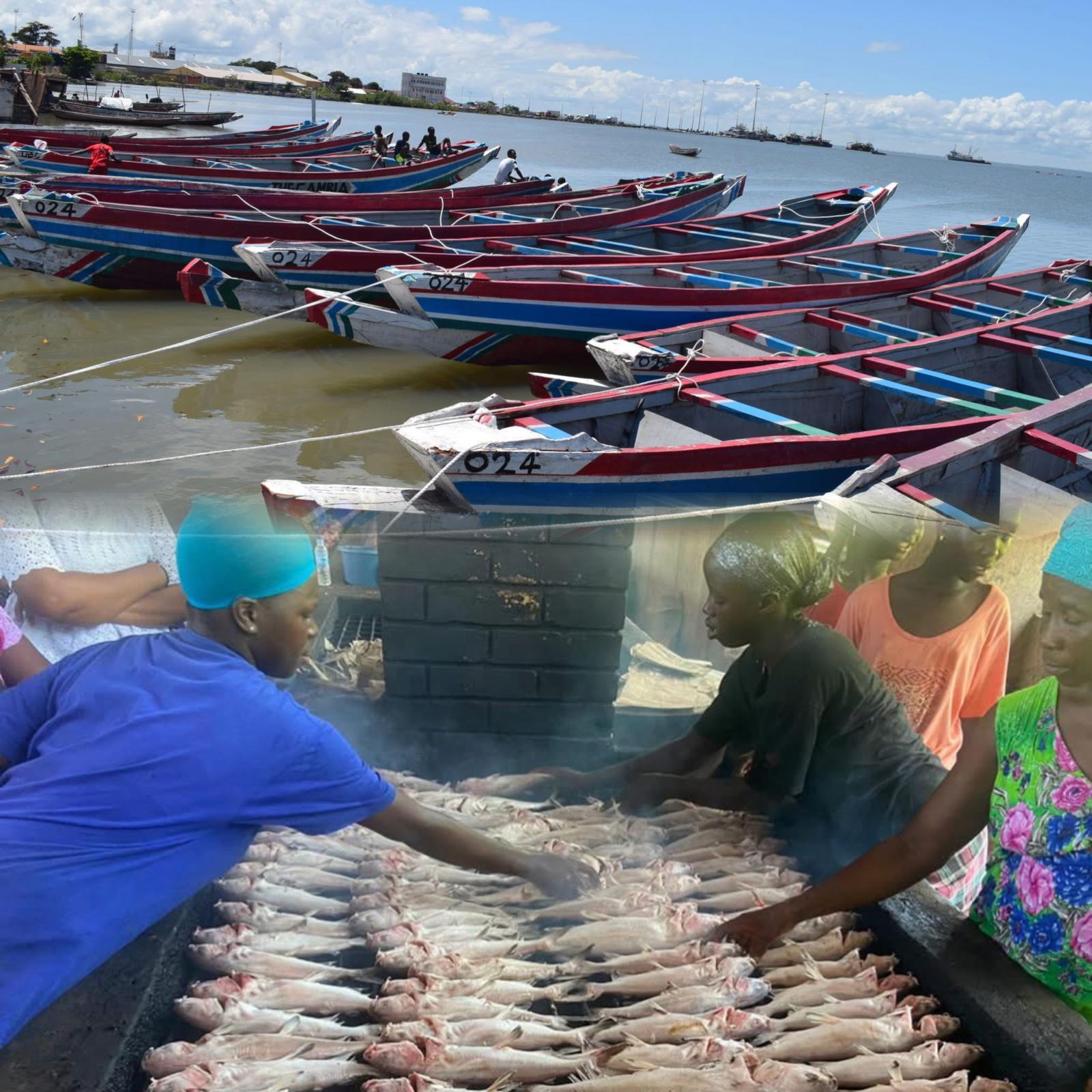
Starting January 1, 2026, Gambia will face a complete ban on exporting seafood to the United States, as announced by NOAA Fisheries on August 29, 2025, in the Federal Register. The decision, rooted in the Marine Mammal Protection Act (MMPA) Import Provisions, stems from Gambia’s failure to meet U.S. standards for reducing marine mammal bycatch in commercial fishing operations. Alongside Gambia, nations such as Benin, Grenada, Guinea, Haiti, Iran, Namibia, New Caledonia, Russia, St. Lucia, Togo, and Venezuela will face full import prohibitions due to non-compliance with MMPA standards.
The MMPA Import Provisions require countries exporting fish and fish products to the U.S. to adhere to the same bycatch reduction standards as American fisheries. NOAA Fisheries, which oversees seafood trade programs, determined that Gambia did not submit an application for a comparability finding, automatically disqualifying all its fisheries from U.S. market access. This marks a significant blow to Gambia’s fishing industry, which relies heavily on seafood exports as a source of revenue and employment.
Gambia’s coastal waters, rich with species like shrimp, snapper, and sardines, support thousands of artisanal and commercial fishers. The ban threatens to disrupt local economies, particularly in coastal communities like Bakau and Tanji, where fishing is a primary livelihood. In 2023, Gambia exported approximately $10 million worth of seafood, with a portion entering U.S. markets. The prohibition could redirect trade to other markets, but smaller economies like Gambia’s often struggle to absorb such shifts.
NOAA Fisheries, in collaboration with U.S. Customs and Border Protection, has developed lists of Harmonized Tariff Schedule (HTS) codes to identify seafood products from prohibited fisheries. These lists, which include specific species and gear types, will trigger import restrictions. For nations like Gambia, where all fisheries are barred, no seafood exports will be permitted without a Certification of Admissibility (COA). The COA process allows importers to verify that shipments are not from prohibited fisheries, but Gambia’s complete exclusion complicates compliance.
The U.S. decision underscores a global push to protect marine mammals, such as dolphins and seals, often unintentionally caught in fishing gear. Gambia’s largely unregulated fisheries have struggled to implement bycatch mitigation measures like those required in U.S. waters. NOAA Fisheries has urged affected nations to align their practices with MMPA standards, but Gambia’s lack of application suggests limited capacity or prioritization of these requirements.
The ban poses immediate challenges for Gambian fishers and exporters. Without U.S. market access, local prices may plummet, and alternative markets in Europe or Asia may demand costly certifications. NOAA Fisheries offers compliance support, but Gambia must act swiftly to develop bycatch reduction strategies to regain market access. As the January 2026 deadline looms, the nation faces a critical juncture to reform its fishing practices or risk long-term economic fallout.