By Fatou Dahaba
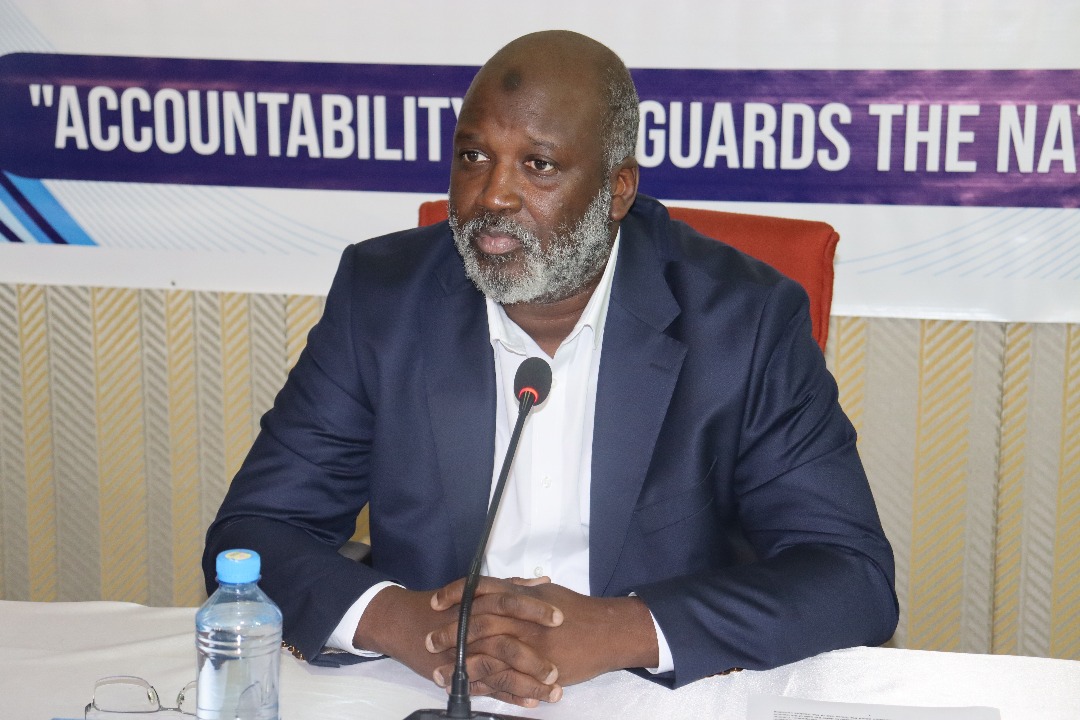
Abubacarr M. Tambadou, former Minister of Justice and Attorney General, has admitted to significant institutional lapses in implementing a court order to freeze assets linked to former President Yahya Jammeh, as identified by the Janneh Commission. Testifying before a special select committee investigating the disposal of these assets, Tambadou acknowledged failures in coordinating with key agencies, including the Gambia Livestock Market Agency (GLMA) and the Parks and Wildlife Department.
The court order, intended to secure livestock and wildlife assets tied to the former president, was not effectively communicated to the relevant institutions. Tambadou conceded, “If there is unchallenged evidence that the Ministry did not reach out to GLMA or Wildlife to invite them to a meeting, or we did not write to their respective ministries, then we would have failed in our responsibility to inform them.” His admission highlights a critical breakdown in communication that hindered the execution of the court’s directive.
During his testimony, Tambadou explained that the Ministry of Justice had recommended GLMA and Parks and Wildlife as the appropriate agencies to manage the assets due to their expertise in livestock and wildlife management. The court adopted this suggestion, but the Ministry failed to relay the order to these agencies promptly. Evidence presented to the committee, including submissions from GLMA, confirmed that no initial correspondence was received from the Ministry of Justice or their line ministry, the Ministry of Agriculture. GLMA later received a delayed directive from the Ministry of Agriculture to take control of the assets, but only after a period of inaction.
When pressed by Counsel Dibba about whether GLMA and Parks and Wildlife attended a critical meeting on the matter, Tambadou could not recall their presence. “If I attended a meeting, the easiest thing to remember is who the chair was and who the secretary was,” he said. “I would be very surprised if there was no phone call to GLMA or Wildlife to attend a meeting at the Ministry, because that would have been my instructions to reach out to them immediately.”
Counsel Dibba emphasized that these institutional failures had severe consequences, leaving the assets unmanaged and causing ongoing challenges for the country. The lack of coordination and follow-through has raised concerns about the effectiveness of asset recovery efforts following the Janneh Commission’s findings, which investigated financial misconduct under the former regime.
Tambadou’s testimony underscores the complexities of implementing court orders in asset recovery processes, particularly when multiple institutions are involved. The committee’s investigation continues to probe the handling of the former president’s assets, with a focus on ensuring accountability and preventing future lapses.
Tambadou Admits Flaws in Asset Recovery, Defends Actions Before Inquiry
Tambadou recounted the challenging climate of early 2017, when public and cabinet pressure pushed for swift action to freeze the former president’s assets. He explained that the Janneh Commission was quickly established to investigate these financial dealings. “I resisted that pressure because I wanted them to provide me with something I could go to court with,” Tambadou stated, emphasizing his insistence on securing prima facie evidence before pursuing legal action. This, he noted, delayed the freezing application following his appointment.
Highlighting the transitional justice process, Tambadou argued that governance reforms should have taken precedence over asset recovery. He admitted to imperfections, stating, “I can guarantee this committee that you will find flaws. And that’s simply because there is no perfect process, there is no perfect system.” However, he firmly denied any improper conduct, asserting that no evidence of unlawful behavior or personal motives would be found.
Tambadou expressed readiness to clarify issues based on the evidence presented to the committee. He cautioned that the inquiry appeared to focus on fault-finding rather than fact-finding, urging a balanced approach. “In a process that involves many people with various activities, certainly there will be flaws,” he reiterated.
The committee chairperson, Hon. Abdoulie Ceesay, commended Tambadou’s willingness to testify, noting it reflected respect for the committee’s work. “We are aware of our mandate, and our ultimate intent is to ensure facts are found,” Ceesay assured, adding that these findings would be presented to the plenary for further action.
As The Gambia grapples with the legacy of the Jammeh era, Tambadou’s admission serves as a sobering reminder of the need for robust institutional frameworks to safeguard public resources. The committee is expected to release further findings as it evaluates the broader implications of these failures.