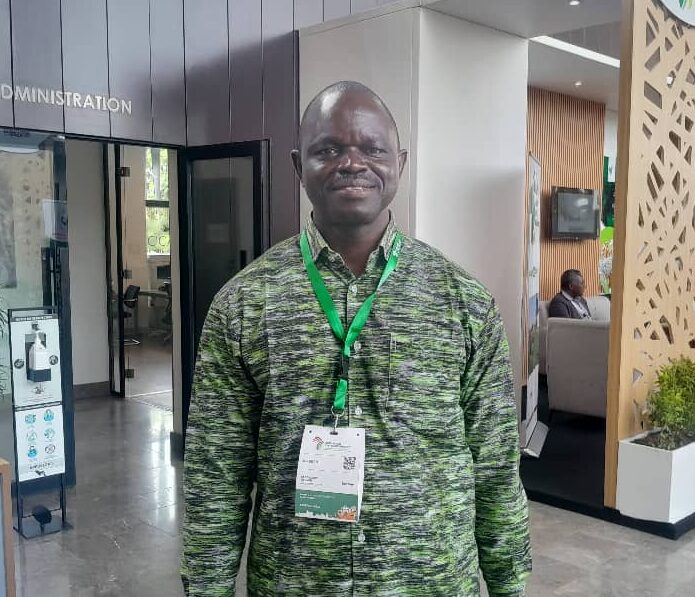
By: Kebba Ansu Manneh
The Gambia is grappling with a severe shortfall in rice production, meeting just 12% of its annual rice consumption needs, according to Babucarr Manneh, Director General of the Africa Rice Center. Speaking on the sidelines of the Africa Food Systems Forum in Dakar, Manneh highlighted the challenges plaguing the nation’s rice sector, including poor access roads for farmers, increasing soil salinity, and threats from hippos in some regions. These factors have deepened the country’s reliance on imported rice, exacerbating food security concerns.
Manneh revealed that The Gambia consumes approximately 300,000 tons of rice annually but produces less than 40,000 tons domestically. “There is a big gap,” he stated, emphasizing the urgent need to strengthen the rice value chain. He commended the Gambian government for taking steps to address these challenges through collaborative agricultural initiatives, including the Rice Value Chain Transformation Project (REWARD), aimed at boosting local production and reducing import dependency.
The decline in rice production over recent years has been a pressing issue, but Manneh noted that the government, under President Adama Barrow, has sought support from international partners like the African Development Bank and the Islamic Development Bank. “Fortunately, the present government has realized the importance of rice for The Gambia,” he said. Several bank-funded rice projects are currently underway, and early data suggest a gradual improvement in production over the past three years.
The REWARD project, launched this year, is a cornerstone of these efforts. Manneh expressed optimism that it will play a pivotal role in achieving rice self-sufficiency by 2030. Beyond increasing yields, the project focuses on improving harvesting techniques, reducing post-harvest losses, and ensuring high-quality local rice to compete with imported products. “Strengthening the rice value chain is not only about production but also about enhancing quality to attract buyers and consumers,” Manneh explained.
Reflecting on the Africa Rice Center’s role, Manneh shared its historical context. Founded in 1971 as the West Africa Rice Development Association (WARDA) by 11 West African countries, including The Gambia, the organization aimed to counter the region’s growing dependence on imported rice as consumption outpaced production in the early 1970s.
“The creation of WARDA was a response to rice consumption overtaking production,” Manneh said. Over time, the institution’s success attracted additional member countries from West, Central, Southern, and North Africa, leading to its rebranding as the Africa Rice Center.
Despite the challenges, Manneh remains hopeful. With ongoing investments and strategic interventions, The Gambia is poised to reverse the downward trend in rice production. The government’s proactive measures, coupled with international support, signal a commitment to achieving food security and reducing the nation’s reliance on imports. As the REWARD project gains momentum, the goal of rice self-sufficiency by 2030 appears increasingly attainable, offering\node