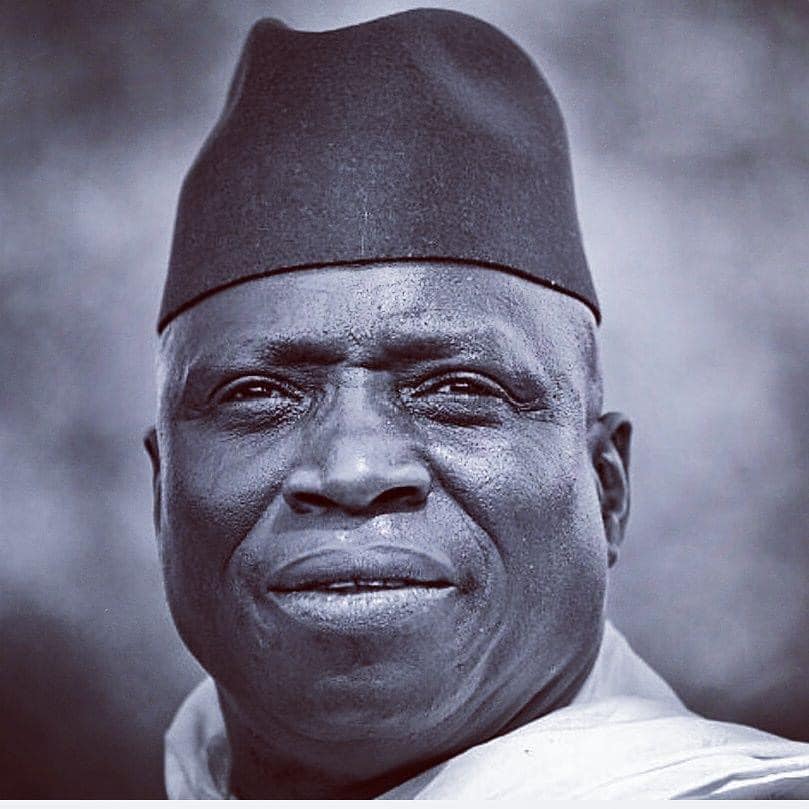
The Gambian government issued a stern warning on Tuesday, declaring that former President Yahya Jammeh will face arrest and trial for alleged human rights abuses if he returns from exile, explicitly rejecting rumors of any immunity agreement.
Jammeh, who ruled The Gambia with an iron fist for 22 years until his 2016 election defeat, has lived in Equatorial Guinea since January 2017. His ouster followed a tense political standoff resolved through regional military intervention by ECOWAS forces. During his tenure, Jammeh’s regime was accused of widespread atrocities, including extrajudicial killings, torture, enforced disappearances, and sexual violence—claims substantiated by the Truth, Reconciliation and Reparations Commission (TRRC).
Established in 2018, the TRRC conducted public hearings where victims and former officials testified to systemic abuses. Its 2021 final report implicated Jammeh in orchestrating murders, such as the 2004 killing of journalist Deyda Hydara, and the 2005 massacre of West African migrants. The commission recommended prosecutions, which led the government to endorse most of its findings in its 2022 White Paper and pledge reforms to prevent recurrence.
Recent statements from Jammeh’s supporters have hinted at his imminent return, sparking speculation about a secret Memorandum of Understanding that would grant him amnesty. The government categorically denied this, clarifying that the only related document was an unsigned 2017 Joint Declaration by the African Union, ECOWAS, and the UN. This diplomatic note aimed to secure a peaceful transition but carried no binding immunity, nor did it shield Jammeh from accountability beyond his departure from office.
“The right to return is constitutional, but it does not override justice for grave crimes,” the statement read. It emphasized robust legal processes under Gambian law, guaranteeing fair trials and due process for all parties.
President Adama Barrow’s administration, elected in 2016 and re-elected in 2021, has prioritized transitional justice amid pressure from victims’ groups and international partners. Human rights organizations, such as Amnesty International, have hailed the TRRC as a model for Africa, although delays in prosecutions have drawn criticism.
Jammeh, now 60, has occasionally signaled a comeback via social media, rallying his APRC party loyalists. His potential return could destabilize the fragile democracy, but the government reassured citizens of its commitment to the rule of law.
In his address to supporters on Saturday via WhatsApp audio, Jammeh claimed that a Memorandum of Understanding (MOU) with the coalition allowed him to return after six months to live as a citizen, a promise he alleges was broken, thereby extending his exile to nine years. “They pleaded with me to leave… I was prepared to go back to my farm,” Jammeh said, noting fears of his influence due to his so-called massive support base and military ties.