By: Kebba Ansu Manneh
Dr. Abdou Ceesay, Director General of the Department of Livestock Services (DLS), urged farmers and citizens to remain calm yet vigilant following the confirmation of a Rift Valley Fever (RVF) outbreak in the North Bank Region (NBR), which has already claimed the lives of four cows.
In an exclusive interview with the Alkamba Times at his Abuko office, Dr. Ceesay assured the public that proactive measures are underway to contain the viral disease. “We have adequate systems in place, supported by One Health stakeholders, the Ministry of Health (MoH), and the World Organisation for Animal Health (WOAH),” he stated, emphasizing coordinated efforts to prevent widespread transmission.
The outbreak was first detected on October 31, 2025, in Kissima Jaw village, NBR. Blood samples from affected cattle tested positive for RVF at a laboratory, marking the first confirmed cases in The Gambia this season.
Dr. Ceesay called on livestock owners to immediately report symptoms such as abortions, premature deaths, or high fevers in cattle and small ruminants to the nearest veterinary offices.
“This is a transboundary and zoonotic disease,” he explained, noting its ability to infect both animals and humans. The virus, primarily spread by mosquitoes, had already emerged in neighboring Mauritania and Senegal, prompting heightened surveillance in The Gambia.
Since reports from the region surfaced, DLS has intensified coordination meetings, strengthened national and international collaborations, and mobilized resources. “We’ve been preparing since hearing about outbreaks in Senegal and Mauritania,”
Dr. Ceesay said. “RVF requires cross-border cooperation, and we’re working closely with the Ministry of Health under the One Health platform.”One human case has been reported: a Mauritanian national residing in the Senegalese border village of Ker Ayib, who was treated at the Ker Ali Health Center.
Health authorities are sharing real-time data to monitor potential human infections. Dr. Ceesay described RVF as an endemic disease in The Gambia, often resurfacing during years with heavy rainfall, which creates ideal conditions for mosquito breeding.
“This isn’t the first time,” he noted, referencing past outbreaks tied to seasonal flooding. To bolster response efforts, DLS is engaging partners, including the Food and Agriculture Organization (FAO). Discussions are ongoing with the Ministry of Agriculture’s Permanent Secretary and the Ministry of Finance to secure additional funding. “Resource mobilization is critical right now.” Dr. Ceesay stressed.
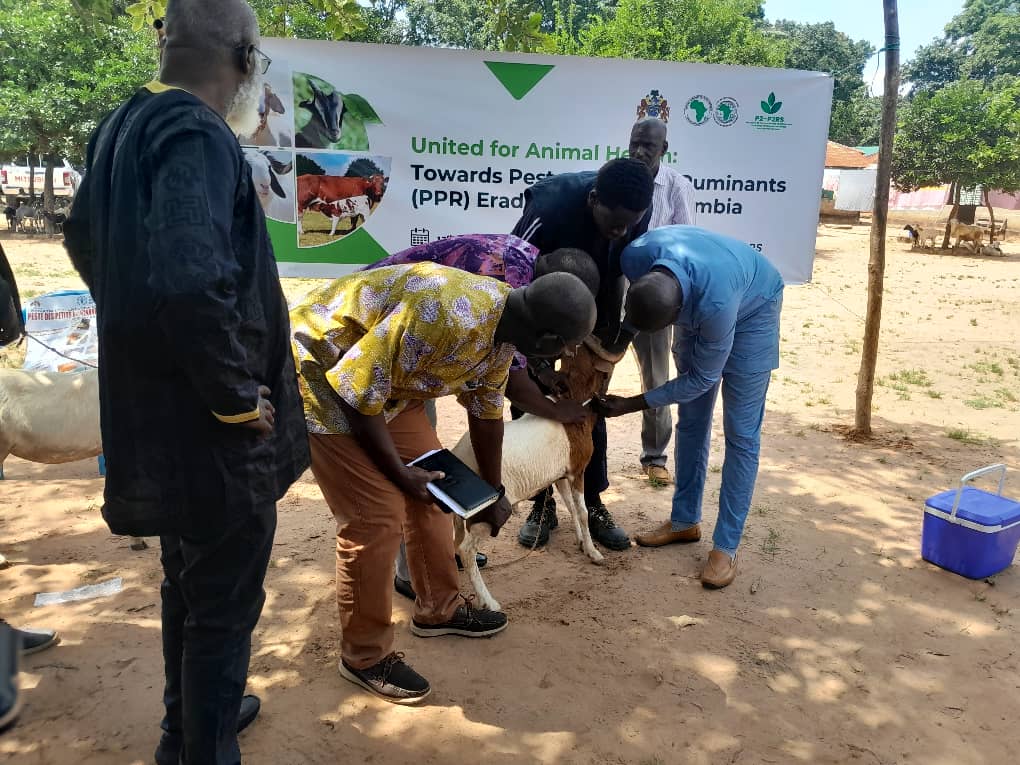
Field sensitization campaigns have been ramped up through livestock assistants nationwide. Farmers are advised to handle potentially infected animals with extreme caution to avoid zoonotic transmission, which can occur through contact with blood, tissues, or aborted fetuses.
Veterinary teams are conducting active surveillance, vaccinating at-risk herds where feasible, and advising on vector control measures such as eliminating standing water and using insect repellents on livestock.
While no widespread human infections have been reported in The Gambia, health officials urge anyone experiencing flu-like symptoms after contact with sick animals to seek immediate medical attention.
Dr. Ceesay reiterated the importance of early reporting: “Farmers are our first line of defense. Prompt action saves lives—both animal and human.”The DLS continues to monitor high-risk areas, particularly in flood-prone areas of the NBR and border communities.
Citizens are encouraged to stay informed through official channels and avoid consuming meat from uninspected sources.
As rainfall persists, authorities warn that vigilance must remain high to prevent escalation. The collective One Health approach, uniting animal, human, and environmental health sectors, underscores The Gambia’s strategy to combat this recurring threat.