By Sainabou Sambou
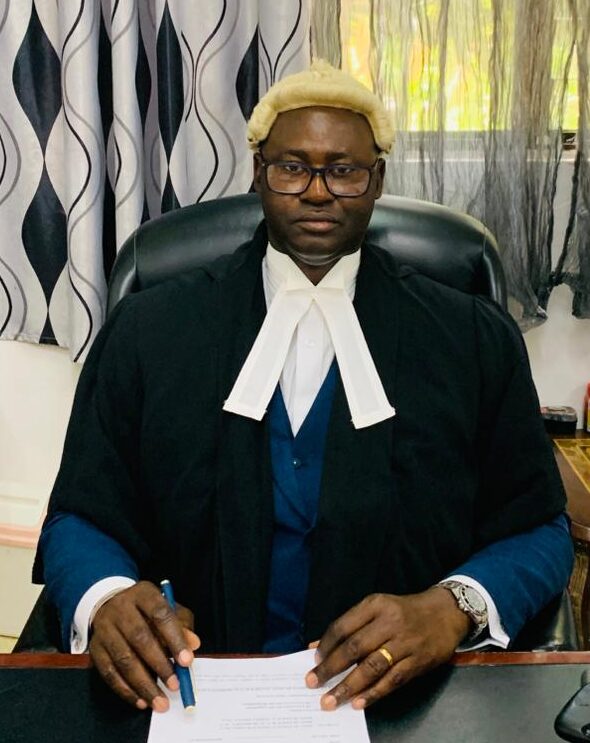
The High Court of The Gambia, presided over by Justice Ebrima Jaiteh, has ruled that the cautionary and voluntary statements made by the accused person, Arona Tine, were given voluntarily and will be admitted as evidence in court.
The ruling came on November 4, 2025, after the defence raised an objection, claiming the statements were obtained through threats and intimidation. The case, The State versus Arona Tine, is in connection with the alleged murder of Fatoumatta Kargbo.
Defence lawyer S. Ade argued that his client was coerced by police officers while still recovering from throat surgery and that there was no independent witness during the process. He urged the court to reject the statements.
However, State Counsel F. Drammeh opposed the objection, saying the statements were properly obtained in line with the Evidence Act and the Judges’ Rules.
During the mini-trial, known as a voire dire, the prosecution called four witnesses: Detective Landing Jallow, who recorded the statements; Ebrima Janneh, the independent witness; Officer Omar Sonko; and Detective Elizabeth Sylva. They all testified to the court that the accused was cautioned in Wolof, the language he understands, and that the statements were given voluntarily, without any threats or force.
The independent witness, Ebrima Janneh, a cameraman from Dippakunda, stated that the accused appeared calm and was not under any pressure when giving his statement. He confirmed that both he and the accused signed and thumbprinted the documents after the statements were read back to him.
In his own testimony, Arona Tine told the court that he was forced to give the statements. He claimed that police officers threatened him, handcuffed him, and denied him his medication after being discharged from the hospital. He insisted that no independent witness was present.
In his ruling, Justice Ebrima Jaiteh said the prosecution had proved beyond a reasonable doubt that the statements were given voluntarily.
He stated that the evidence presented by the prosecution witnesses was consistent and credible, and that there was no evidence to suggest that the accused was threatened or forced.
“The totality of the circumstances shows that the statements were made freely and voluntarily,” Justice Jaiteh said.
Justice Jaiteh admitted the two statements into evidence, marking them as Exhibit P8 (voluntary statement) and Exhibit P9 (cautionary statement). He also advised police officers to always follow proper procedures, especially when dealing with suspects in poor health.