By Alieu Ceesay
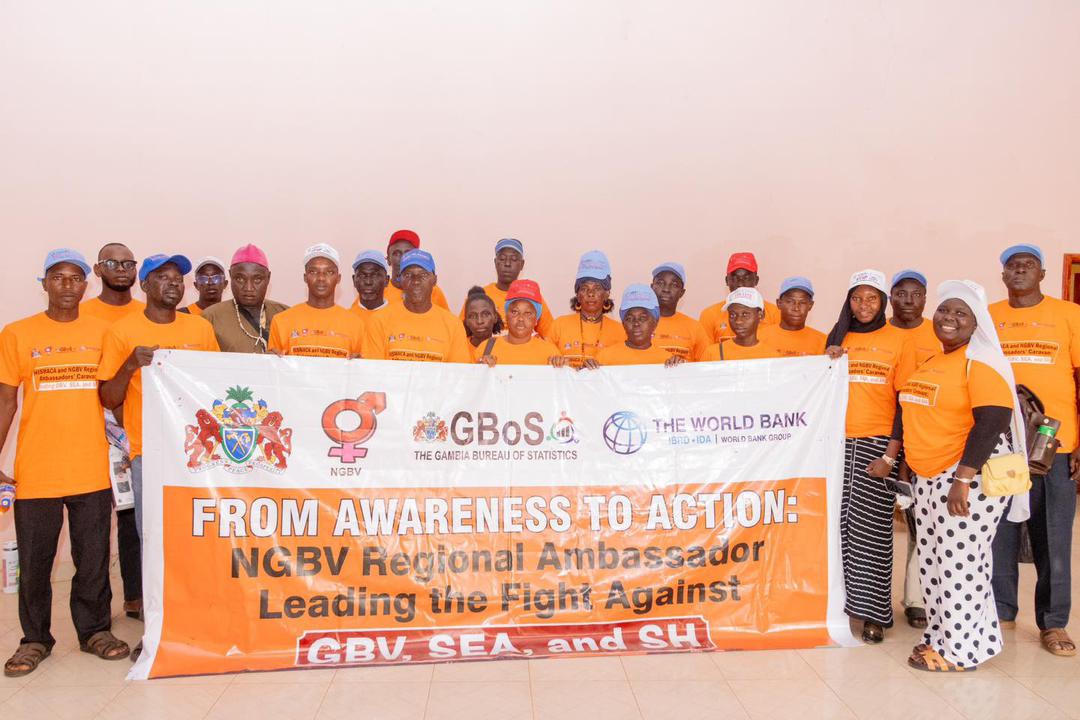
Residents in Brikama and surrounding communities joined a vibrant roadshow on Monday as the Network Against Gender-Based Violence in The Gambia (NGBV) intensified its campaign to end violence against women and girls, with special focus on female genital mutilation (FGM) and the rising threat of digital abuse.
Organized just days before the International Day for the Elimination of Violence against Women (25 November), this year’s global theme — “UNITE to End Digital Violence against All Women and Girls” — resonated strongly during the march. Activists carried banners and distributed flyers calling on citizens to support victims and reject all forms of gender-based violence.
“Women and girls continue to bear the heaviest burden,” NGBV stated, citing alarming national statistics from the 2019–2020 Gambia Demographic and Health Survey: 40% of ever-married women have experienced physical, sexual, or emotional violence from a current or most recent partner, 46% have suffered physical violence, and 9% have endured sexual violence.
While acknowledging the government’s progress, the Network urged more decisive action. In an open statement, NGBV called on the Ministries of Gender, Justice, and Health, the Gambia Police Force, local authorities, community leaders, and development partners to: Enforce existing laws more effectively, Promote gender-transformative programs to change harmful attitudes, Expand one-stop centers offering medical, legal, and psychosocial support for survivors, and Pass specific legislation criminalizing digital violence against women and girls.
The roadshow culminated in a courtesy visit to the West Coast Region Governor’s office and community engagements. Regional AIDS Coordinator Hamadi Sowe challenged residents to end the culture of silence.
“The problem of gender-based violence is us as a people,” Sowe declared. “We must tie our belts, break this culture of silence and muslaha (informal reconciliation), and confront this evil practice occurring in our societies.”
As The Gambia prepares to join the world in marking the International Day, activists say the Brikama mobilization signals growing public resolve to protect women and girls from all forms of violence — physical, sexual, cultural, and now increasingly digital.