Dr. Ousman Gajigo
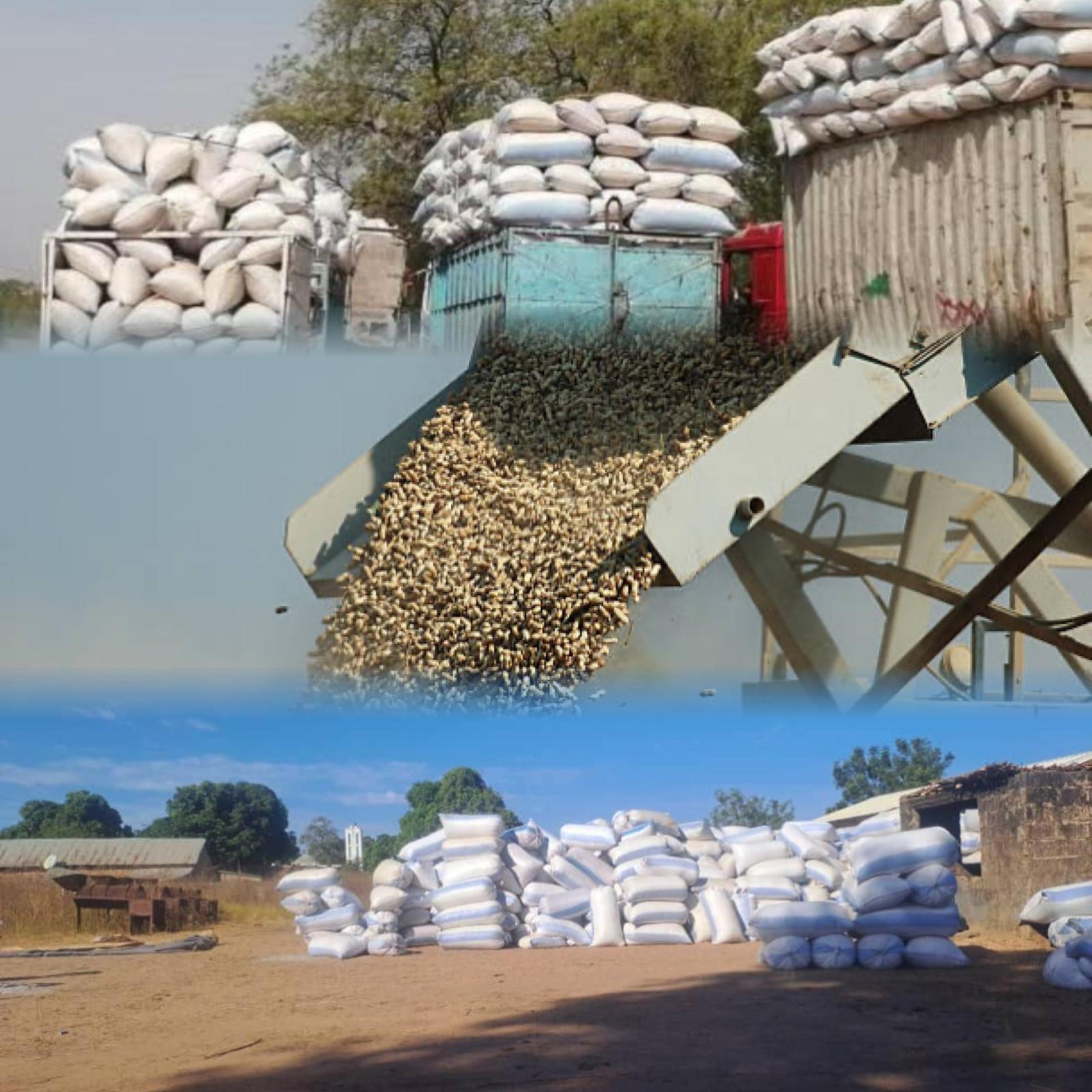
The recent groundnut price that the government has offered to Gambian farmers should be a wake-up call for a national discussion on what proper compensation should be. This year’s price for groundnuts was D38,000 per tonne. There are many reasons why such a price is extremely low, given the Gambian context.
The typical groundnut farmer starts work on their field in May or June with field preparation before the rains begin. This is followed by seeding when the rain starts. Groundnuts notoriously require multiple rounds of weeding, given the country’s rare use of herbicides. The harvesting process is also arduous, requiring digging in dry soil and days of vigilantly guarding exposed groundnuts from livestock and wildlife. The season ends with groundnut threshing and bagging by late December. Each segment of this process is demanding and time-consuming. The process typically spans about 7 months.
Let’s look at the volume of production for the average Gambian groundnut farmer. The average groundnut farm size in The Gambia is about 1 hectare. The average groundnut yield in the country, based on available data, is about 850 kg per hectare. This means that, based on the government’s price, the average Gambian farmer can expect to receive about D32,000 for the whole season.
Receiving D32,000 for 7 months of grueling work comes out to less than D4,500 per month. Recall that most of our groundnut farmers live in rural areas, where non-farm employment opportunities are nonexistent. Given the average household size and typical cost of essential commodities, is D4,500 per month sufficient for a livable income in the current Gambian environment? Of course not.
This poor compensation for groundnut farmers has been ongoing for years and has worsened under the presidency of Adama Barrow. This compensation, together with overall inadequate attention and poor implementation of agricultural strategy under the current administration, has hastened a decline in this subsector. Average annual groundnut production under President Barrow is about half that under Yahya Jammeh and about a third of the average under President Jawara.
When thinking about appropriate government intervention in any sector, the foremost concern in the minds of policymakers should be the welfare of people. Unfortunately, this has not been the case for the Adama Barrow regime when it comes to agriculture in general and groundnut farmers in particular. The key point is that when it comes to annual compensation for farmers, careful thought should go into determining the objective being targeted when a price is offered for the country’s key cash crop. It should go without saying that the primary focus should be on improving the livelihoods of farmers, who constitute a significant segment of our population, yet most of whom continue to live in destitution.
There should be at least two references guiding appropriate compensation for farmers. The first should be the global price for a particular commodity. When the price offered to local farmers is lower than that in other countries, as is the case with groundnut this year, this is cause for concern. But even if the price offered by the government matches the global commodity price, that is not sufficient by itself. The government needs to ensure that the price farmers receive for a strategic cash crop is at least enough to allow them to feed their families and realize some year-to-year improvements.
Providing an appropriate price for farmers is not, however, expense-free. At the national budget level, this will require the government to substantially increase the allocation for farmer compensation. Even in our current state of the economy, there is enough room in our budget to increase compensation to farmers by reducing allocations to other unproductive sectors. Specifically, our budget should be able to provide Gambian farmers with D60,000 per tonne as long as the government is willing to reduce wasteful expenditures from other areas.
It needs to be recognized that the long-term solution for our groundnut farmers does not rest with the government annually buying farmers’ harvests. Rather, it is the development of agro-processing industries that would create demand for farmers’ produce. In the case of groundnuts, such a long-term solution is quite feasible. Vegetable oil is a major food item in The Gambia and is currently mostly imported. A capable government should be able to create the incentive structures for the establishment of private-led agro-processing industries engaged in vegetable oil production that would create demand for farmers’ groundnuts.
The development of the agricultural sector is key to addressing our food security challenges and meeting our national development goals. The farmers who are toiling in the fields in this sector need to be rewarded with fair returns for their hard work. The government of Adama Barrow has completely failed in this regard. If we want our farmers to receive appropriate compensation and reduce poverty, we need a change in December 2026.