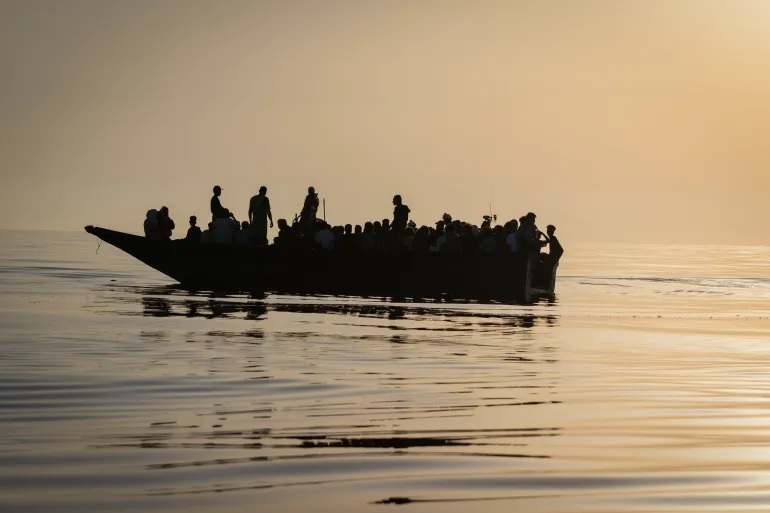
A wooden migrant boat carrying 164 people turned back to Gambian shores near Bakau on Thursday after engine trouble, and worsening weather dashed hopes of reaching Europe, averting what could have been another deadly chapter in the perilous “backway” migration route.
The vessel departed from Foni Bereft on Sunday, January 18, loaded with mostly young men, along with 14 women and two children. Passengers endured days at sea before mechanical failure—one engine stopped working—which, combined with rough seas and bad weather, made continuing the journey impossible.
Migrant rights activist Ebrima Drammeh, who met the group upon arrival in the Bakau Costa area and the vicinity of Burusibi Turn Table, confirmed that everyone survived the ordeal. “None of them has died, but they are so exhausted, tired, and hungry,” Drammeh told reporters. “I have already informed the immigration authorities and the Red Cross to provide immediate assistance.”
Among the returnees, two individuals were reported to be ill, and one was facing mental health difficulties, highlighting the physical and psychological toll of such attempts. Immigration officials and Red Cross teams quickly mobilized, offering medical care, food, water, and other essential support to the fatigued group.
The safe return stands in stark contrast to recent tragedies along West Africa’s Atlantic migration corridor. Just weeks earlier, a New Year’s Eve capsizing off Jinack village claimed dozens of lives from an overcrowded boat bound for Europe, with death tolls reported as high as 31 or more in various updates, underscoring the route’s extreme dangers.
Many Gambians and other West Africans continue to risk the “backway”—often in rickety, overloaded pirogues—driven by economic hardship, unemployment, and dreams of better opportunities in Europe, particularly in Spain’s Canary Islands. Smugglers exploit desperation with promises of safe passage, but vessels frequently suffer breakdowns, capsize in storms, or face interception.
Advocates like Drammeh, known for his real-time tracking and advocacy through platforms such as Ebrima Migrants Situation, warn that without addressing root causes like poverty and lack of legal pathways, such journeys—and their risks—will persist.
The incident serves as a reminder of the human cost behind irregular migration statistics, even when fortune spares lives. Authorities have not issued an official comment on the return, but support efforts continue for the 164 who made it home alive.