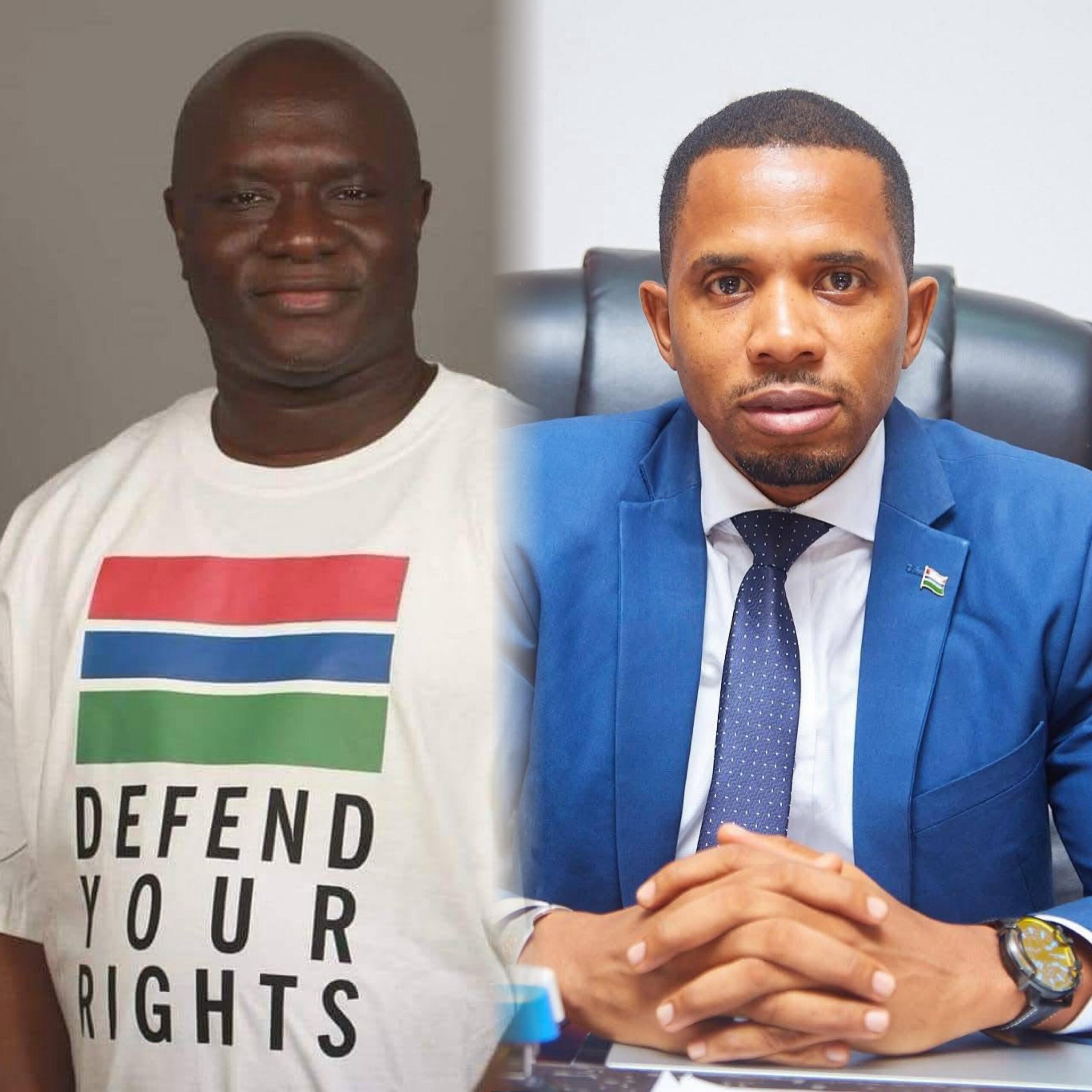
Civil society actors in The Gambia have issued a strongly worded statement condemning recent public attacks by Dr. Ismaila Ceesay, the Minister of Information, Media and Broadcasting Services, against prominent activist Madi Jobarteh and the Edward Francis Small Center for Rights and Justice.
The statement, released amid escalating tensions between government officials and civil society voices, describes Dr. Ceesay’s remarks as part of a “troubling pattern” of delegitimizing critics rather than addressing substantive governance concerns. It specifically highlights the minister’s questioning of the Center’s legitimacy, portraying it as an attack on the credibility of independent civic engagement.
Dr. Ceesay reportedly challenged the formal status of the Edward Francis Small Center, suggesting it lacks institutional structure—such as office buildings, servers, or significant staff—and operates more as an individual initiative tied to Jobarteh. In response to Jobarteh’s criticisms of transparency, public resource use, and due process, the minister allegedly accused the activist of harboring a “dual syndrome of idleness and bitterness” and urged him to form a political party instead of “hiding behind activism.”
The civil society statement pushes back firmly, asserting that legitimacy in civic work stems not from physical or administrative resources but from the “substance, accuracy, and public value” of contributions. It notes that small initiatives and individuals have historically driven accountability and human rights progress in The Gambia, including during the struggle against the former regime of Yahya Jammeh.
The statement praises Madi Jobarteh’s credentials as a leading civil society figure with over three decades of experience in governance, human rights, and development. Recognized nationally and across Africa, Jobarteh is described as a principled advocate for transparency, rule of law, and citizen participation—motivations rooted in democratic ideals rather than personal gain. The Center, founded by Jobarteh, is presented as an extension of his long-term commitment to institutional accountability and inclusive governance, in contrast to the “personality cults” of the Jammeh era that Gambians rejected.
Signatories argue that focusing criticism on administrative form over constitutional rights threatens to shrink civic space. The Gambian Constitution guarantees freedom of expression, association, and participation in public affairs to all citizens, not solely well-resourced organizations. Framing accountability efforts this way, they warn, undermines democratic discourse and implies only formally established entities can scrutinize power.
The statement emphasizes that Jobarteh’s critiques center on legitimate public interest issues, which warrant factual, open responses from officials rather than personal discrediting. It calls for renewed respect for diverse civic forms, including individual-led initiatives; constructive dialogue between government and accountability actors; and a shift toward addressing governance substance for the benefit of Gambians.
In conclusion, the group invokes the nation’s democratic history: “The Gambia’s democracy was built by courageous individuals long before institutions were formalized. We must be careful not to rewrite that history or narrow the space for civic action today.”
The exchange underscores ongoing friction in The Gambia’s post-Jammeh democratic landscape, where activists demand greater transparency while officials defend government actions amid accusations of intolerance toward dissent. Civil society urges a recommitment to open engagement to strengthen democratic institutions and protect hard-won freedoms.