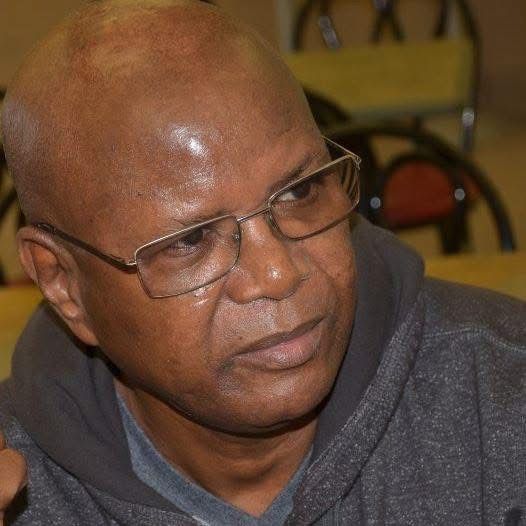
Veteran journalist and former Minister of Information Demba Ali Jawo has accused elements within President Adama Barrow’s administration of deliberately excluding him from official functions, describing it as an act of political vindictiveness tied to his ongoing criticisms and his role in an opposition unity initiative.
In a personal reflection titled *
“A Victim of Vindictiveness?”Jawo recounted his abrupt dismissal from the cabinet in June 2018 as part of a major reshuffle by President Barrow. One of five ministers let go without explanation—a legal right of the executive—he noted that the others were subsequently offered positions in government, while he was not.
Jawo suggested that the differential treatment stemmed from his refusal to mute his public critiques or to offer praise for the administration. He revealed receiving indirect approaches from intermediaries linked to the presidency, implying a diplomatic appointment could be available if he stopped criticizing the government. He rejected these overtures outright, stating he had no interest in returning to public office.
As Information Minister from 2017 to 2018, Jawo described his time in cabinet as confining, given the demands of collective responsibility and his role as government spokesperson. Leaving office, he said, restored his freedom to speak openly as a journalist and critic.
While maintaining cordial personal relations with President Barrow and some officials—emphasizing his gratitude for the initial appointment and that his criticisms target principles, not personalities—Jawo continued to receive ex-ministerial courtesies, such as invitations to national events, including independence celebrations.
That changed, he claimed, after his APEX membership became public. APEX is a volunteer group of Gambians working to forge a united opposition coalition to challenge Barrow and his alliance in the upcoming presidential elections. Jawo alleged this crossed a red line for some in power, prompting informal sanctions.
He cited his pointed exclusion from the president’s annual media dinner in December—where veteran journalists like himself were customarily expected—together with a recent national dialogue forum and the 61st independence anniversary celebrations. Sources within government, he said, pointed to a specific cabinet minister who ensured his name was removed from invitation lists.
Jawo insisted he is undisturbed by the loss of privileges. “As a bona fide Gambian, I am free to belong to any group or engage in anything within the precinct of the law,” he wrote. “If anyone decides to deny me certain privileges because of my activities, so be it.”
The statement underscores deepening political divisions in The Gambia ahead of elections, with opposition figures like Jawo pushing for coalition-building amid perceptions of intolerance toward dissent from the ruling camp.