By Sainabou Sambou
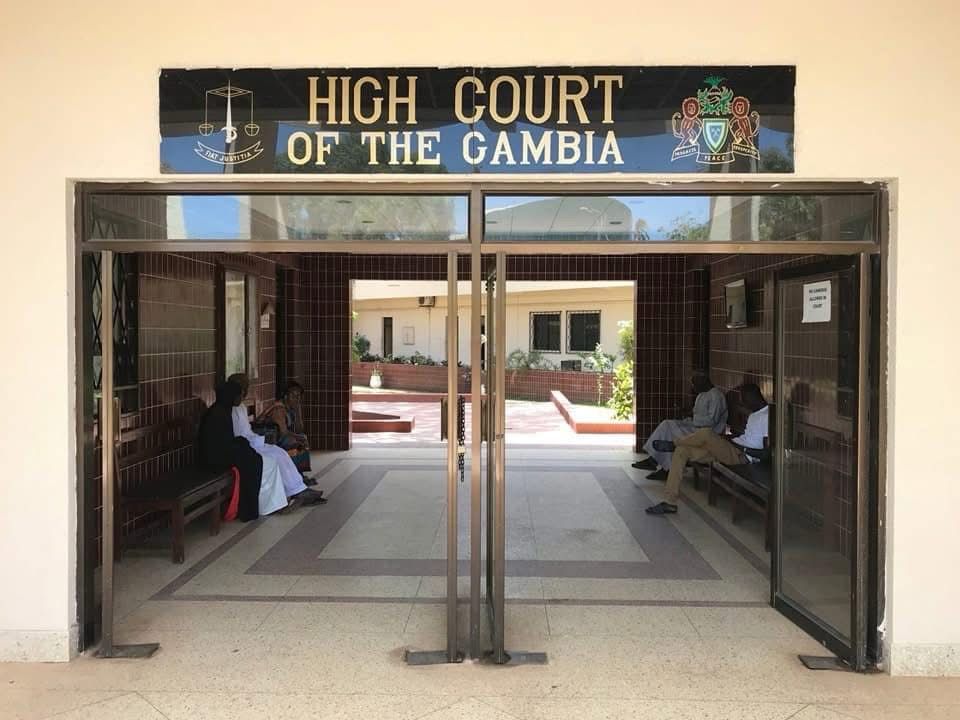
Justice Ebrima Jaiteh of the High Court on Tuesday, March 17, 2026, ordered the forfeiture to the State of all medicines seized from Edrissa Kujabi, reversing an earlier ruling by the Bundung Magistrates’ Court that had refused the prosecution’s application.
The case stemmed from a judgment delivered on February 10, 2026, by Magistrate R. Mendy, who convicted Kujabi after he pleaded guilty to unlawfully storing medicines in unauthorised premises. Despite the conviction, the magistrate declined to order the forfeiture of the seized drugs, stating that the prosecution had failed to prove the medicines were unfit for human consumption. That forfeiture would serve the public interest.
Dissatisfied with the decision, the State appealed to the High Court, arguing that Magistrate Mendy had erred in law by introducing conditions not contained in Section 52(1) of the Medicines and Related Products Act 2014.
State Counsel A. Colley submitted that once a conviction is secured for an offence under the Act, the court is empowered to order the forfeiture of any medicines seized in connection with the offence. He contended that the lower court failed to properly exercise its discretion and that its decision undermined the core objective of the law, which is to protect public health by regulating the storage and distribution of medicines.
Counsel for the respondent, A. R. Gomez, opposed the appeal. He argued that the State’s case suffered from procedural defects and that forfeiture is a discretionary remedy which must be exercised only on sufficient evidential grounds.
In his ruling, Justice Jaiteh first dismissed the respondent’s preliminary objection, holding that minor procedural irregularities in the appeal process did not affect the substance of the matter.
On the substantive issue, Justice Jaiteh ruled that the magistrate had misinterpreted the clear and unambiguous language of Section 52(1) of the Medicines and Related Products Act 2014. He stressed that the law does not require the prosecution to prove that the medicines were unsafe or that forfeiture was in the public interest.
“The language of the law is clear and unambiguous,” Justice Jaiteh declared. “Once medicines are seized in connection with an offence and a conviction is obtained, the court has the authority to order their forfeiture.”
The judge further emphasised that the Act was enacted to safeguard public health by ensuring that medicines are stored and handled only in licensed premises. Allowing such medicines to remain outside regulatory control, he said, would defeat the very purpose of the legislation.
Justice Jaiteh held that the magistrate had improperly exercised her discretion by relying on factors not provided for in the statute.
Consequently, the High Court allowed the State’s appeal, set aside the portion of the Bundung Magistrates’ Court’s judgment refusing forfeiture, and ordered that all medicines and related products seized from Edrissa Kujabi be forfeited to the State.
The court directed the relevant regulatory authorities to take custody of the forfeited items and dispose of or handle them in accordance with public health and regulatory standards.