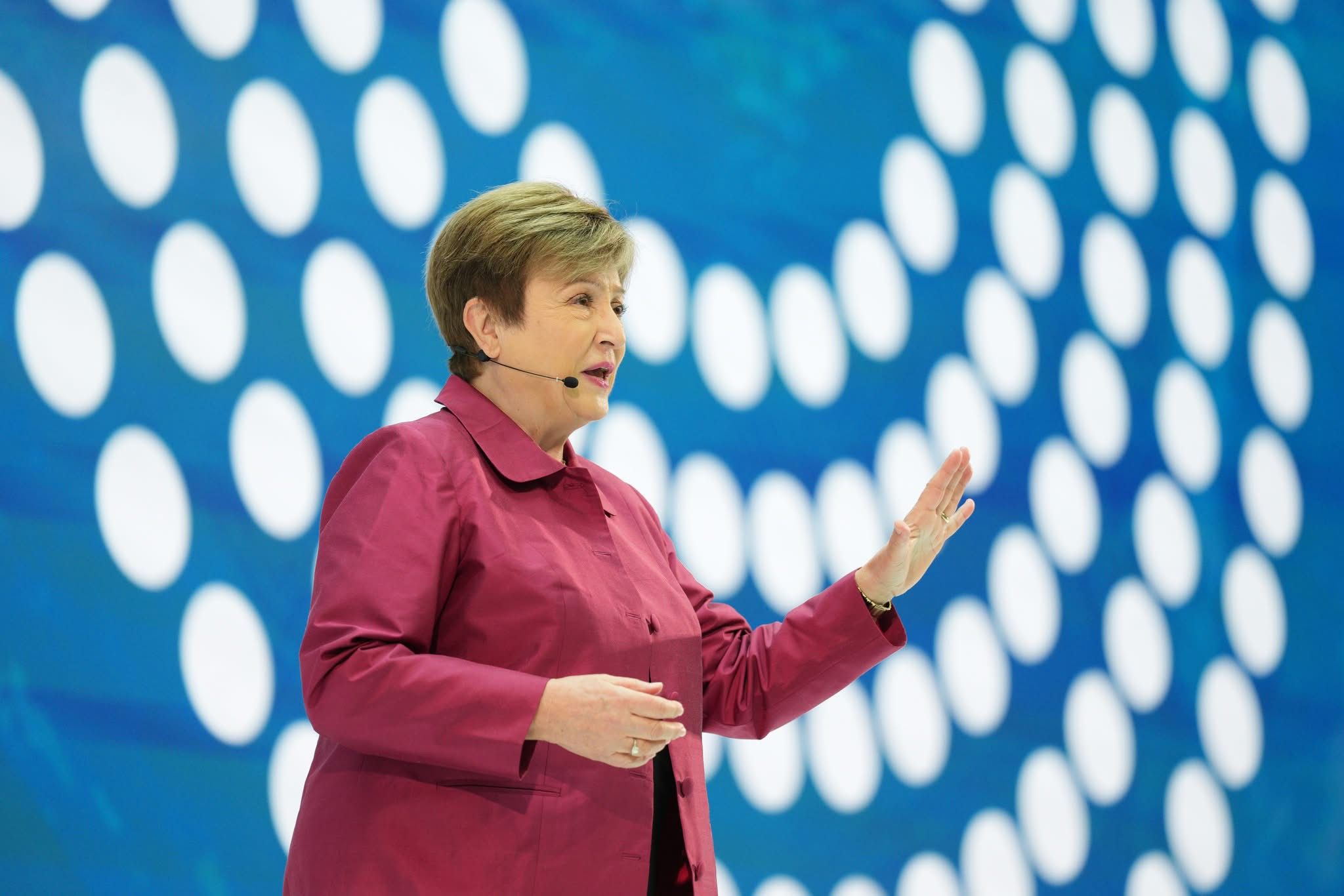
A resilient world economy faces fresh tests from the now-paused war in the Middle East, which has triggered sharp disruptions in energy supplies, soaring prices, and strained supply chains, IMF Managing Director Kristalina Georgieva said Thursday.
In her curtain-raiser speech for the 2026 IMF-World Bank Spring Meetings in Washington, D.C., Georgieva described the conflict as delivering a large, global, and asymmetric supply shock with heavy burdens falling on vulnerable energy-importing nations.
“The conflict has caused considerable hardship around the globe,” Georgieva stated, extending sympathy to those affected by the war and all conflicts. “A resilient world economy is being tested again by the now-paused war in the Middle East.”
The shock has cut the world’s daily oil flow by 13 percent and liquefied natural gas (LNG) by 20 percent, she noted. Brent crude prices surged from $72 per barrel to a peak of $120, remaining elevated even after the pause in fighting.
Infrastructure damage, including to Qatar’s Ras Laffan complex and reduced traffic through key passages like Bab-el-Mandeb, has compounded the problem. Ripple effects include shortages of refined products such as diesel and jet fuel, disrupting transportation, trade, and tourism.
Supply chain strains have extended to industrial inputs like sulfur, helium, and naphtha, while higher fertilizer and transport costs have pushed food insecurity higher, adding 45 million people to the ranks of those facing hunger—for a global total exceeding 360 million.
The impact is uneven. Over 80 percent of countries are net oil importers, with developing nations in Sub-Saharan Africa and small island states among the most exposed. Energy exporters have fared better, but the overall effect is slower global growth and higher inflation pressures, even in optimistic scenarios of a durable ceasefire. Georgieva warned there would be “no neat and clean return to the status quo ante,” citing damaged infrastructure that could take years to repair and lingering uncertainty over key shipping routes.
Financial markets tightened in response, with emerging market bond spreads widening and equities adjusting, though conditions have since eased somewhat. Near-term inflation expectations have shifted higher, reflecting uncertainty, but longer-run expectations remain anchored—a positive sign, according to the IMF chief.
Georgieva stressed that policy choices will determine how well the world weathers the storm. She urged policymakers to reject “go-it-alone” measures such as export bans or price controls, warning they would only “pour gasoline on the fire” and worsen global conditions.
Instead, she called for targeted and temporary fiscal support for the most vulnerable, while central banks remain vigilant to prevent inflation expectations from de-anchoring. If expectations show signs of breaking, authorities should stand ready with rate hikes or other measures.
Georgieva emphasized rebuilding fiscal space, noting that public debt levels are much higher than two decades ago and interest payments are rising as a share of revenue across income groups.
“Avoid policies pulling in opposite directions,” she said, likening mismatched fiscal stimulus and monetary tightening to “driving with one foot on the accelerator and one on the brake.” Strong fundamentals, she added, remain the best defense against inevitable future shocks.
The IMF anticipates increased demand for balance-of-payments support, potentially rising by $20 billion to $50 billion, and stands ready to scale up programs. Georgieva highlighted coordination with partners like the International Energy Agency and World Bank on energy conservation and policies that preserve price signals.
As finance ministers and central bankers gather for the Spring Meetings next week, the focus will be on easing pain for economies and people while fostering resilience. Georgieva concluded with a hope for lasting peace: “War takes away everything that we work for.”
The speech sets the tone for discussions on navigating uncertainty, with the IMF set to release updated global economic forecasts in the coming days.