By: Momodou Gagigo
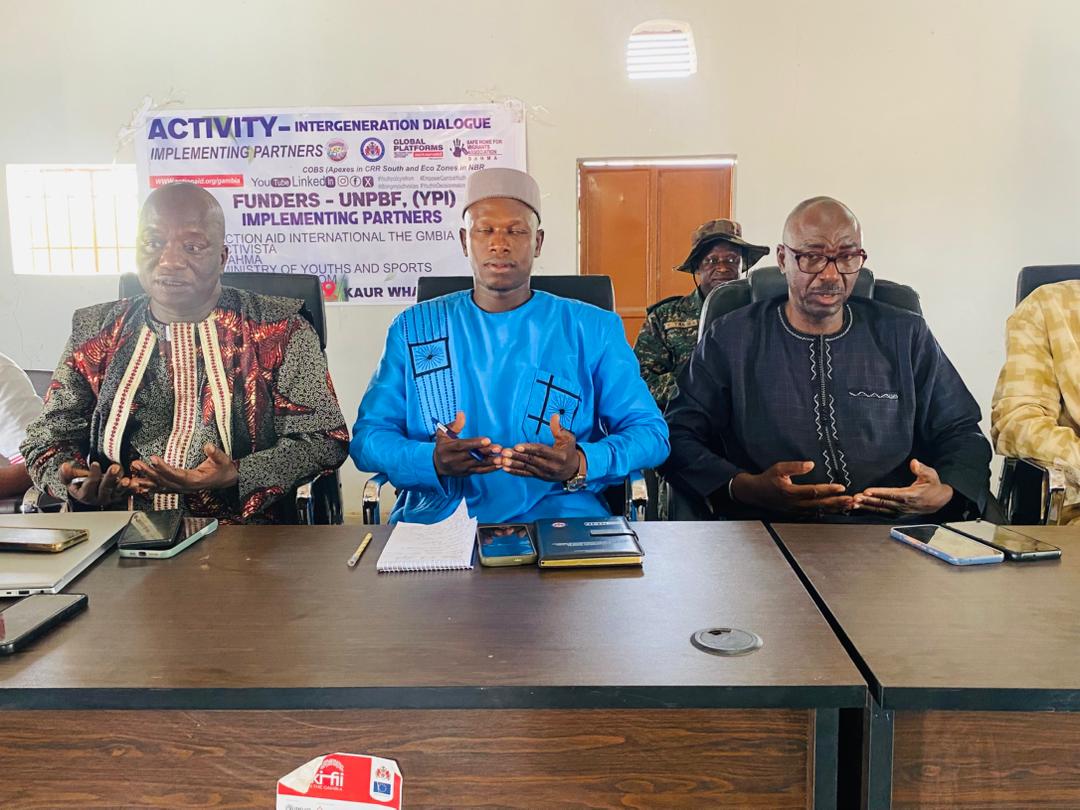
Actionaid International, The Gambia (AAITG) has successfully organized an Intergenerational Dialogue on Youth Inclusion in Decision-Making Structures. The event, held in Kaur, Central River Region (CRR), was conducted under the Youth Promotion Initiative (YPI), which the United Nations Peacebuilding Fund funds.
The dialogue sought to promote meaningful youth participation in governance processes while fostering stronger collaboration between young people, traditional leaders, community elders, and duty bearers. It brought together a diverse mix of stakeholders, including young women and men, community leaders, local government representatives, civil society actors, and development partners. Participants described the gathering as a safe and inclusive platform for candid discussions on barriers hindering youth involvement and practical ways to enhance intergenerational cooperation.
Lady Councilor for Lower Salloum, Mairam Sowe, urged women and youth—who make up the majority in communities across CRR—to actively engage in local government affairs. “I am calling on every youth to participate in this dialogue as every point raised will be noted and addressed,” she said.
Discussions centered on persistent challenges, including limited youth representation in local governance bodies, socio-cultural norms that often sideline young voices, inadequate access to information, and insufficient capacity-building opportunities. Young participants stressed the need for deliberate policies and community mechanisms that treat youth as equal partners in development rather than mere beneficiaries.
Abdoulie Jawara, Youth Chairman for the Central River Region, highlighted the importance of the dialogue and encouraged youths to maintain discipline throughout the session.
The event also spotlighted success stories where youth engagement has driven community development, peacebuilding, and greater accountability.
Central River Region Governor Ousman Bah acknowledged the changing role of young people in society.
He expressed a strong commitment to creating inclusive spaces for youth participation while safeguarding cultural values.
“This mutual understanding will strengthen trust and establish the foundation for sustainable intergenerational collaboration,” Governor Bah stated.
Chairman of the Kuntaur Area Council, Saikou Jawara, reaffirmed his council’s dedication to welcoming youth into decision-making processes. “This dialogue is for you, the youths; we expect you to take part and represent your fellow youth from your respective communities well,” he told participants.
By the end of the dialogue, stakeholders reached consensus on several practical recommendations. These include establishing youth representation in community decision-making bodies, rolling out continuous civic education programs, introducing mentorship initiatives between elders and youth, and enhancing collaboration between local authorities and youth-led structures.
ActionAid International, The Gambia, reaffirmed its commitment to supporting youth-led advocacy, capacity building, and policy influence at both local and national levels through the ongoing YPI project.
Overall, the intergenerational dialogue has boosted awareness, promoted shared ownership, and paved the way for collective action toward greater youth inclusion in CRR. The outcomes align with national development priorities and ActionAid’s rights-based programming approach, marking a positive step toward more inclusive and sustainable governance in the region.