Message from Dr Lang Fafa Dampha, Executive Director of the Pan-African Centre for Cultures and Languages (PACCL), Calls for Greater Action from African Nations to Empower Women on the Occasion of African Women’s Day, 31 July 2025
On African Women’s Day, we come together to honour the enduring legacy, resilience and brilliance of African women who, for generations, have shaped the cultural soul of our continent. Their contributions to the preservation and advancement of African cultures and languages are both profound and indispensable, yet too often go unrecognised. Today is not only a day of celebration. It is a moment of reflection, recognition and a collective call to action.
African women are not merely carriers of tradition. They are the heartbeat of our heritage. Across time and geography, they have safeguarded oral histories, nurtured indigenous knowledge systems and passed down the languages that form the foundation of our identity. From rural homesteads to urban cultural institutions, women have held the line between erasure and remembrance, between survival and revival. Long before colonial borders divided our communities, African women served as the living libraries of our civilisations. Through oral tradition, they preserved wisdom, ensured intergenerational knowledge transfer and grounded our societies in meaning. They have been the custodians of memory, the interpreters of history and the stewards of cultural continuity.
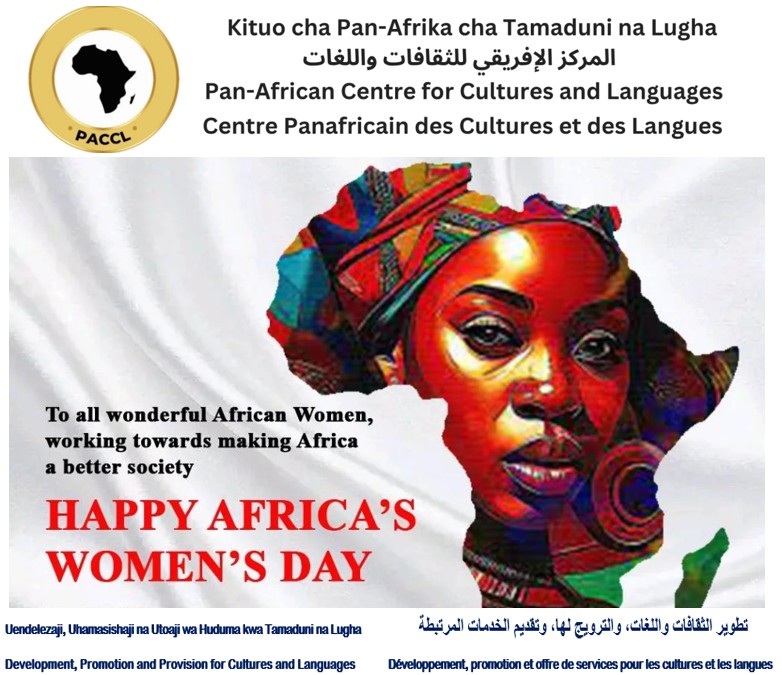
In rural villages, grandmothers teach folk songs that encode moral teachings and ancestral stories. In cities, women scholars decolonise education by reclaiming narratives erased by colonial systems. These women form the bridge between what was and what must be.
When a mother sings a lullaby in Yoruba, she is doing more than soothing her child, she is transmitting language, memory and identity. When a market trader negotiates in Swahili, she is affirming the everyday power of African languages. When a poet reclaims Amazigh identity through verse, she is challenging centuries of marginalisation. When a Mandinka woman sings while working in the rice fields, her melody carries the weight of history and the strength of survival. And when Wolof, Fula or Sarahule women gather their children to narrate folktales, they are preserving ancestral wisdom, cultural worldviews and social values. These women are not simply communicating. They are resisting. Their voices are instruments of cultural sovereignty, ensuring that African languages and traditions continue to live, evolve and empower.
African women have long stood at the frontlines of struggle, resisting colonialism, patriarchy and the continued marginalisation of indigenous cultures. They have fought for linguistic justice, challenging policies that privilege colonial languages over African mother tongues in education, governance and media. They have revived endangered traditions through music, dance, storytelling and increasingly through digital platforms. Economically, they have sustained community-based industries deeply rooted in cultural heritage, from shea butter cooperatives in Ghana to handwoven textiles in Nigeria.
Yet their labour often goes unseen. The very women who teach children their first words in languages such as Arabic, Cinyanja, Ewe, Fang-Bety, Fulfulde, Hausa, Igbo, IsiZulu, Kikongo, Kikuyu, Kiswahili, Lingala, Malagasy, Mandinka, Sarahuleh, Setswana, Somali, Tazight, Wolof, Yoruba…, are often excluded from national language policy discussions. African Women’s Day compels us to confront this invisibility and ask: how much longer will their vital contributions be overlooked?
True liberation is impossible without the visible participation and leadership of African women. Across the continent and the diaspora, they continue to lead with distinction, vision and transformative impact. As we mark this day, we not only celebrate cultural bearers and community leaders but also honour the trailblazers in academia, governance, science, the arts and human rights who are actively shaping Africa’s present and future.
In academia, figures such as Professor Amina Mama and Dr Nkiru Nzegwu are pioneering African feminist thought through intellectual frameworks rooted in African realities. At the African Union Commission, Mrs Amina El Fadil provides critical leadership in health, humanitarian affairs and social development, demonstrating how institutional excellence can drive progress on the continent. In the realm of finance, Mrs Edith Akorfa Lumor, Director of Finance at the African Union, is advancing fiscal accountability and addressing the continent’s vulnerability to illicit financial flows. Her strategic oversight supports key structures like Africa CDC, where financial sustainability is essential for meeting Africa’s public health and development goals.
In the arts, women such as Njideka Akunyili Crosby and Wanuri Kahiu are reshaping global narratives through visual and cinematic storytelling. Gambian artist Sona Jobarteh, the first female Kora virtuoso, has broken centuries-old gender norms in music, exemplifying both cultural mastery and gender defiance in one of West Africa’s most revered musical traditions.
African women are also leading boldly in human rights advocacy. Fatou Jagne Senghore’s work in defending civil liberties and justice has earned her respect across the continent. The legacy of Mrs Louise Njie, as the first woman to serve as a cabinet minister in The Gambia, continues to inspire generations of African women in politics and leadership.
Mrs Kodou Alieu Jeng, a Telecom Engineer at Africell and Founder and CEO of WiSTEM Gambia, has transformed opportunities for young girls in science and technology. Her visionary leadership has earned her prestigious recognition from UNESCO and the African Academy of Languages (ACALAN) of the African Union. She now serves as a key member of ACALAN’s Continental Coordinating Committee for African Languages Week, where she champions the integration of STEM and indigenous knowledge systems.
Similarly, Mrs. Cany Jobe, Director of Exploration and Production at the Gambia National Petroleum Corporation (GNPC), brings over 14 years of expertise in the energy sector. A distinguished petroleum engineer and project management specialist, she has worked across multiple countries, driving innovation in Africa’s energy landscape. Her advocacy for women in STEM has cemented her reputation as one of Africa’s most inspiring female leaders in the energy industry.
These remarkable women are not just excelling in their fields, they are opening doors for future generations, proving that African women belong at the forefront of scientific and technological advancement.
Institutional leadership within the African Union also owes much to the contributions of women like Mrs Angela Martins, Ag Director of Social Development, Culture and Sports, whose commitment has significantly improved programming and operational impact. We further recognise the tireless service of Mrs Aster Abebe, retired Human Resources Secretary, who played a crucial role in enhancing human resources operations, particularly in overseeing staff appraisals at the Department of Health and Humanitarian Affairs.
These women, along with countless others, educators, scientists, artists, administrators and activists, embody the spirit of African Women’s Day. They are our modern-day heroines. They redefine what leadership looks like, and they remind us that the transformation of Africa is inseparable from the empowerment of its women.
Their stories are not only worth celebrating. They are worth replicating. They dismantle stereotypes, open doors and inspire the next generation. As we reflect on the meaning of this day, may their courage and brilliance remind us that when African women rise, the continent rises with them.
At the Pan-African Centre for Cultures and Languages, we affirm that decolonisation cannot be achieved without women’s leadership at its core. We are committed to funding women-led initiatives in cultural heritage, oral history and language revitalisation. We champion inclusive, gender-aware language policies that reflect the realities of African women and girls. We are building safe and creative spaces where women can speak, teach, lead and thrive without fear of erasure or exclusion.
But celebration alone is not enough. We call upon governments, institutions and communities to act. Invest in women’s knowledge. Support female historians, linguists, educators and cultural practitioners. Amplify women’s voices in policymaking, literature and the arts. Protect women’s spaces, both rural and urban, where identity, memory and language are preserved and shared.
African women are not relics of the past. They are architects of the future. They are planting seeds of cultural renewal and justice in the cracks left behind by colonialism. They are teaching the next generation to speak with pride, remember with purpose and resist with wisdom.
At the Pan-African Centre for Cultures and Languages, we reaffirm our unwavering commitment to centring women in all our cultural and linguistic work. Our vision of a true African cultural renaissance rests on the full inclusion, leadership and genius of African women. Today, we do not merely honour them, we walk beside them, we learn from them and we build with them.
Because the soul of Africa beats in her women. And when African women thrive, Africa thrives.
In solidarity and respect,
Dr Lang Fafa Dampha
Executive Director
Pan-African Centre for Cultures and Languages (PACCL)