By Alieu Ceesay
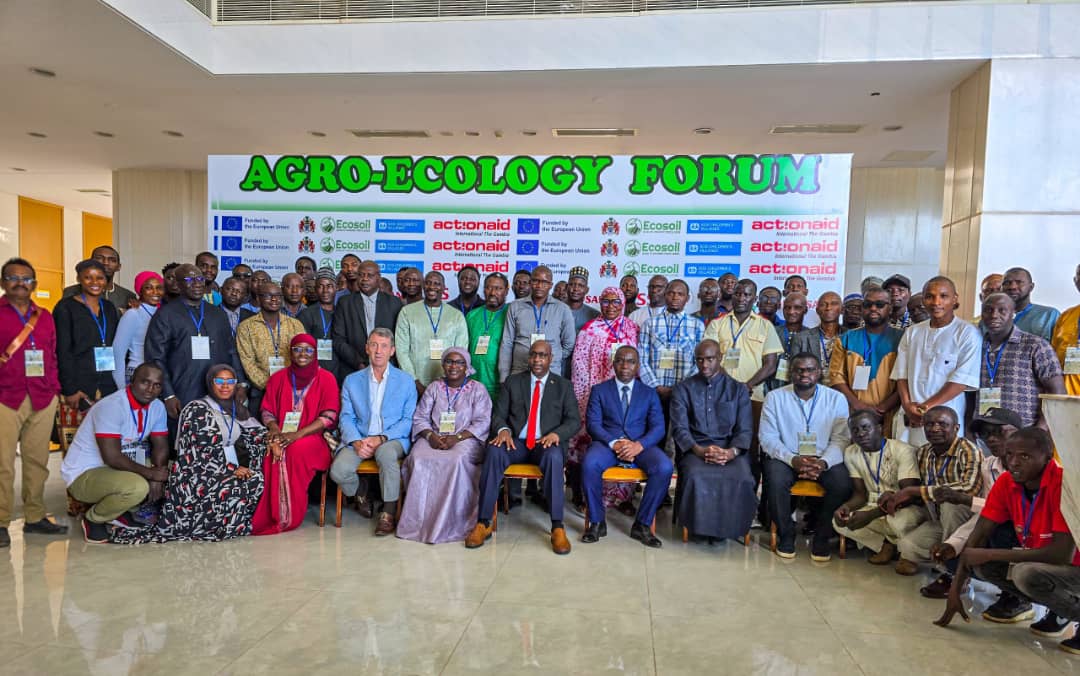
Ndella Faye Colley, Executive Director of ActionAid International, The Gambia, called on the Gambian government to integrate agroecology into national agricultural policies and extension services during the Agroecology Forum held under the theme “Transforming Agriculture, Building Resilience and Restoring Ecosystems.” The event, attended by National Assembly members and dignitaries, highlighted agroecology’s potential to revolutionize farming in The Gambia.
Colley emphasized that, with proper training, agroecology can empower local farmers to produce compost and implement natural pest control, boosting yields and economic gains.
She noted that agroecology enhances soil health, strengthens food sovereignty, and reduces dependency on costly external inputs, offering a sustainable solution to climate change challenges. “We are requesting more attention to integrate agroecology into national agricultural policies and extension services,” Colley urged.
She also advocated for investments in compost and organic fertilizer infrastructure in rural communities, alongside increased funding for agroecological education and knowledge-sharing events. “Everything we do generates knowledge and lessons to be learned,” she added.
Highlighting agroecology’s alignment with the Sustainable Development Goals, Colley linked it to eradicating hunger, reducing poverty, promoting gender equality, and advancing climate action. She further called for market incentives, such as subsidizing organic fertilizer costs, to encourage organic production. According to sources, the government allocated $393 million in 2024 and $937 million in 2025 for chemical fertilizers. Colley proposed redirecting 30% of these funds to organic fertilizer investments to provide farmers with more sustainable options.
Momarta Taal, Executive Director of EcoSoil, echoed Colley’s sentiments, stressing the collective responsibility to protect soil for future generations. “It is a mission to safeguard our soils for our children,” Taal declared, emphasizing soil health as a cornerstone of sustainable agriculture.
Agriculture Minister Demba Sabally reaffirmed the government’s commitment to transforming the agricultural sector into one that is resilient, inclusive, and environmentally sustainable. “The government of The Gambia recognizes agriculture as the cornerstone of our economic livelihood and food security,” Sabally stated, pledging to promote self-sufficiency through innovative practices.
Jean Pierre Kouamin, Country Director of SOS Children’s Village, also expressed solidarity with the push for agroecology, underscoring its role in fostering sustainable development. The forum brought together stakeholders to discuss actionable steps toward a greener agricultural future.
The event underscored the urgent need for policy reforms to support agroecology, with speakers highlighting its potential to address climate challenges, improve livelihoods, and ensure food security. As The Gambia faces increasing environmental pressures, integrating agroecology into national strategies could mark a significant step toward a sustainable and resilient agricultural sector.