By Sainabou Sambou
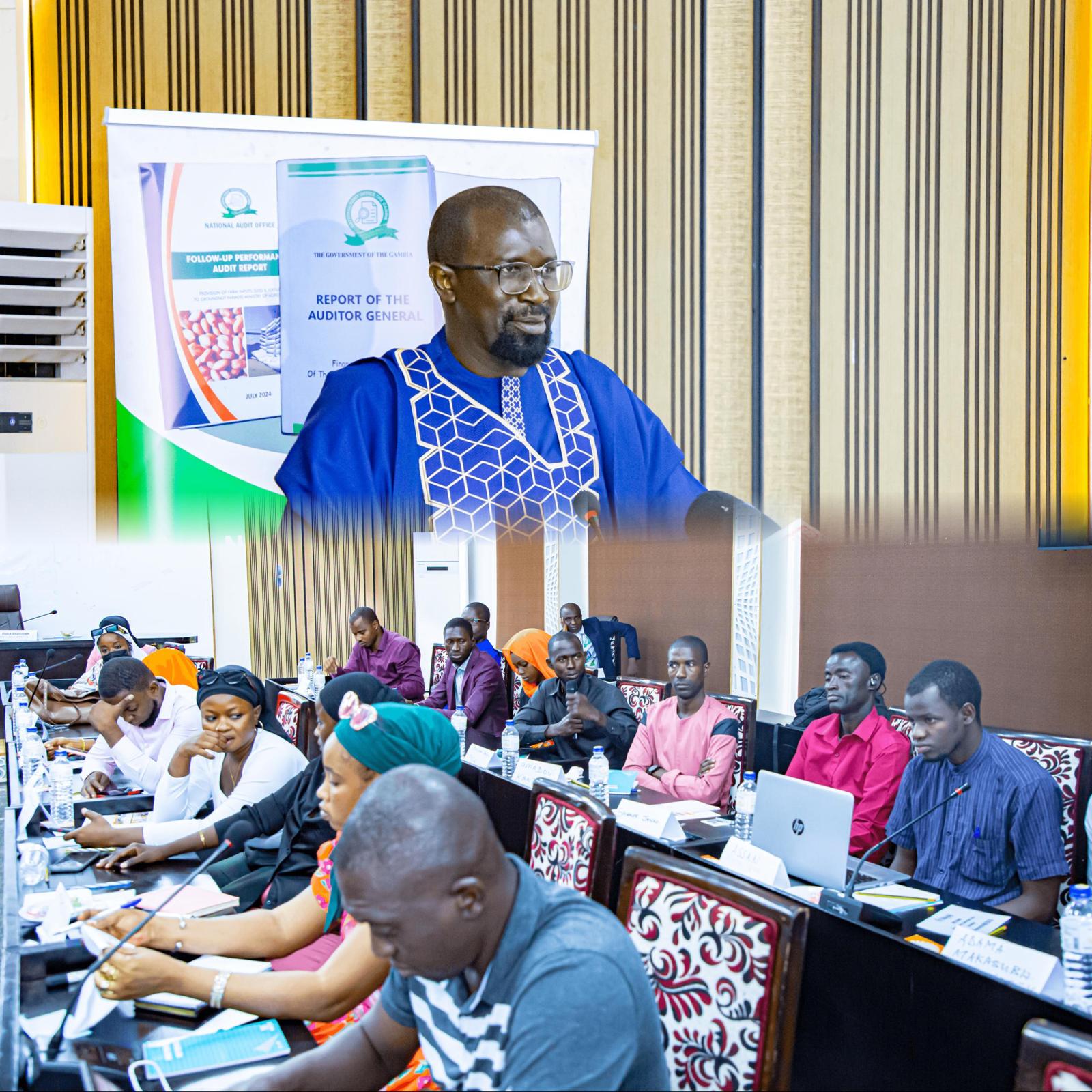
Auditor General Modou Ceesay opened a two-day Annual Engagement with Media Houses on July 30, 2025, calling for stronger collaboration between the National Audit Office (NAO) and journalists to enhance transparency and accountability in public service. Held at a local hotel in Kololi, the forum brought together media professionals from television, radio, community radio networks, newspapers, online platforms, and representatives of the Gambia Press Union, alongside NAO staff and management.
In his opening remarks, Ceesay described the media as vital partners in the NAO’s mission, expressing gratitude for their ongoing interest in audit matters. “This event is part of our annual initiative to engage with targeted stakeholders, aimed at enhancing collaboration and increasing the impact of our audits,” he said. “We specifically want to highlight the role of stakeholders, particularly the media, in the work we do at the National Audit Office.”
As The Gambia’s Supreme Audit Institution (SAI), the NAO holds a constitutional mandate to oversee government accountability and ensure legislative scrutiny of public resource use. Ceesay emphasized the critical role SAIs play in democratic governance, forming an essential pillar of the accountability system. “Our responsibility to monitor government accounts, operations, and performance means we must work with citizens to promote public scrutiny,” he stated.
Citing Principle 12 of the International Organisation of Supreme Audit Institutions (INTOSAI), Ceesay underscored the value of SAIs in improving lives through increased accountability and transparency. However, he noted that these benefits depend on effective communication with the public. “That’s where the media plays a crucial role,” he said. “Often referred to as the fourth arm of government, the media remains the main source of information for citizens. It can raise awareness and help us reach a wider audience.”
Ceesay highlighted the NAO’s commitment to regular media engagements to discuss its activities and audit products, noting that prior interactions have already improved cooperation. “We are hopeful that this two-day engagement will help deepen your understanding of our mandate, audit processes, reporting structures, and our mutual expectations,” he told participants. He encouraged journalists to ask questions, seek clarification, and gain a clearer understanding of the NAO’s role and operations.
The Auditor General expressed his desire for journalists to leverage the knowledge gained during the forum to report more effectively on audit findings, making them accessible and relevant to the public. “Let this event mark the continuation of a mutually beneficial partnership between the NAO and the media community,” Ceesay said, inviting feedback on strengthening future collaborations.
He stressed that accountability and transparency are cornerstones of good governance, with the media playing a powerful role in amplifying NAO findings, highlighting critical issues, and tracking the implementation of audit recommendations. “The media can help us ensure that our work resonates with citizens and drives meaningful change,” Ceesay added.
The engagement, which runs through July 31, features interactive sessions, capacity-building modules on interpreting audit reports, and discussions on responsible audit reporting practices. These activities aim to equip journalists with the tools to accurately convey complex audit information to the public, fostering greater awareness and scrutiny of government operations.
The forum reflects the NAO’s ongoing efforts to bridge the gap between audit institutions and the public through strategic partnerships. By empowering journalists to report on audit findings effectively, the NAO seeks to strengthen democratic oversight and ensure the responsible management of public resources. As the event progresses, participants are expected to explore practical ways to sustain this collaboration, ensuring that audit reporting catalyzes improved governance in The Gambia.