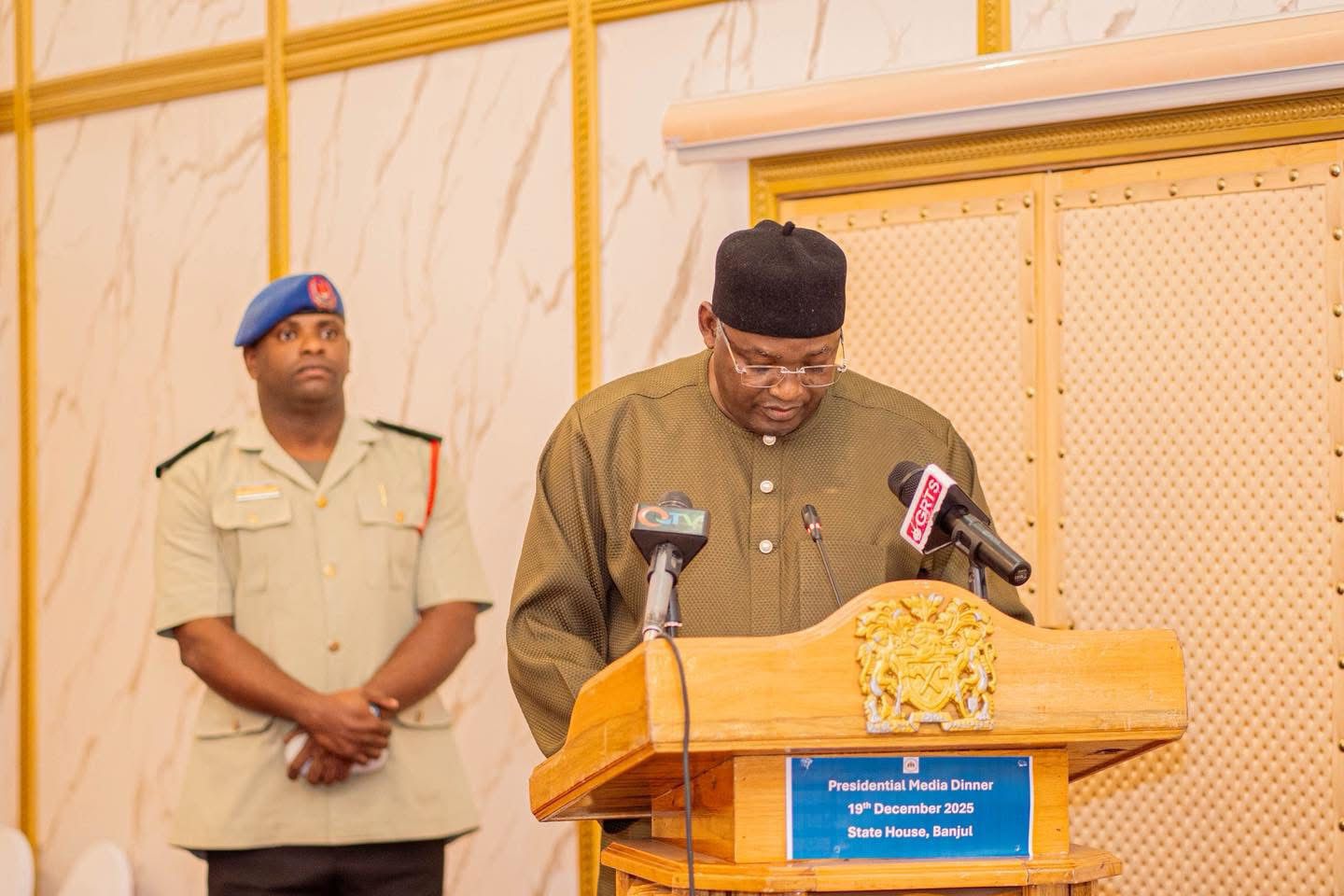
President Adama Barrow reaffirmed his administration’s commitment to a free and fearless media environment during the annual Presidential Media Dinner held at State House on Friday evening.
The event brought together media chiefs, editors, and journalists from print, broadcast, and online outlets, offering a rare platform for direct dialogue between the presidency and the press corps on issues shaping national development and media practice.
In her opening remarks, Director of Press and Public Relations Amie Bojang Sissoho underscored that both the government and the media share the common goal of national progress, even if their priorities and methods differ. “That difference should not make us enemies,” she said.
Minister of Information, Media and Broadcasting Services, Dr Ismaila Ceesay, described the dinner as a clear demonstration of President Barrow’s determination to reset and strengthen relations with the media since the 2017 democratic transition.
President Barrow urged journalists to adopt a more positive, vibrant approach to their reporting, arguing that international news agencies often focus on wars and conflicts, while Gambian media coverage remains dominated by political stories and commentaries. He attributed this to the country’s relative peace, security, and democratic stability.
In his address on behalf of the Gambia Press Union (GPU), board member Alieu Ceesay praised the government for significant strides in media relations over the past eight years. He highlighted the passage of the Access to Information Act 2021 – a bill initiated by the GPU – and the recent allocation of land for the long-awaited National Press Bantaba, a facility that will house the GPU Secretariat, the Media Academy for Journalism and Communication (MAJaC), affiliates, and the Media Council of The Gambia.
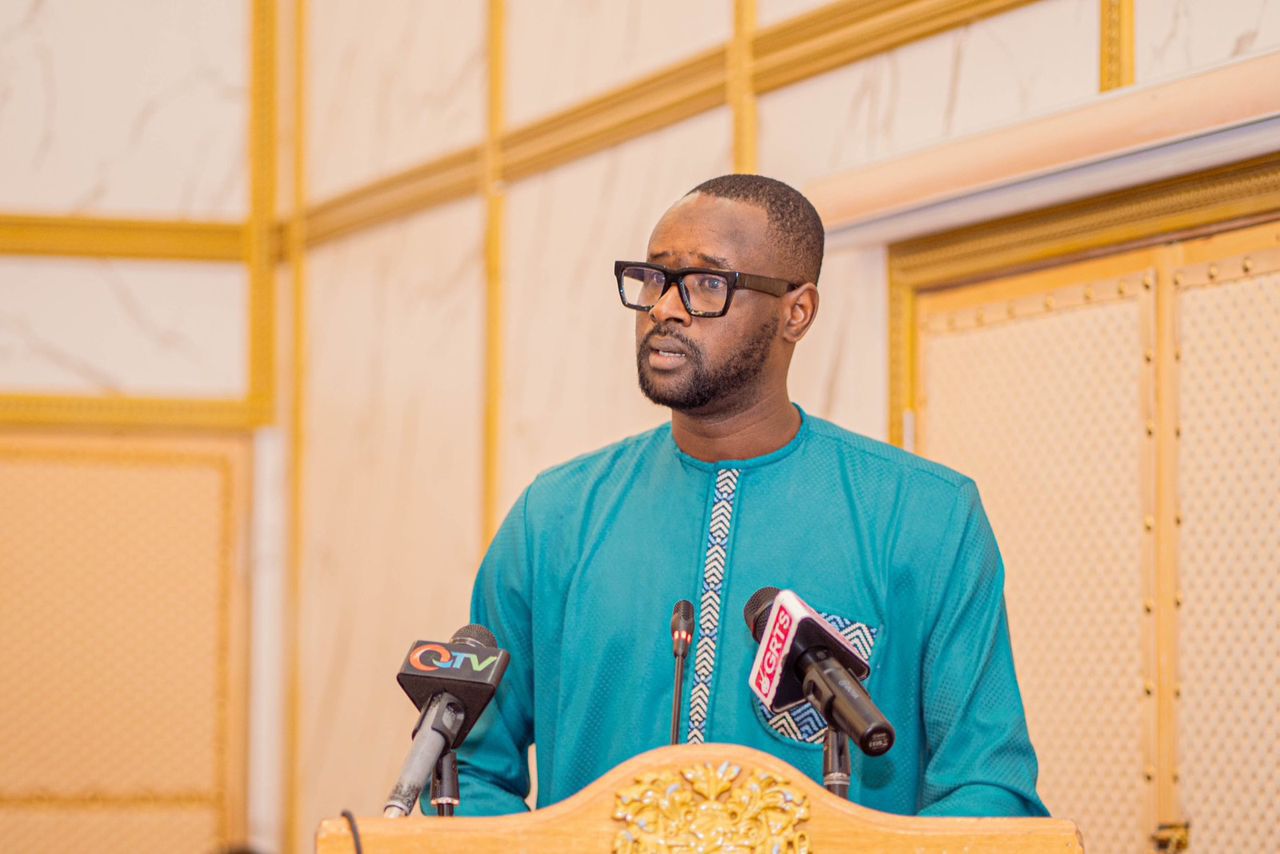
Despite these gains, Ceesay expressed concern over recent setbacks. He noted that The Gambia retained its 58th position in the 2025 World Press Freedom Index but slipped from 10th to 11th in Africa, citing economic pressures on media houses, high taxes, the absence of journalist safety mechanisms, incomplete implementation of the Access to Information law, and restrictive provisions in existing media legislation.
The GPU also strongly opposed the proposed Cybercrime Bill 2023, warning that its restrictive clauses could further undermine press freedom if enacted in its current form.
Ceesay reiterated the Union’s commitment to national peace and stability through ongoing training in conflict-sensitive reporting, hate speech prevention, fact-checking, and ethical journalism, and appealed for sustained government support to advance media development.
The dinner ended with a call to continue collaborating to build a stronger, more independent, and responsible media sector in The Gambia.