By Alieu Ceesay
Hundreds of clearing agents brought operations to a standstill at the bustling Port of Banjul on Tuesday as the Association of Custom Clearing and Forwarding Agencies (ACCFA) began an indefinite sit-down strike to protest the introduction of new charges linked to the government’s E-Tracking system.
The agents, whose daily income depends on the swift clearance and movement of imported containers, say the new tariffs imposed by the Ministry of Finance and implemented by the Gambia Revenue Authority (GRA) have dramatically increased costs, threatening their livelihoods and the competitiveness of The Gambia’s shipping industry.
According to ACCFA officials, the E-Tracking system — originally designed to monitor containers and transit cargo in real time — now comes with additional fees that were never previously charged. Under the new structure, a 44-foot container attracts a fee of $170, while a 24-foot container is charged $80, along with other related costs passed on to shipping lines and ultimately to importers and consumers.
Deputy Secretary General Lamin Bojang, addressing fellow agents at the port, described the charges as “not genuine” and urged the government to immediately reverse them.
“We are here to tell the people that the payment is not genuine, so that the government can understand, the relevant authorities can understand,” Bojang said. “They don’t have the understanding. We are not protesting because we are against whatever. But we want to bring sanity to the job.”
The association warned that the extra financial burden could drive importers to divert shipments to neighbouring Senegal, where clearance is reportedly cheaper and more efficient. Such a shift, they fear, would severely damage Banjul Port’s traffic and wipe out jobs in an industry that supports approximately 2,000 workers.
Bojang highlighted practical frustrations with the new system, including long queues, poor network connectivity, and delays waiting for confirmations from overseas servers.
“The ETN — we find it very difficult to go there and queue to pay and wait for confirmation from the UK,” he explained. “The system is not good. The network is bad. You’ll be sitting there waiting for them. They said we are waiting for the confirmation. This confusion is totally not from Gambia.”
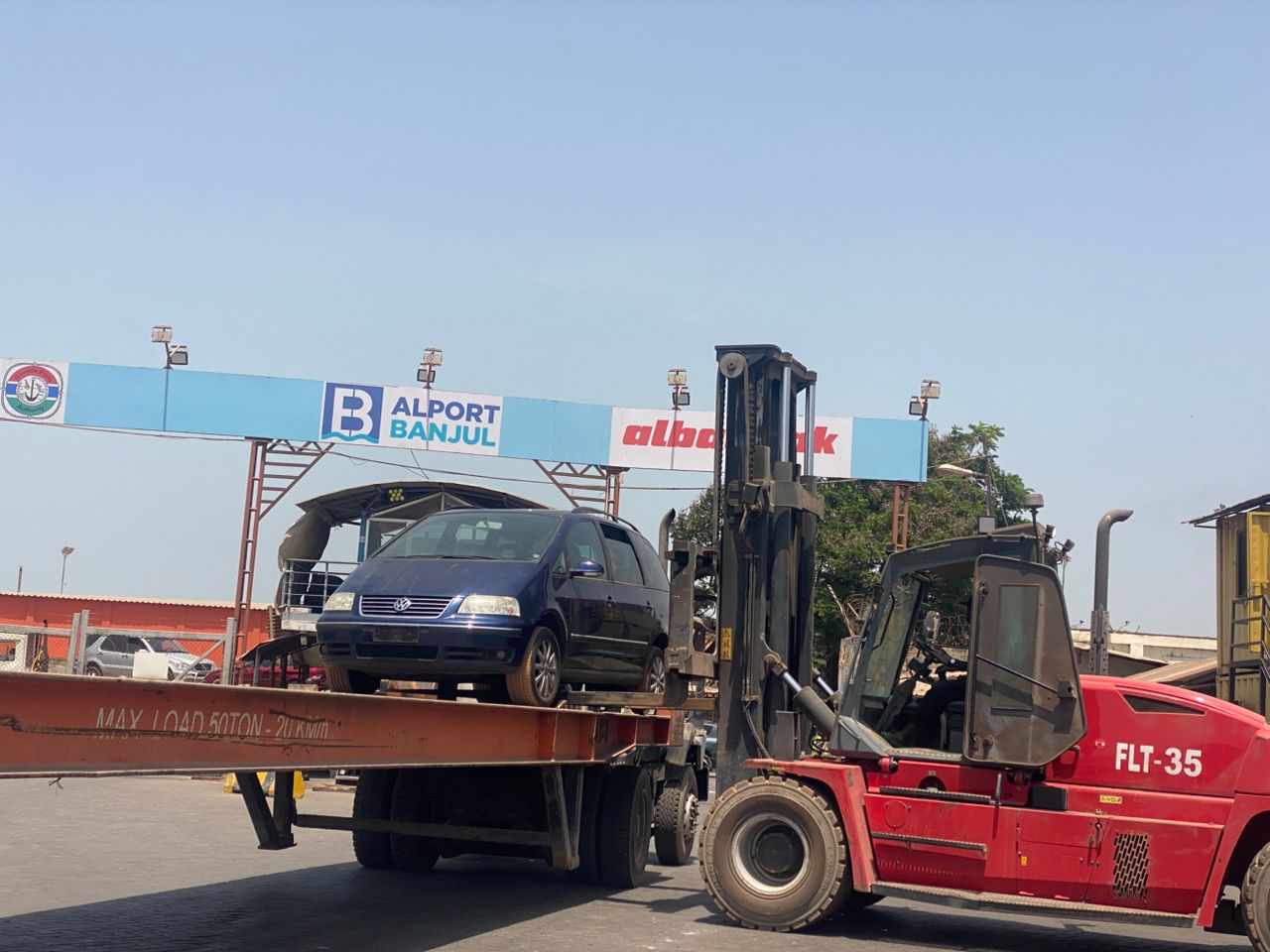
The strike has halted container clearance activities at the port’s main terminals, including the Turkish-built ALPORT facility, creating immediate uncertainty for importers, shipping companies, and traders who depend on the timely delivery of goods.
ACCFA leaders are demanding urgent clarification and engagement from the Ministry of Finance and GRA on the justification, implementation, and overall impact of the new tariff regime. No official response from the government had been received at the time of going to press.
As the sit-down protest continues with no timeline for resolution, the association insists it remains open to dialogue but will not resume normal operations until the “unfair” charges are addressed.
The development comes amid broader efforts by Gambian authorities to modernise customs through digital platforms such as the National Single Window and E-Tracking, initiatives previously praised for improving transparency and reducing smuggling. However, stakeholders now argue that the accompanying fees risk undermining those very goals by harming local businesses and diverting trade away from Banjul.