By: Mustapha Manneh
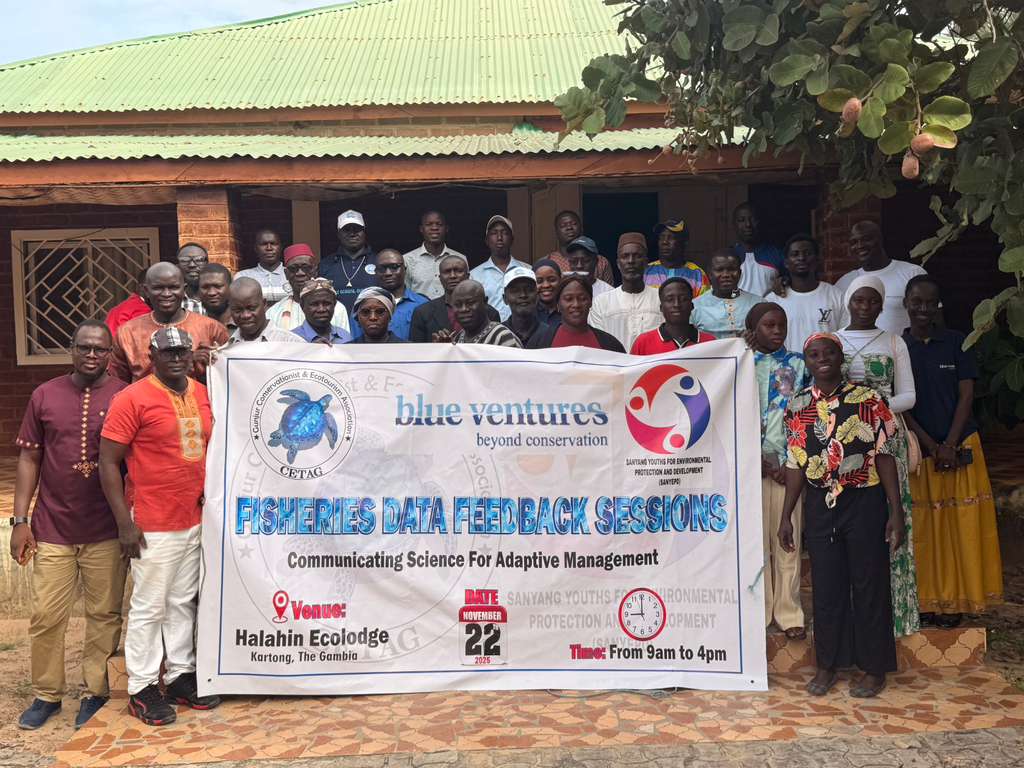
A packed room at Halahin Ecolodge erupted in applause on Saturday as coastal fishers, women processors, and youth leaders saw, for the first time, nine months of their own fisheries data transformed into clear charts and maps on a new digital dashboard.
The event, organised by Blue Ventures in partnership with Concerned Coastal Communities Action Group (CETAG) and Concern Universal’s Sustainable Action for Nature and Youth Empowerment and Poverty Alleviation and Development (SANYEPD), presented early findings from an ambitious community-led monitoring programme that began in early 2025.
The numbers told a sobering story: significant declines in landings of key species such as Bonga shad and sardinella – small pelagic fish that millions of Gambians depend on for food and income.
“This is a monumental achievement for CETAG and SANYEPD,” declared Ahmed Manjang, CETAG Coordinator. “Being the first initiative of its kind in the entire subregion makes it even more remarkable. This data will significantly strengthen our advocacy efforts and, I believe, play a crucial role in guiding national fisheries policies.”
Over 60 participants, including representatives from community-based organisations such as Their Voice Must Be Heard, spent the day exploring the newly launched Community Fisheries Dashboard. This interactive online tool turns raw catch and effort records into easy-to-understand trends.
Through hands-on exercises, fishers learned how to track changes in their own landing sites, identify overfished species, and use evidence when negotiating with government or buyers.
“We are pleased to work shoulder-to-shoulder with communities and local partners to build strong, data-driven foundations for sustainable fisheries,” said Awa Rane Ndoye, Blue Ventures’ Head of Technical Capacity for West Africa. “Today reinforces that real change happens through collaboration and shared learning.”
The workshop closed with participants agreeing on concrete recommendations to improve co-management of fisheries and protect vital mangrove habitats that serve as nursery grounds for many commercial species.
Organisers say the Kartong session marks only the beginning. With the dashboard now publicly accessible and training ongoing, Gambia’s coastal communities are, for the first time, armed with the evidence they need to shape their own future.