By: Bakary Mankajang
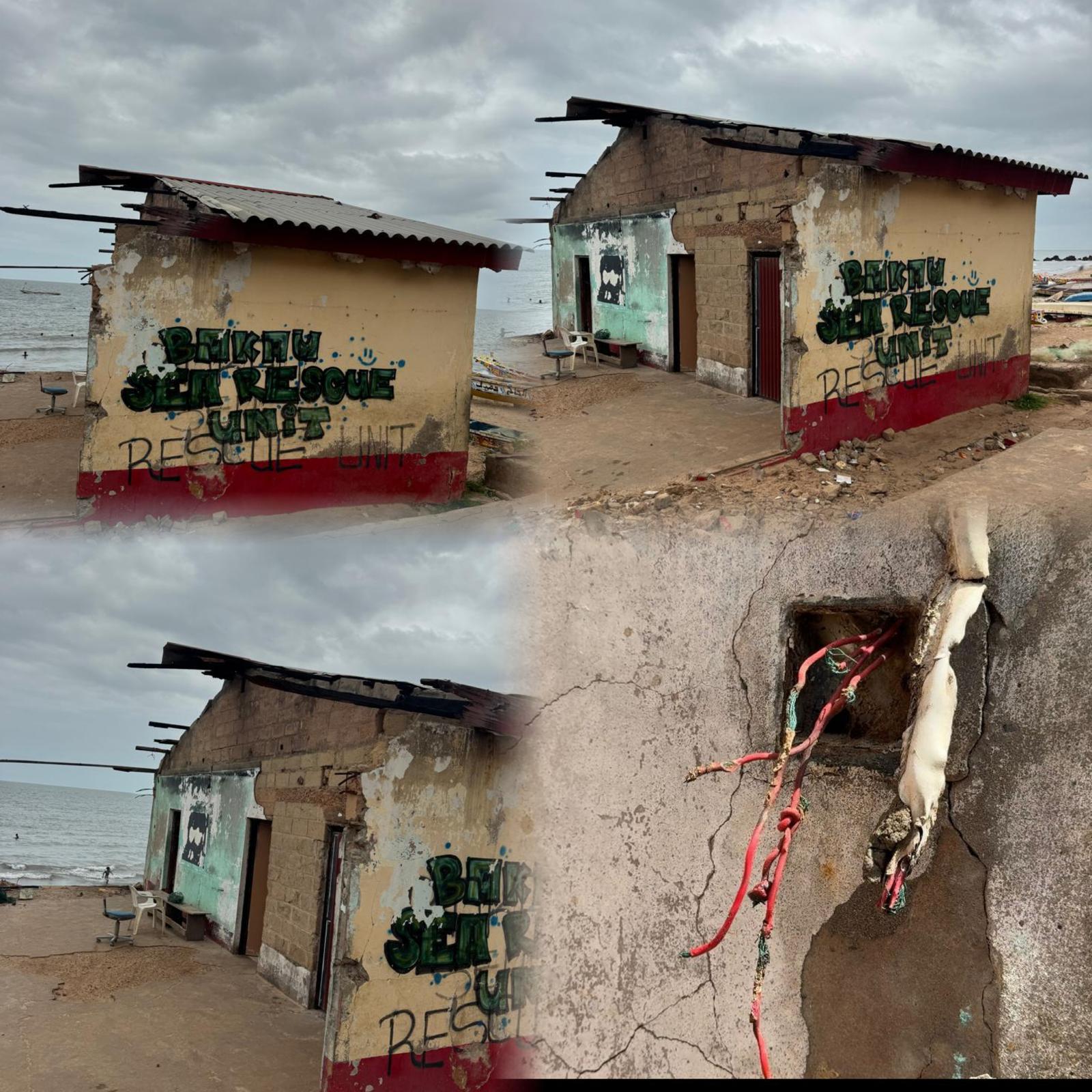
Two years after a devastating fire gutted the Bakau Sea Rescue Unit Building, the critical marine rescue facility remains in disrepair. Officers there operate in hazardous conditions, prompting growing concern among residents and seaside visitors. The once-vital hub for marine rescue operations now stands as a crumbling shell, with cracked walls threatening collapse and no clear timeline for restoration.
The fire, which struck in 2023, forced rescue workers to evacuate the building that served as a base for officers at the Bakau sea landing site. The cause of the blaze remains unknown, and since the incident, the facility has been left abandoned, its deteriorating state undermining the critical work of the rescue unit.
Pa Bojang, a leader of the Bakau sea landing site, emphasized the unit’s essential role in training officers for other rescue units and saving lives at sea. “The building is completely destroyed now, and officers are left vulnerable,” Bojang said, highlighting the dire circumstances faced by the team.
Rescue officers continue to operate under challenging conditions, with the dilapidated facility impeding their ability to provide effective service. Bojang praised the officers’ dedication, who persist despite the lack of proper infrastructure, but stressed that their work is being severely hampered. “The government needs to take action to address this situation,” he urged, echoing the sentiments of many in the community who call for restoring the facility to its former functionality.
Speaking anonymously due to the sensitivity of the issue, an officer underscored the critical nature of the Bakau Sea Rescue Unit, which requires a 24-hour presence to handle emergencies, including nighttime rescues and monitoring migrant boats departing for Europe. The current state of the building, however, makes round-the-clock operations impossible. “The condition of the facility is obstructing our ability to function effectively,” the officer said, noting that the structure is unfit for use. Authorities have repeatedly promised a temporary solution, such as providing an empty container for the officers to use until the facility is rebuilt, but these commitments have yet to materialize. “I believe the authorities should enhance their efforts to resolve the situation,” the officer added.
The lack of communication from officials compounds the community’s frustration. Attempts to obtain information from the department’s Public Relations Officer have been met with unfulfilled promises, leaving residents and rescue workers alike in the dark about the facility’s plans. The Bakau Sea Rescue Unit, once a beacon of hope for those in peril at sea, now stands as a symbol of neglect, with its crumbling walls reflecting the broader challenges faced by the officers who continue to serve despite the odds.
Residents and visitors to the seaside are increasingly vocal in their demands for immediate action to restore the unit to its former glory. The facility’s role in supporting Bakau and other rescue units across the region underscores the urgency of addressing its plight. As the second anniversary of the fire passes, the community waits for tangible progress, hoping that the government will prioritize the restoration of this vital lifeline for maritime safety.