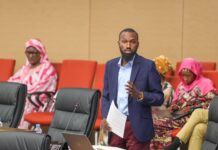
Honorable Bakary K. Badjie, the National Assembly Member for Foni Bintang Karanai, has strongly criticized the ruling party’s majority in Parliament for repeatedly blocking adjournment debates, marking the third consecutive session without one.
Badjie described the move as a “deliberate effort to silence discussion” on pressing national issues, warning that it undermines democracy and hinders the country’s development.
Adjournment debates, Badjie explained, are crucial parliamentary sessions allowing lawmakers to raise constituency concerns and hold government ministers accountable directly. “Many Gambians may not fully understand what an Adjournment Debate is,” he noted. “It is a very important parliamentary session where Members of the National Assembly (NAMs) raise the concerns, challenges, and pressing issues affecting their constituencies and the country at large.”
The lawmaker highlighted that the ruling party, NAMs, has consistently voted against motions for these debates, leveraging their majority to block them. This pattern, he argued, signals the government’s reluctance to address fundamental challenges facing citizens. “When a National Assembly adjourns without debate, it sends a hazardous message that the government is not interested in confronting the challenges Gambians are facing,” Badjie stated.
He pointed to several avoided topics, including a recent 50% salary increase for National Assembly members—approved amid broader economic struggles—while wages for teachers, soldiers, police officers, nurses, and agricultural workers remain stagnant. Badjie also cited the ongoing depreciation of the Dalasi, skyrocketing prices of basic commodities, growing economic hardship, and allegations of widespread corruption in government systems.
“Avoiding debate does not solve problems; it only deepens them,” he warned, accusing some lawmakers of fearing open scrutiny on sensitive matters like unresolved salary and pension bills.
Badjie, known for his outspoken views, called on Gambians to demand greater accountability. “The people of The Gambia must be alerted. We cannot continue to have a National Assembly where members are afraid to speak the truth, afraid to challenge the government, and afraid to stand up for the people who elected them.”
He emphasized that Parliament should be a forum for truth and representation, not silence. “Our democracy depends on it. Our development depends on it. The future of The Gambia depends on it.”
The criticism comes amid ongoing debates over economic pressures, including Dalasi fluctuations and rising living costs, despite government reports of macroeconomic stability and growth projections for 2025. Opposition figures have echoed similar frustrations in recent sessions, accusing the majority of shielding the executive from oversight.