By: Ebrima Mbaye
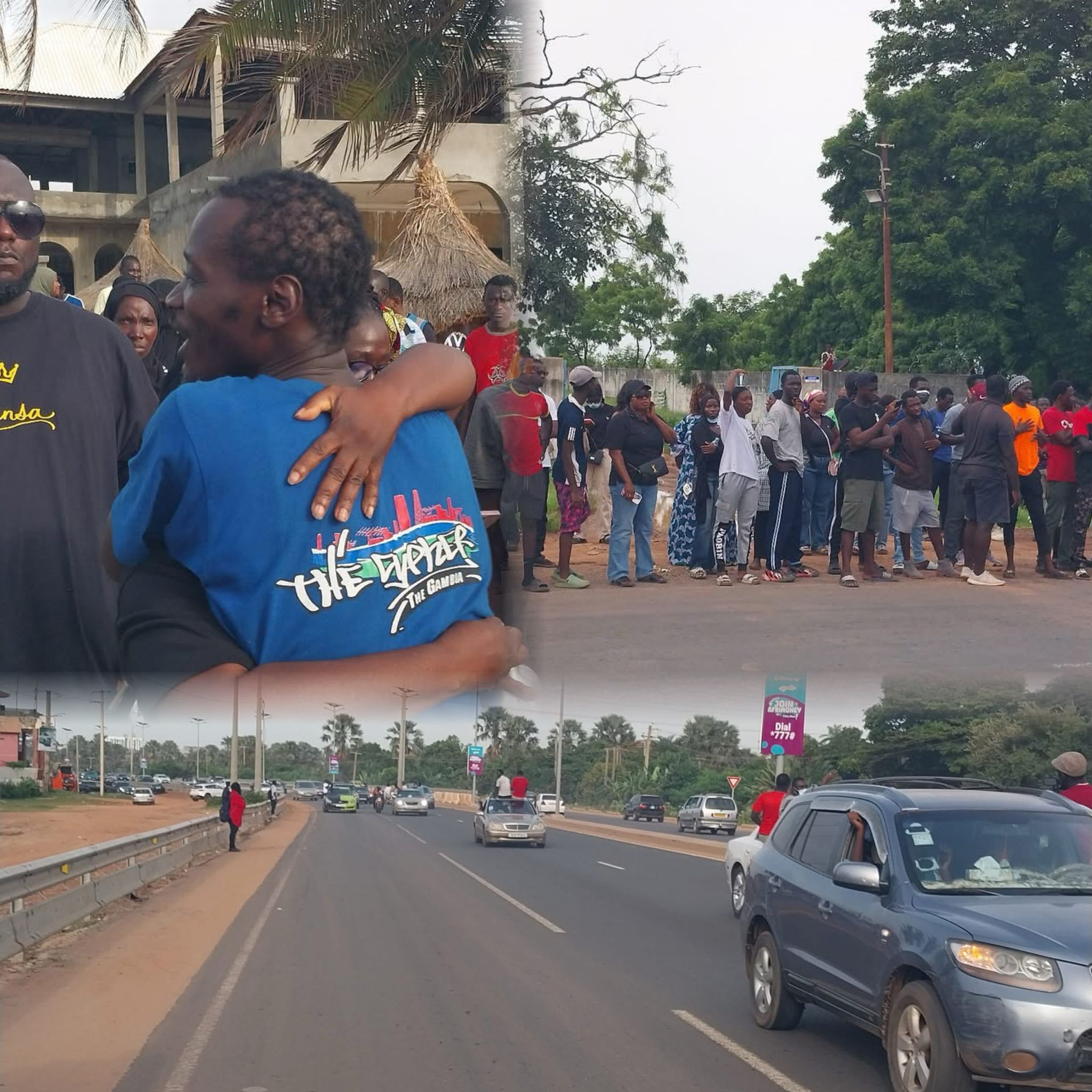
Scenes of jubilation erupted across Banjul and Kanifing on August 27, 2025, as Magistrate Thomas Faud Touray of the Kanifing Magistrates’ Court granted bail to 22 peaceful protesters, who were charged with holding an unlicensed procession. The landmark ruling, delivered after a tense period of detention, prompted scores of young people, including families of the accused, to gather at Mile Central Prisons on the outskirts of the capital to welcome the released protesters. Amid cheers and honking cars, the freed individuals were hailed as heroes, with some describing them as “true patriots” for their stand.
The accused were arraigned on Monday, August 25, 2025, under Section 5(5) of the Public Offences Act, Cap 22:01, Vol 4, Revised Laws of The Gambia, 2009. The prosecution alleged that on August 23, 2025, the group conducted a procession along Kairaba Avenue in Kanifing without a permit from the Inspector General of Police, an act deemed likely to cause a breach of the peace. All 22 pleaded not guilty. The prosecution, while seeking an adjournment, did not oppose bail but noted that the accused had previously rejected police-level bail conditions, demanding unconditional release. The defense urged reasonable bail terms.
Magistrate Touray’s ruling followed a defense motion to expedite the bail decision, advancing the adjournment from September 4 to August 27, 2025. The court weighed whether bail was appropriate, guided by the bailable nature of the offense and legal principles. Key considerations included the severity of the offense, the risk of interference with investigations, the accused’s potential for flight risk, the likelihood of reoffending, and the safety of the accused.
Central to the ruling was the constitutional presumption of innocence under section 24(3)(a) of the 1997 Constitution, which guarantees that every person is presumed innocent until proven guilty. Magistrate Touray emphasized that the prosecution bears the burden of proof, as stipulated in Section 144(2) of the Evidence Act. Established case law further guided the court’s discretion, as there was no evidence suggesting the accused posed a significant risk.
The bail conditions require each accused to post D50,000 (Fifty Thousand Dalasis) with one Gambian surety matching the amount. Sureties must swear an affidavit of means and deposit a valid Gambian Biometric Passport or ID card with the court registrar until the trial concludes. The accused were also ordered to enter a self-recognizance agreement to maintain peace and good behavior, with bail revocation as a penalty for non-compliance.
As the ruling was announced, celebrations spilled into the streets. At Mile Central Prisons, families and supporters greeted the released protesters with emotional embraces and chants of solidarity. Cars honked in Banjul and Kanifing, reflecting widespread public support. Many view the procession as an exercise of free expression, and the bail decision was hailed as a victory for constitutional rights.
As the case heads to trial, it is expected to spotlight ongoing debates about freedom of assembly and the legal framework governing processions in The Gambia. The release of the 22 protesters has ignited hope among their supporters, who see their actions as a courageous stand for justice.