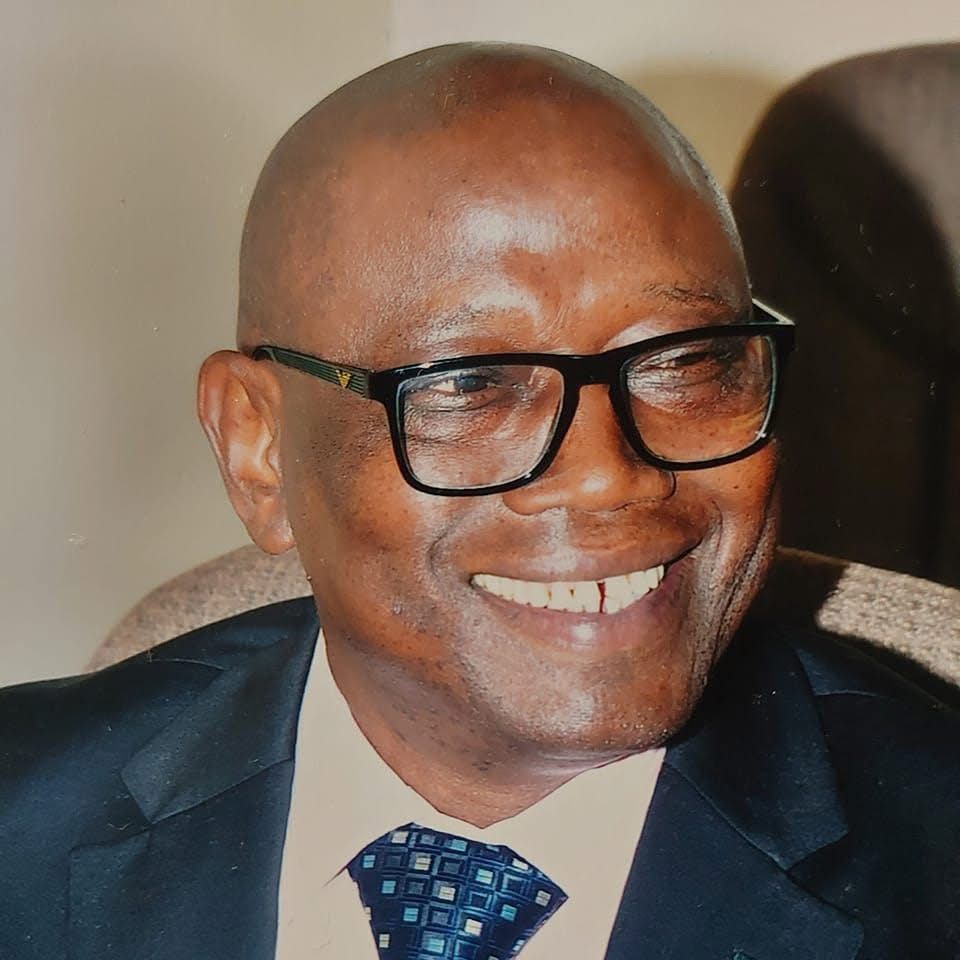
In a poignant open letter, Dr. Baba Jallow, former Executive Secretary of the Truth, Reconciliation and Reparations Commission (TRRC), has called on President Adama Barrow to urgently address a growing crisis sparked by the arrest of peaceful protesters by the Gambia Police Force. The arrests, made in the name of maintaining law and order, have escalated civic discontent into a politically charged situation that threatens national stability, Jallow warns.
The arrests stem from protests against tariffs set by the Public Utilities Regulatory Authority (PURA), which citizens expressed through peaceful demonstrations. Jallow argues that the law enforced by the police, inherited from the repressive regime of former President Yahya Jammeh, is a “bad law” that stifles democratic freedoms. “It is a law that has no place in our current democratic dispensation,” Jallow writes, noting that its enforcement has transformed legitimate civic action into a national security concern. He cites historical examples, including Senegal under Macky Sall and Tunisia under Ben Ali, where state crackdowns on protests led to the collapse of the government.
Jallow emphasizes that democratic legitimacy hinges on guaranteeing rights, such as freedom of assembly and expression, not just holding elections or showcasing development projects. He warns that suppressing peaceful protests does not eliminate dissent but amplifies it, fostering resentment and potentially destabilizing the nation. “Arresting peaceful protesters is never a wise thing to do,” Jallow asserts, pointing to the crowds showing solidarity with the detained and the hunger strikes undertaken by some protesters as evidence of escalating tensions.
The letter highlights that the police could have ensured the protests remained orderly, allowing citizens to voice their grievances and disperse peacefully. Instead, arrests have criminalized legitimate activity, pushing discontent into volatile channels. Jallow notes that sending protesters to Mile Two Remand Wing serves no constructive purpose and risks further inflaming the situation. “When a government reacts to peaceful protests with repression, it is projecting weakness and insecurity, not strength,” he writes.
Drawing parallels to Jammeh’s downfall, Jallow cautions Barrow against repeating the mistakes of his predecessor, whose repression fueled his ouster. He urges the president to recognize peaceful protests as a democratic “safety valve” that allows citizens to hold institutions accountable without resorting to violence. Suppressing such protests, Jallow argues, erodes public trust, weakens government legitimacy, and deepens social polarization, posing a “highly dangerous potential for national instability.”
Jallow’s letter concludes with a direct appeal for Barrow to intervene and unconditionally release the detained protesters. He frames this action as a courageous step toward consolidating Gambia’s democracy and enhancing national security. “Doing the right thing is not a sign of weakness. It is a sign of good and courageous leadership,” Jallow writes. He acknowledges Barrow’s formation of a committee to review PURA tariffs as a positive move but insists that releasing the protesters is critical to de-escalating the crisis.
The situation in Gambia remains tense, with public anger growing over the arrests and the government’s response. Jallow’s letter highlights the broader implications for democratic governance, warning that continued repression could have unpredictable consequences. As the nation watches, Barrow faces a pivotal moment to demonstrate leadership by embracing dissent as a cornerstone of democracy rather than a threat to be quashed.
“May peace be upon The Gambia,” Jallow concludes, expressing hope that Barrow will act swiftly to restore calm and reinforce the country’s democratic progress. The nation awaits the president’s response as the crisis unfolds, with the potential to shape Gambia’s democratic future.