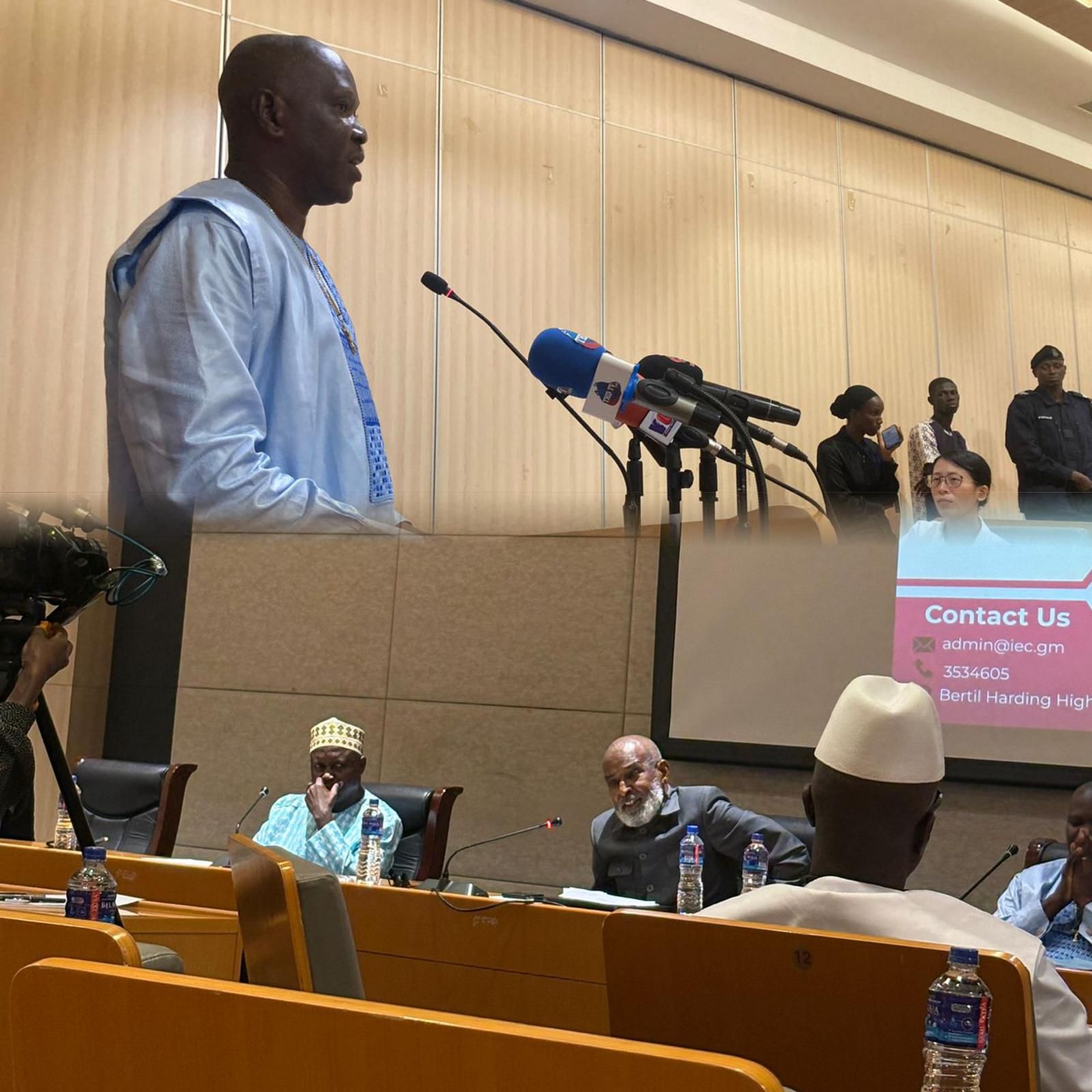
The Independent Electoral Commission (IEC) of The Gambia has announced that the country’s next presidential election will take place on December 5, 2026, as revealed by IEC Chairman Joseph Colley during the launch of the 2026–2027 election calendar at the OIC Conference Center in Bijilo. The announcement marks a significant milestone in Gambia’s democratic journey, setting the stage for a series of elections over the next two years, including National Assembly elections on April 10, 2027, Councillor elections on May 22, 2027, and Mayoral and Chairperson elections on June 26, 2027.
In his first public address since taking office, Colley underscored the importance of political participation as a constitutional right, urging citizens to exercise it responsibly. “Political affiliation is enshrined in the Constitution as a human right. However, we urge all to exercise this right responsibly and within the limits of the law,” he said. The IEC also outlined plans for a supplementary voter registration exercise from April 1 to May 14, 2026, to update the 2021 voter register, a move that has already sparked debate among political stakeholders.
The IEC, mandated under Section 43 of the Constitution to oversee all public elections and referenda, emphasized its commitment to delivering free, fair, transparent, and inclusive elections. Colley highlighted the commission’s Strategic Plan for 2026–2027, which prioritizes inclusion, transparency, and adherence to legal standards. He noted ongoing stakeholder engagement to ensure clarity and build confidence in the electoral process. “The Commission would like to reassure the electorate and all stakeholders of its continued commitment to deliver credible elections to all Gambians at all times,” Colley affirmed.
Addressing concerns about the IEC’s impartiality, Vice Chairman Cherno Jallow responded to questions about the appointment process for commission members. “I reassure stakeholders of the integrity of members of the Commission and their resolve to act with integrity to deliver credible, inclusive, and transparent elections in accordance with the Constitution and Elections Act,” Jallow said. He urged stakeholders to judge the IEC by its actions rather than assumptions, emphasizing the commission’s dedication to fairness.
However, the announcement has drawn criticism from opposition leaders, particularly Essa Faal of the APP Sobeya Party, who questioned the credibility of the existing voter register. Faal argued that a supplementary update may not address longstanding issues, including non-Gambians and excluding eligible voters. “We cannot have a level playing field if there are already questions on the existing voter register,” Faal told journalists. He called for a comprehensive, nationwide voter registration exercise, acknowledging its higher cost but stressing its necessity for ensuring fairness and credibility.
The IEC also announced the appointment of returning officers for the upcoming elections, including Abdullah K. Jeng (Banjul), Cherno M. Jallow (Kanifing), Lamin Cham (Yaram Bamba), Lamin J. Jadama (Brikama), Baboucarr Ndong (Sibanor), Ahmadou Taal (Mansakonko), Haddy Sidat Jobe-George (Kerewan), Anthony Robert Secka (Wassu), Sulayman Joof (Janjanbureh), Essa Baldeh (Basse), and Joseph Colley as the Chairman and Returning Officer for the Presidential Election.
The IEC emphasized that the election dates were carefully chosen to meet legal and logistical requirements, ensuring a transparent and credible process. Political parties were urged to promote peace, tolerance, and compliance with registration requirements before engaging in activities.
As The Gambia prepares for this critical electoral cycle, the debate over the voter register and the IEC’s ability to deliver a fair process will likely remain at the forefront of political discourse, with stakeholders watching closely to ensure the democratic process upholds the people’s will.