Gambia Participates (GP), leading a coalition of urban and rural civil society organisations under the Collaboration for Open and Accountable Budgeting (COAB), today presented a hard-hitting review of the 2026 Executive Budget Proposal to members of the National Assembly, calling for an immediate reduction of at least D640 million in what they describe as wasteful and non-essential recurrent expenditure.
The 38-page report, submitted exactly three weeks after Finance Minister Seedy Keita tabled the D59.3 billion budget on October 31, accuses the government of persistent fiscal indiscipline, systematic overspending through virements, and opaque reporting of loan drawdowns that “raises serious questions about the traceability of billions in borrowing.”
“While the government projects a balanced budget of D59.3 billion in revenue and expenditure, the trends show a widening gap between intent and execution,” Gambia Participates.
“Travel expenses, fuel, furniture, and presidential tours continue to balloon with little value for money, while development projects remain stuck at less than 20 per cent execution.”
Key findings that triggered the proposed D640 million cut include:
– The Office of the President spent D142 million on travel in 2024 against an approved D66 million – a 115% overrun.
– Presidential visits to the provinces cost D64 million in 2024, 115% above the approved ceiling.
– Development expenditure absorption averaged below 20% in recent years, leaving billions approved but unspent.
– Recurrent allocation for furniture and fittings across ministries and agencies, with some institutions receiving new budgets every year despite recent purchases.
– Loan drawdowns consistently reported as “zero” in actuals despite billions approved, creating a “black hole” in debt transparency.
The coalition recommends slashing seven recurrent budget lines – including travel expenses (cut by D200 million), fuel and lubricants (D184.6 million), training costs, printing, vehicles, and furniture – to bring total savings to D640.18 million.
Rather than park the savings, the report proposes redirecting D408 million of it to citizen-priority areas:
– D200 million to create 5,000 new jobs under the Ministry of Trade and Employment
– D200 million for the construction of 200 affordable urban homes for low-income workers
– D5 million additional funding to the Anti-Corruption Commission
– D3 million for printing textbooks in public schools
Even after these redirections, the proposal would still yield a net saving of D232 million, further reducing planned borrowing.
The review also calls for structural reforms: freezing furniture budgets for at least two years after any purchase, capping virement authority at 5% without parliamentary approval, replacing high-fuel-consumption government vehicles, and reconciling the mysterious “zero actuals” reported for multi-billion dalasi loan drawdowns year after year.
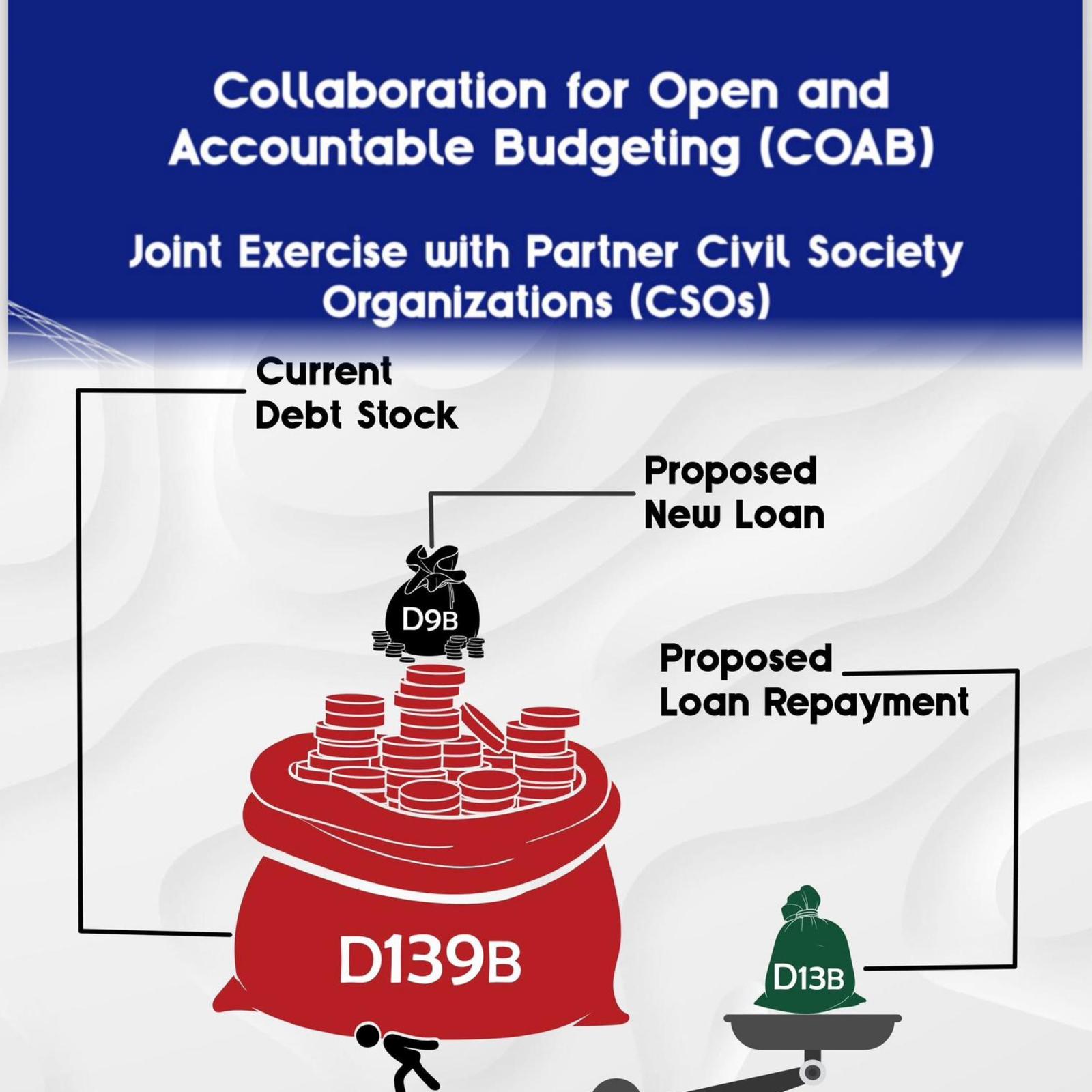
Public debt concerns loom large in the document. Despite allocating D13.4 billion for debt servicing in 2026, the coalition warns that new borrowing of D9 billion means the country’s debt stock – already at 70.4% of GDP or D139 billion as of June 2025 – will barely fall by D4.4 billion next year.
“Every dalasi saved from wasteful spending is a dalasi that does not have to be borrowed and repaid with interest by future generations,” the report concludes.
The presentation was attended by representatives from the University of The Gambia Students Union, FAWEGAM, Think Young Women, EFANet, and media houses, all of whom were trained under the COAB initiative, supported by the International Budget Partnership.
National Assembly Members who received the document promised to study the recommendations before the appropriation debates begin next month. Deputy Speaker Seedy Njie acknowledged the coalition’s work, saying, “Civil society scrutiny remains vital for a credible budget process.”
As The Gambia heads into 2026 facing tight fiscal space and high debt, today’s report has set the stage for what could be one of the most contested budget cycles in recent years.