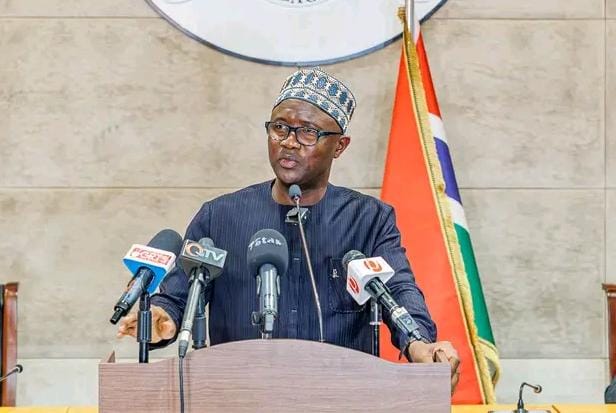
In a boost for The Gambia’s beleaguered telecom sector, Communications and Digital Economy Minister Lamin Jabbi has unveiled plans for a local company to invest a staggering D6.7 billion (approximately $95 million) into Gamcel, the state-owned mobile operator grappling with outdated infrastructure. The announcement during a recent fortnightly Mansa Kunda briefing signals a strategic pivot toward modernization while prioritizing national control over critical assets.
Minister Jabbi described the unnamed investor’s proposal as “successful” and “responsive,” noting that his ministry has greenlit it for Cabinet approval. “Hopefully, by the end of this month or early next month, subject to Cabinet’s endorsement, we will sign this agreement with them,” he told reporters, emphasizing the deal’s potential to breathe new life into Gamcel.
Long plagued by financial woes and technological lag, Gamcel operates in an era where global GSM providers race to deploy cutting-edge networks. The company clings to obsolete 2G and 3 G LTE systems, leaving it outpaced by competitors offering 4G and 5G services. “We are the only operator currently on 2G and 3 G. Every other operator in this market has 4G or 5G,” lamented Gamcel General Manager Fatou Fatty, highlighting the urgent need for upgrades.
Under the proposed partnership, the investor will fund a comprehensive overhaul of the facility. All Gamcel sites will transition to advanced technologies, phasing out legacy 2G and 3 G networks in favor of 4G and 5G coverage. The deal also includes procuring a modern billing system to replace the current “very obsolete” setup, enabling value-added services for customers. “A good number of the sites and some services of Gamcel would be very effective once they arrive,” Fatty added, noting that procurement has already begun.
Jabbi’s ministry deliberately favored local bidders, rejecting “so many” international proposals after rigorous assessments. “Based on experience, if you give it to a Gambian company, whatever money they get tomorrow, it sits here. It will never be floated out of this country. Sometimes you don’t need to say everything. That is the strategic reasoning,” the minister explained, underscoring a policy of economic retention and self-reliance.
The investment takes the form of equity shares to prevent Gamcel’s collapse without complete privatization. This approach also extends to Gamcel’s parent entity, where similar rumors of an outright sale have circulated. Jabbi firmly debunked them: “The government is not selling Gamtel. In creating a digital economy, you cannot let go of everything. It is not happening anywhere in the world. It is sensitive in terms of security. Strategically, it wouldn’t make much sense.”
Gamtel Managing Director Lamin Tunkara reinforced this, framing the initiatives as public-private partnerships (PPPs). “We do not have the money to upgrade our infrastructure. But there is someone who wants to invest and share profits with us. As of today, everyone should understand that Gamtel is not for sale. It is still under the government and being run by the same management,” he stated.
The government has approved $50 million for Gamtel’s network expansion and upgrades to support these efforts. Jabbi expressed optimism: “We believe the market dynamics will change for Gamtel once these funds are disbursed and put into use.” This infusion and private investment positions Gamtel/Gamcel to reclaim competitiveness in a digital-first landscape.
However, revival comes at a human cost. To ensure “commercial viability and ability to compete,” the government is implementing a phased staff downsizing program. The process, designed with worker protections in mind, unfolds in four stages.
In the first phase, 486 employees opted for voluntary exits, receiving generous severance packages ranging from D500,000 to D1 million each. “In addition to that, we are paying them six months: you give them a package, and in addition, you give them another six months’ pay. We call that a notice period,” Jabbi detailed. The second phase targets 155 staff for voluntary early retirement, while phases three and four will result in the redundancy of 182 workers.
“All these are measured. And each person affected is paid substantially and comfortably,” the minister assured, adding that a dedicated grievance mechanism will oversee appeals and fairness. The downsizing, though painful, is framed as essential for long-term sustainability, allowing Gamtel/Gamcel to serve the nation more effectively amid evolving telecom demands.
As The Gambia accelerates its digital economy ambitions, this D6.7 billion lifeline for Gamcel could mark a turning point. By blending local investment with strategic safeguards, the government aims to fortify infrastructure without ceding control—echoing global trends where nations reclaim vital sectors from private overreach. Stakeholders await Cabinet’s nod, but the message is clear: The Gambia is betting on homegrown innovation to bridge the digital divide.