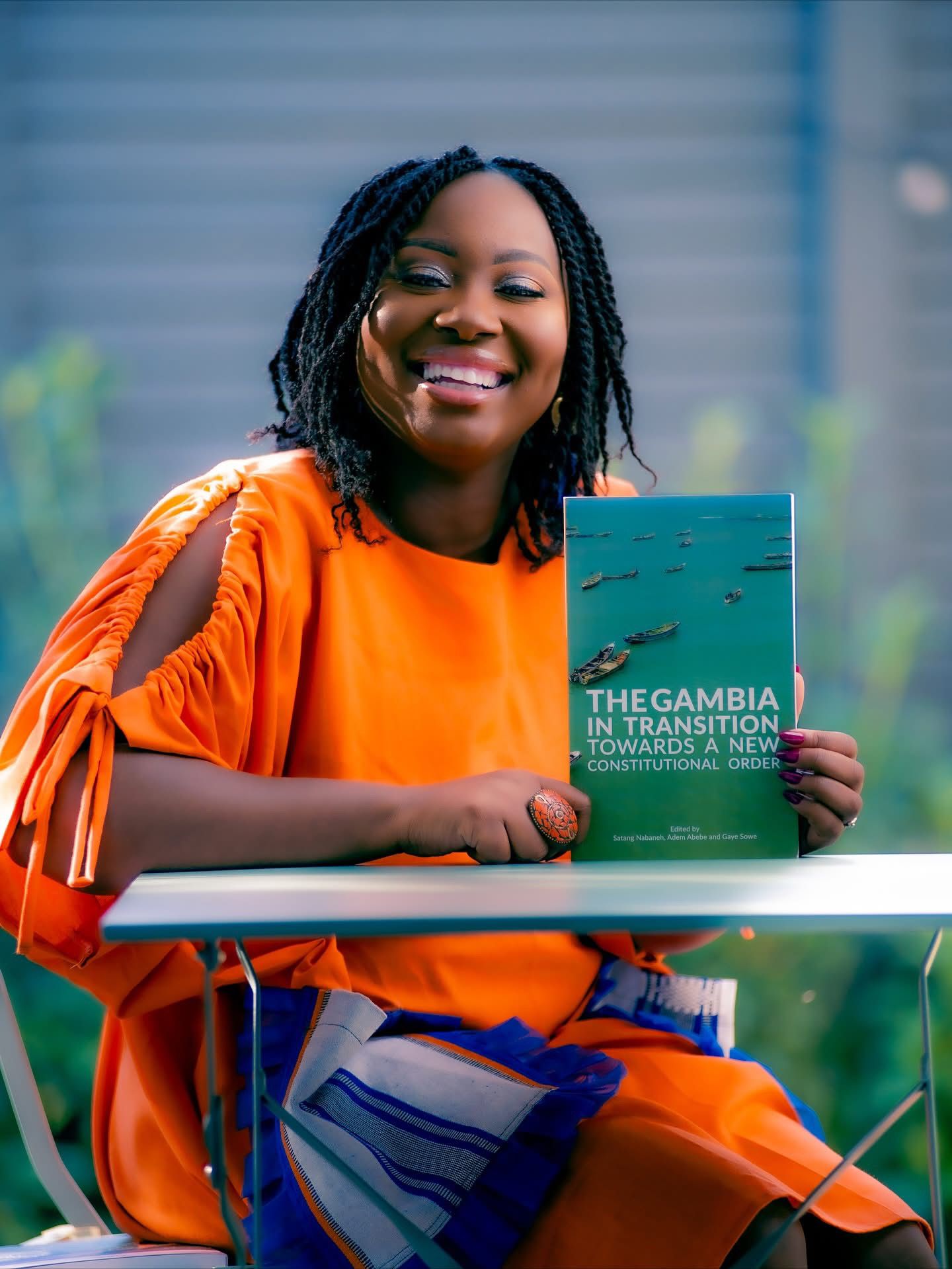
In a landmark achievement for Gambian representation on the African continent, Dr. Satang Nabaneh has become the first Gambian ever elected to the African Committee of Experts on the Rights and Welfare of the Child (ACERWC), the African Union’s premier body dedicated to child rights. The February 2026 election marks a 25-year milestone for The Gambia and underscores the growing global influence of Gambian women in human rights leadership.
In an exclusive interview with The Alkamba Times for its International Women’s Day special edition, Dr. Nabaneh—Research Professor of Law and Director of Programs at the University of Dayton Human Rights Center—shared her journey from child advocate in Banjul to one of Africa’s leading voices on gender equality, reproductive justice, and child protection.
Dr. Nabaneh’s commitment to justice began early. At eight years old, she joined the Banjul Red Cross and community initiatives such as Voice of the Young. By age twelve, she represented The Gambia as a child delegate to the Children’s Parliament of the World. These experiences, she says, instilled a lifelong belief that “those closest to the injustice are best positioned to lead the change.”
That conviction led her to co-found Think Young Women (TYW) to empower future female leaders and continues to guide her work today.
Her academic path—from a Bachelor of Laws at the University of The Gambia, to an LLM and LLD in Human Rights and Democratization in Africa from the University of Pretoria, and a Ph.D. from the University of Washington—has equipped her to bridge law, political science, women’s studies, and public health. “I design research that looks past structural barriers to find contextually rooted solutions,” she explained, with a focus on evidence-based reforms to combat gender-based violence, reproductive injustice, and emerging threats.
In her ACERWC role, Dr. Nabaneh outlined an ambitious agenda: protecting girls not only from traditional harms like child marriage and FGM, but also from modern dangers, including digital violence, online harassment, sextortion, misuse of AI, and the disproportionate impact of climate emergencies on the girl-child.
“I intend to push for gender-responsive, child-centered policies that ensure technology and climate responses do not leave the most vulnerable behind,” she said. “We must move beyond rhetoric to results—providing states with the technical expertise to turn regional obligations into concrete national laws and resourced protection systems.”
A staunch advocate for decolonizing human rights discourse, Dr. Nabaneh insists that “academia is not enough.” Her work at the University of Dayton emphasizes community-rooted scholarship and reciprocal learning. As a 2025 Women Have Wings Laureate, she is launching the Young Women’s Justice and Legal Immersion (JALI) Program through Law Hub Gambia in summer 2026. The pilot initiative will equip high school girls with critical thinking, persuasive writing, leadership training, mock competitions, and direct engagement with legal professionals, thereby disrupting traditional power dynamics from an early age.
Reflecting on The Gambia’s post-2016 democratic progress, she praised advances in constitutional reform and legislative protections but stressed the need for deeper implementation. She advocates a three-pronged strategy, among them: Stronger legal safeguards against gender-based violence and digital threats; Substantive inclusion of women in constitutional and legislative processes; Dedicated resources and accountability to translate regional human rights commitments into lived national realities
To young Gambian women aspiring to careers in law, human rights, academia, or activism, Dr. Nabaneh offered clear, empowering guidance: “Believe in your capacity to lead and transform. Build your ‘village.’ Surround yourself with mentors and peers who share your passion for justice… Your voice, a powerful blend of lived experience and intellect, is indispensable.”
Rooted in Gambian values of communal resilience and solidarity, Dr. Nabaneh envisions a future where Gambian women move “beyond the sidelines of advocacy and into the engine rooms of power,” presiding over national and continental institutions.
As The Alkamba Times celebrates trailblazing Gambian women this International Women’s Day, Dr. Satang Nabaneh stands as a powerful example of intellectual rigor, moral courage, and unyielding commitment to justice—proving once again that Gambian women are not merely contributors to progress; they are shaping its direction for generations to come.