By: Alieu Ceesay
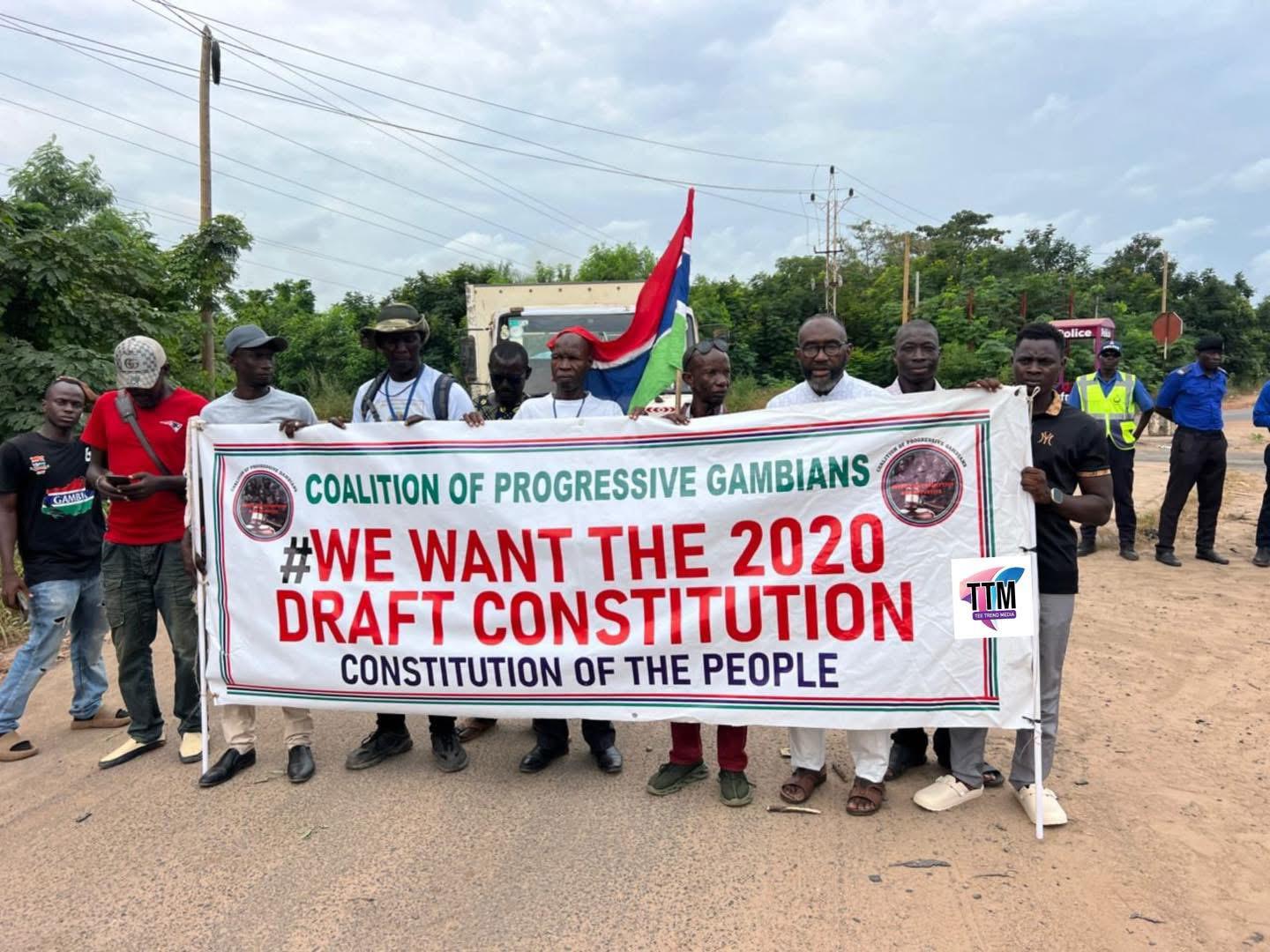
Citizens and activists from the Coalition of Progressive Gambians (CoPG) took to the streets of Banjul on Saturday in a peaceful march, urging National Assembly members to resurrect the 2020 draft constitution and abandon the recently rejected 2024 version, which critics branded a “cabinet constitution” tailored to executive interests.
The demonstration, starting from Bond Road and culminating at the National Assembly, highlighted growing frustration over The Gambia’s stalled constitutional reform process. Protesters waved banners proclaiming “2020 Draft Constitution is the Constitution of the People,” decrying the 1997 constitution – the country’s current governing document – as a “draconian” relic of the Yahya Jammeh era.
The 2020 draft, crafted after extensive nationwide and diaspora consultations costing over D120 million, was rejected by lawmakers in 2020 despite embodying Gambians’ aspirations for independent institutions, including the electoral commission, judiciary, and legislature.
A revised 2024 draft, amended by the Ministry of Justice, faced a similar fate earlier this year when it failed to secure the required votes in the National Assembly, with opponents arguing it omitted key safeguards and centralized power in the presidency.
“The 2020 constitution highlights the independence of the electoral commission, the judiciary, and even the legislative – so why reject it and bring us one that’s only for the president? We will not accept it,” declared Lamin Bojang, CoPG’s Public Relations Officer, to cheers from the crowd.
Protesters delivered a petition to Deputy Speaker Seedy Njie and Solicitor General Hussein Thomasi, vowing to remain persistent. “As long as they don’t return the 2020 draft, we will not give up. We call on the EU and ECOWAS to pressure the government,” said Assistant PRO Abubacarr Darboe.
Participant Famara Sighateh echoed the sentiment: “We want better laws – that’s why I’m here.”
The march remained orderly, covering a short distance without incident. CoPG’s action follows months of advocacy, including threats of nationwide protests if its demands are not met.
Following the rejection of the 2024 bill in July, which left The Gambia under the 1997 framework, activists warn of deepening democratic deficits. Justice Minister Dawda Jallow has acknowledged setbacks but pledged to revisit the process
As calls for a “people’s constitution” intensify, today’s protest signals Gambians’ resolve to end years of constitutional limbo and fulfill post-Jammeh reform promises.