By: Dawda Colley
The Ministry of Trade, Industry, Regional Integration and Employment, on 26 February 2026, notified stakeholders in the maritime transport ecosystem about the reintroduction of the Electronic Cargo Tracking Note (ECTN), which came into effect on 5 January 2026, following Cabinet approval. This decision, as reported, was part of the Concession Agreement signed between the Global Tracking and Maritime Solutions (GTMS) and the Government of The Gambia on a 60% to 40% revenue sharing basis.
The ECTN was first introduced on 15 May 2023, with leading shipping agencies like Maersk Line (G) and Mediterranean Shipping Company (MSC), notifying their customers through an advisory dated on 15 June 2023 about its introduction and applicability, including cargoes on transit to neighbouring countries such as Senegal, Bissau, Conakry, and Mali; and export cargoes from The Gambia.
This was met with public disapproval, especially from the major consignees (importers) and the Association of Clearing & Forwarding Agents, simply because of the widely held belief that its introduction would not only increase the cost of doing business at Banjul Port, but also increase commodity prices in the market, undermine the comparative advantage of Banjul Port, divert more domestic cargoes to Dakar Port, and discourage existing and potential transit cargo operators from utilizing the Port of Banjul as a transit point.
Since its disapproval in 2023, ECTN has been on a hiatus, but maintaining a physical presence in the Port without enforcing charges.
Although the proposed 2026 ECTN tariff reflects a reduction in charges for containerized cargo compared to the initial 2023 rates, the reintroduction of the ECTN has also led to the imposition of new charges. These include fees on saloon cars, SUVs, and heavy-duty vehicles (trucks) discharged from Ro-Ro vessels, as well as on bulk cargo such as rice, sugar, wheat, and basalt. Furthermore, all export 20-foot containers (TEUs) will now be subject to ECTN charges, as outlined in the tables below:
According to a communique by the Concessionaire (GTMS), ECTN is an internationally recognized cargo monitoring mechanism designed to enhance maritime security, cargo visibility, and trade transparency across global shipping routes.
GTMS further states that, this initiative (concession) supports the Gambia’s commitments to:
- Strengthening national security and cargo traceability,
- Improve trade facilitation and port efficiency,
- Enhancing regulatory oversight of cargo entering the country,
- Aligning with international best practices.
Let’s examine and understand how the abovementioned were being handled prior to the introduction and reintroduction of ECTN at Banjul Port.
- National security and cargo traceability
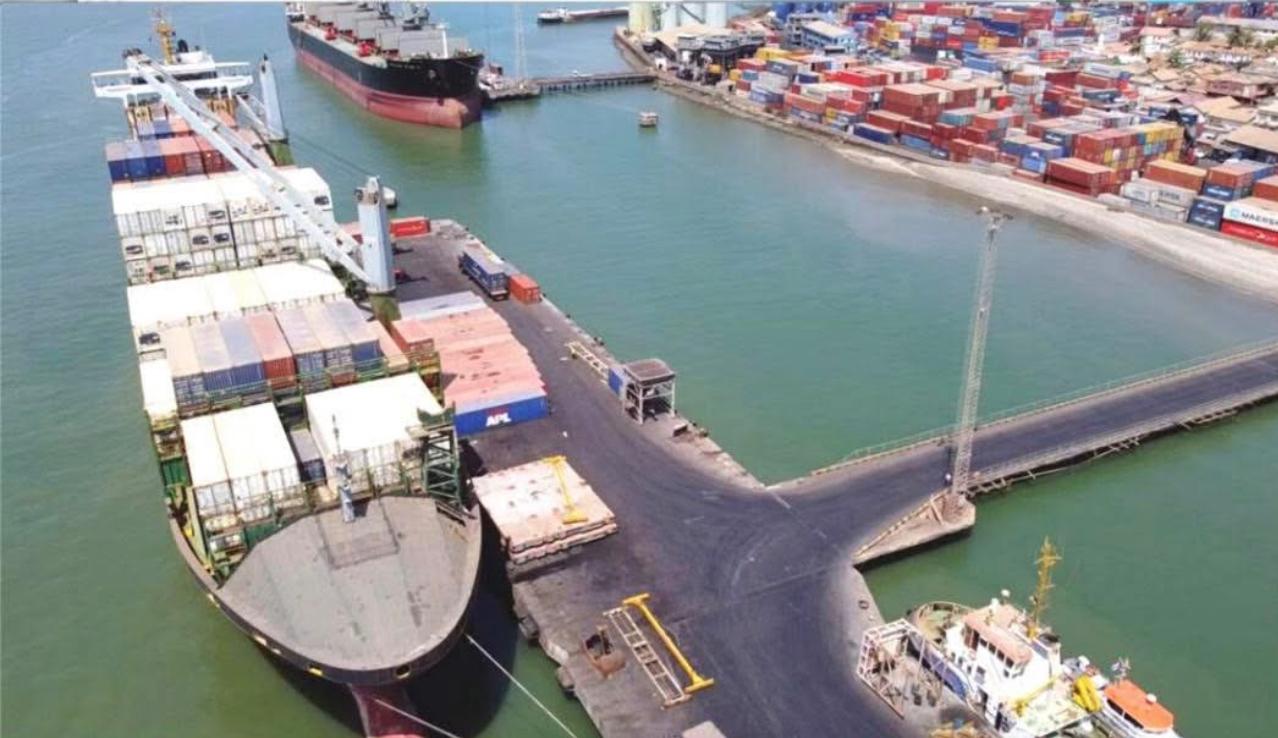
- National Security: The Port of Banjul is a very crucial node in our country’s international trade endeavors, handling over 80% of goods traded in the country. As such, this makes the Port susceptible to illegal and counterfeit goods. To address this vulnerability, the Government of the Gambia made the conscious decision by deploying key security agencies at the seaport. This includes The Gambia Police Force, State Intelligence Services, Gambia Immigration Department, Gambia Armed Forces, Food Safety and Quality Authority, coupled with a private company Nick TC Scan to mitigate the threats of illegal and counterfeit goods entering the country by sea.
Furthermore, the Gambia Maritime Administration handles all port state control functions of the Government in relation to the International Convention for the Safety of Life at Sea (SOLAS), Marine Pollution (MARPOL), and the International Convention on Standards of Training, Certification, and Watchkeeping for Seafarers (STCW) to ensure safety, security, pollution prevention, and crew living conditions of all vessels calling at the Port of Banjul. To bolster Port safety and security, the Gambia Ports Authority also has a designated Port Facility Security Officer (PFSO) to ensure the port meets the International Ship and Port Facility Security (ISPS) Code protocols and requirements.
- Cargo traceability: Cargo tracking from port of loading to port of discharge is a free-of-charge service that all container shipping lines operating in The Gambia offer to their customers using the bill of lading (BL) or container number. Below are the container tracking sites of all container Shipping Agencies operating in the country:
Maersk Line, https://www.maersk.com/tracking/; MSC, https://www.msc.com/en/track-a-shipment; CMACGM, https://www.cma-cgm.com/ebusiness/tracking; OBT/WACA Gambia, https://www.hapag-lloyd.com/en/online-business/track/track-by-container-solution.html.
Additionally, vessel location around the globe can be traced through ‘‘vessel finder search engine’’ https://www.vesselfinder.com/. Furthermore, all vessel calling at the Port of Banjul must provide vessel arrival notification documents such as notice of arrival (NOA), pre-arrival notification, vessel and cargo details (vessel name, voyage, flag, IMO number, call sign, last & next port of call, and cargo description); and the regulatory documents such as crew list, passenger list, cargo manifest, and dangerous goods declaration, if any. These documents are shared with all relevant government institutions before any vessel secures a berth, coupled with the necessary security protocols to be carried out.
- Trade facilitation and port efficiency: The understanding of trade facilitation policy or project (as the case may be for ECTN) in the port should simplify, harmonize, modernize, and enhance transparency in service delivery at the Port. The Gambia Revenue Authority (GRA) and Gambia Ports Authority (GPA) have already invested in digitizing their systems to support this initiative.
The GRA utilizes systems such as ASYCUDA World, the Single Window platform, and E-Tracking for transit containers to ensure compliance and improve efficiency in the processing and clearance of goods. The GPA, on the other hand, operates systems including the Port Management Information System (PMIS), the Vessel Traffic System (VTS), which regulates and coordinates vessel movements while enhancing safety, efficiency, and environmental protection in maritime navigation, and the Shore Handling System, which facilitates cargo payment and delivery processes. These systems have enabled GRA to achieve its yearly targets, including last year’s target of GMD 23 billion, and the GPA, despite all odds and challenges over the years, has performed well, consistently paying annual dividends to the government in recent years. With the coming of Alport Banjul, a terminal operating system is envisioned to greatly enhance sea and shore-side operations.
On port efficiency, Alport Banjul as the terminal operator of Banjul Port is the only institution with prerogative, machinery, and technical know-how to enhance port efficiency. Since its inception, Alport Banjul has registered significant strides in port efficiency, reducing vessel turnaround to 72 hours on average and cargo dwell time to 6 days on average.
- Regulatory oversight of cargo entering the country: As stated above, the GMA, GRA, GPA, and FSQA are created by Acts of Parliament and mandated to safeguard the territorial integrity of the country and thereby ensuring that goods entering the country through the seaport are legal and safe for the citizens and people residing in The Gambia. So, the frameworks are already in place, and these institutions have not done a bad job over the years, albeit the need for improvement on certain aspects of their operations is required to strengthen their capacities.
- Aligning with international best practices: The Gambia has domesticated many international maritime transport and trade standards such as SOLAS, MARPOL, STCW, Port Communication and Single Window promulgated by the International Maritime Organization (IMO) and Port Management Association of West and Central Africa (PMAWCA) aimed to improve, coordinate, and harmonize port operations, management, and activities meant to promote, facilitate, and accelerate international and regional maritime trade.
Meanwhile, it is apparently clear that Gambia government through its institutions and agencies at the port carries out all the functions contracted to the GTMS, highlighting the fact that the concession is both duplication of effort and unnecessary, to say the least.
The sixty-four-thousand-dollar question it invokes on any curious mind is, how could the Global Tracking & Maritime Solutions (GTMS) support the Government differently in strengthening national security and cargo traceability, improve trade facilitation and port efficiency, enhancing regulatory oversight of cargo entering the country, and aligning with international best practices without duplication of effort and additional cost to consignees with no significant value?
Having closely observed the activities of ECTN during their brief stint (operations) at Banjul Port in 2023 and having held several discussions with dozens of clearing and forwarding agents who made payments on behalf of their consignees to GTMS during the same timeframe, the following negative consequences are inevitable, if Government of The Gambia continues to sleepwalk into this concession agreement with total disregard and indifference to existing functional frameworks in place, as well as the daily realities of our commodity market.
- INCREASE COMMODITY PRICES IN THE MARKET: To put this into perspective in simple terms, the introduction of the ECTN will have direct cost implications. Alport Banjul and the GRA serve several bulk consignees—importers who, on average, bring in about sixty (60) 20-foot containers per month. These include Fresh Frozen Limited, Jambar, Emkay Stores, Gamfood Limited, Shyben A. Madi & Sons, Batimat, among others.
For example, if Fresh Frozen imports sixty (60) 20-foot containers, it will incur extra cost as shown below, in addition to release/local charges at the Shipping Agencies, GRA import duty, GPA shore handling charges and FSQA charges for food products:
60 × $85 × D72.21 = D368,271.
For 40- and 45-foot containers, the cost would be:
60 × $170 × D72.21 = D736,542.
- These additional costs will inevitably be incorporated into the pricing of goods and passed on to final consumers, leading to a significant increase in commodity prices in the market. Therefore, this raises a critical question: has the Cabinet conducted adequate due diligence on the potential consequences of this substantial increase and the financial burden it may place on the average Gambian?
- UNDERMINE THE COMPARATIVE ADVANTAGE OF BANJUL PORT: In the past, the Port of Banjul enjoyed a strong comparative advantage due to its relatively low tariffs and high operational efficiency. This made it a preferred trading hub and earned it the reputation of being the “supermarket” of the subregion during the 1970s, 1980s, and early 1990s. However, this comparative advantage was eroded in recent years due mainly to underinvestment in port infrastructure and superstructure, perennial port congestion, and other natural forces like draft limitation at the access channel and alongside berths. Since their inception in Banjul, Alport Banjul has significantly improved port efficiency in terms of vessel turnaround time, cargo dwell time, and number of cargo deliveries per period. These improvements have occasioned the lifting of congestion surcharge by shipping lines, a redirection of cargoes which used to transit through Dakar Port to Banjul, and an increase in transit cargoes to third-party countries in 2025. Alport Banjul, like GPA prior to the concession, charges D750, D1,500, D1,876.50 for 20, 40, and 45 feet containers; and D15 per ton for bulk cargoes as shore handling charges. Alport is directly involved in handling cargo, using machinery, labour, and consumables as opposed to GTMS. Has Cabinet done due diligence on safeguarding the gains registered on this front thus far?
- DIVERSION OF MORE DOMESTIC CARGOES TO DAKAR PORT: Even though Alport Banjul registered some efficiency gains last year, the reintroduction of ECTN charges will create an avenue and genuine reasons for businesses to start diverting their cargoes through Dakar, leading to loss of indirect jobs at the Port, loss of revenue to GPA and Alport Banjul and other operators in the Port ecosystem. Has Cabinet done due diligence on the effects of cargo diversion to Dakar on the Banjul Port and the Gambia’s economy?
- DETER CURRENT AND POTENTIAL TRANSIT OPERATORS FROM USING BANJUL AS A TRANSIT POINT: Boosting or encouraging transit trade to third-party countries, especially Mali is the only viable means for Alport Banjul to significantly increase port throughput. Without increase in transit trade, Alport will not be able to handle three (3) million metric tons per year, because our population and domestic consumption is not enough to surge port throughput to those high-end figures. Again, has Cabinet done due diligence on ECTN’s potential to discourage current & potential transit operators from using Banjul as a transit point?
- RENDER SANYANG DEEP SEA PORT A WHITE ELEPHANT PROJECT BEFORE CONSTRUCTION WORKS START: By all indications, Sanyang Deepsea Port is mainly the reason the Government of the Gambia forged a Concession Agreement with Albayrak Group of Companies of Turkey, considering the natural limitations of the Port in Banjul. Alport’s strategy is to revitalize our lost transit trade with a focus mainly on Mali. However, all efforts made by Alport and its strategic partners including GPA, GCCI, Ministry of Transport, Works and Infrastructure, and GRA may be rendered futile because of the ECTN. Besides, GRA has a cargo tracking system for transit cargoes from Banjul to detect and discourage the dumping of transit cargo into the domestic market, proving the case that ECTN’s efforts are a duplication of GRA’s cargo tracking system. Has the Cabinet done due diligence on the consequences of ECTN on the viability of Sanyang Deepsea Port?
CONCLUSION
The GRA has consistently met its annual revenue targets, while the GPA has, in recent years, regularly paid dividends and fulfilled its financial obligations to the Government of The Gambia without failing. This raises an important question: why does the Cabinet seek a duplication of processes and procedures through the ECTN, and in doing so, transfer the associated costs to the business community—costs that will ultimately be borne by consumers?
I strongly believe that certain interests may be seeking benefit from this concession (ECTN) at the expense of the Gambian people, despite being aware that the reintroduction of this system is highly unlikely to deliver meaningful value and may instead yield in undesirable operational and economic consequences for the country.
In the context of what is happening in the world disrupting international supply chain, the ripple effects of the Iran and USA-Israel war is already being felt and as the war goes on an escalation ladder the impact will be harsher and greater in scale, leading vulnerable economies like ours to horrendous external shocks. This among other global economic dynamics must always be factored in by Cabinet when making socio-economic decisions and their implications on The Gambia.
Significant strides have been made over the years to boost the Gambia’s export potential, including free dwell or storage charges for all full container loads exported through Banjul Port.
Records in 2025 explained this rather convincingly. The Banjul Port handled approximately 69,000 TEUS (twenty equivalent units) full container load for both import and export and 1,220 vehicles imported through Ro-Ro vessels. If ECNT was in place in 2025, GTMS would have generated D410,550,000 (69,000 x $85 × D70) on full container load and D3,416,000 (1220 x $40 × D70) on vehicles, respectively handled at the Port.
While a 40% revenue share to the Government may appear beneficial on surface value, the critical question remains: at what cost to the people of The Gambia? Therefore, in the broader interest of the country, I conclude that the 60% revenue share to ECNT is very unnecessary and a waste of valuable state money for services that are already functionally in place and carried out by government institutions and agencies installed at Banjul Port. The concession is markedly a significant loss of money supposedly meant for the state to a private concessionaire whose existence adds no value or monetary gain to The Gambia and her people. Would the government reconsider its decision?