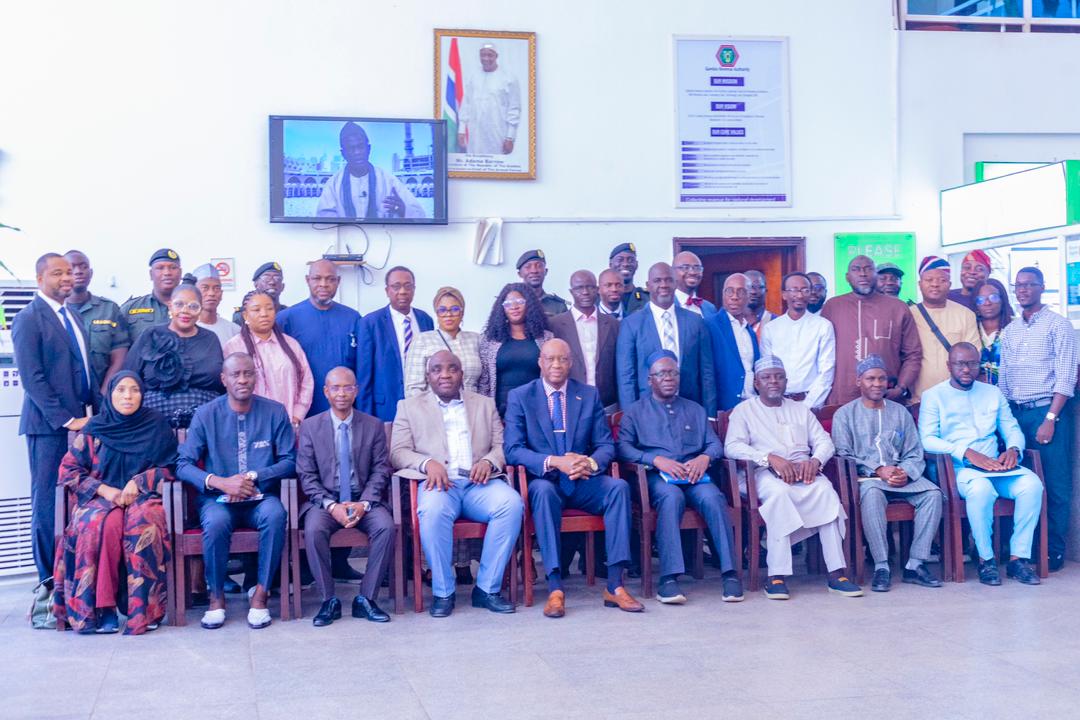
In a move highlighting growing regional collaboration to tackle illicit trade in Africa’s petroleum sector, the Gambia Revenue Authority (GRA) on Thursday welcomed a high-level delegation from Nigeria for a study tour focused on The Gambia’s innovative Fuel Market Initiative.
The visit underscores increasing interest among African nations in proven strategies to curb fuel smuggling, adulteration, and tax evasion—challenges that drain public revenues and endanger consumers across the continent.
Yankuba Darboe, Commissioner General of the GRA, warmly received the Nigerian visitors, describing their arrival as a testament to the strengthening ties among revenue authorities in Africa. “This reflects the growing spirit of cooperation in addressing shared challenges in the petroleum downstream sector,” Darboe said.
At the heart of the discussions is The Gambia’s Fuel Integrity Solution, rolled out in 2025 through a public-private partnership with global security specialist SICPA. The program uses advanced fuel marking technology to tag legally imported petroleum products, enabling authorities to distinguish them from smuggled or adulterated fuels.
Darboe detailed the initiative’s goals: reducing smuggling, eliminating product adulteration, leveling the playing field for legitimate marketers, and safeguarding fuel quality to protect vehicles and public health. “It ensures consumers receive high-standard products while preventing unfair competition from illicit operators,” he explained.
The results have been striking. Before the program’s launch, monthly fuel-related tax collections ranged from D250 million to D300 million. Since implementation, revenues have surged to an average of over D500 million per month—a near doubling that Darboe attributes directly to enhanced compliance, reduced leakages, and stronger regulatory oversight.
“This success demonstrates the power of innovative solutions combined with robust enforcement,” Darboe noted. He highlighted improved market transparency, greater public confidence in the sector, and the principle that no one should evade taxes while others fulfill their obligations.
Darboe also credited international learning for the program’s effectiveness, revealing that GRA officials drew valuable insights from a prior study tour to Tanzania, where a similar SICPA-backed fuel marking system has yielded substantial revenue gains over the years.
Momodou Clark Jarra, General Manager of SICPA Gambia, expressed pride in facilitating the exchange. As a worldwide leader in fuel marking and traceability solutions, SICPA provides forensic-level tagging, real-time monitoring, and detection tools to combat fraud. “The Gambia’s collaboration with GRA and other regulators has proven highly effective,” Jarra said.
He added that the visit offers Nigerian officials hands-on opportunities: engaging SICPA’s technical experts, observing operations alongside Gambian authorities, and interacting with end users to see the system’s day-to-day impact.
Leading the Nigerian delegation, Dr. Jobson O. Ewalefoh emphasized the broader significance of the visit. “This is driven by the spirit of brotherhood and regional integration,” he stated, noting Nigeria’s pursuit of similar measures to bolster economic development and energy sector integrity.
Ewalefoh stressed the urgency of adopting fuel marking to fight fraud, strengthen oversight, and protect the distribution chain. “It is unjust for compliant producers to compete against those who compromise fuel quality, risking environmental damage and health hazards,” he argued.
The delegation aims to study The Gambia’s benchmarks, lessons learned, legal frameworks, implementation challenges, and overall outcomes. Both sides agreed that such knowledge-sharing promises mutual benefits in fortifying Africa’s energy markets against illicit activities.
The study tour reflects a wider trend of African revenue bodies learning from one another’s successes. With fuel marking already delivering results in The Gambia—and similar systems operating or expanding in countries like Tanzania, Sierra Leone, Kenya, and others—the initiative could inspire broader continental adoption.
As delegations from neighboring and regional partners continue to visit Banjul, The Gambia’s experience stands as a model of how targeted technology, public-private partnerships, and cross-border cooperation can transform revenue administration, protect consumers, and promote fair markets in the vital petroleum sector.