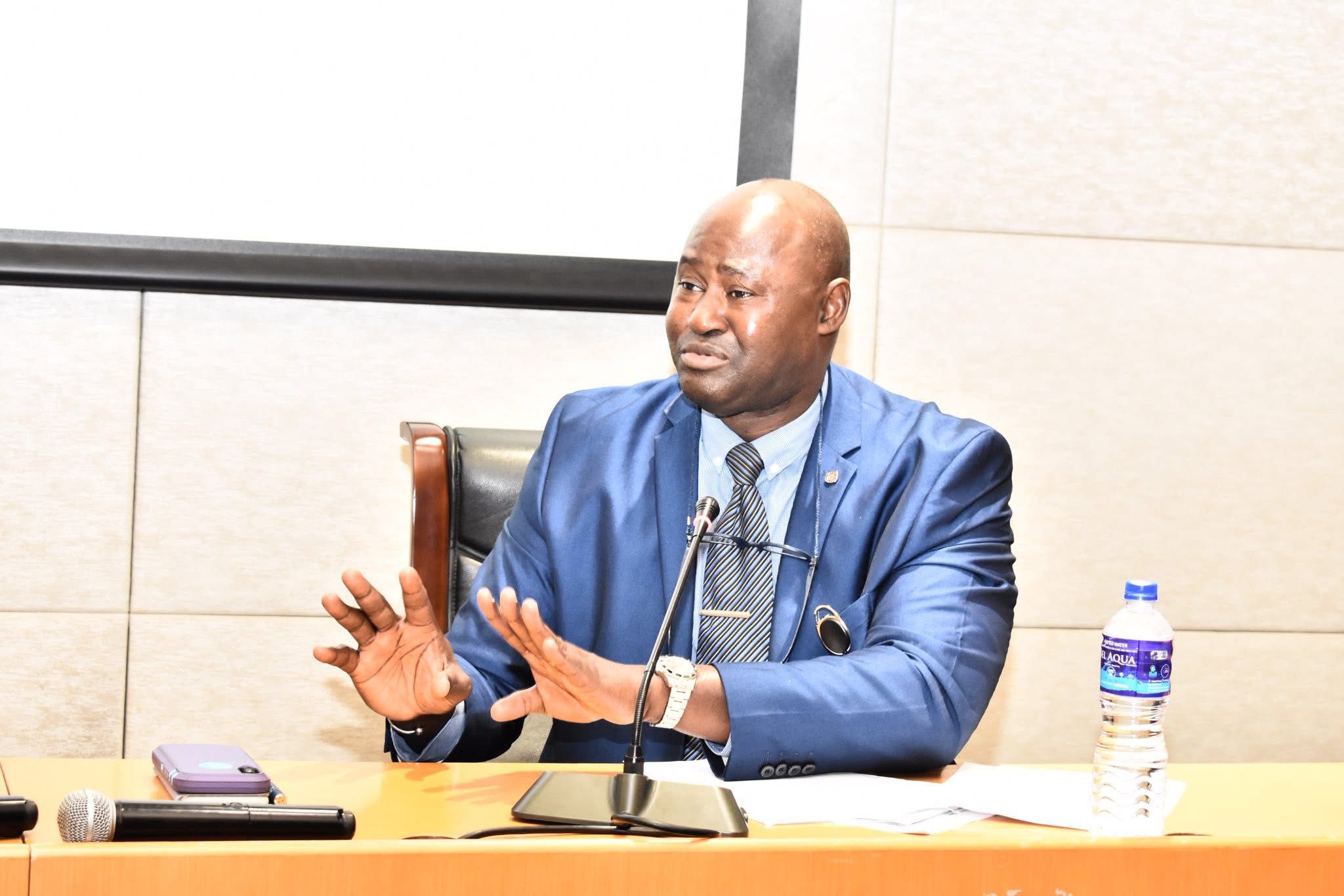
In a significant development in the ongoing rape trial of Ass Malick Njie, a 56-year-old former security guard at QCell Headquarters, High Court, Judge Justice Ebrima Jaiteh has granted a defence application compelling the Gambia Police Force to produce CCTV footage allegedly handed over during the initial investigation.
The ruling, delivered today before a packed courtroom, came just as proceedings were set to hear the second defence witness.
Instead, defence counsel F. C. Anyanwu raised a preliminary matter regarding CCTV evidence from the alleged crime scene at QCell’s premises in Kanifing Municipality.
Njie, who worked as a watchman at the telecommunications company’s main building on Kairaba Avenue, faces a single count of rape contrary to Section 3(1)(a) of the Sexual Offences Act, 2013. Prosecutors allege that on or about February 5, 2022, he intentionally engaged in coercive anal intercourse with a then-12-year-old boy, Mansour Sabally, near the QCell building.
Defence counsel informed the court of a February 12, 2026, letter sent to QCell Limited requesting the relevant CCTV footage. In reply dated February 24, QCell’s Human Resource and Legal Affairs Manager, Omar Cham, confirmed that police investigators had been provided with the footage during the original probe. Cham stated that the company retained no copies, having handed over the material solely for investigative purposes.
Citing Section 221 of the Evidence Act, 1994—which allows the court to summon any person or entity to produce documents that may be material to the case—Anyanwu applied for an order directing the Inspector General of Police to have officers from the Latrikunda German Police Post produce the footage.
State Counsel M. Sarr opposed the request, arguing that the prosecution’s case file contains no reference to any CCTV material. He described the application as unnecessary and a potential waste of judicial time.
Justice Jaiteh, however, rejected the objection. In a detailed analysis, he emphasized the broad discretionary powers under Section 221 to ensure that relevant evidence reaches the court, including from third parties such as public institutions.
“The letter from Mr. Omar Cham is clear and unequivocal,” Jaiteh stated. It confirms that a police investigation occurred, that QCell provided the footage to assigned officers, and that no duplicates were kept. The judge noted it is reasonable to infer the material—if it still exists—remains in police custody.
He dismissed the prosecution’s reliance on the absence of footage in their records, observing that investigators and prosecutors are distinct entities. Police may hold materials without transmission to the State Law Office.
CCTV footage, the judge underscored, constitutes objective, contemporaneous evidence capable of corroborating or contradicting witness accounts in a case of this gravity. Denying its production could undermine the principles of a fair trial.
“The Court cannot lightly disregard the possibility of its existence,” Jaiteh ruled. Granting the application promotes transparency and justice without prejudicing the prosecution; it merely seeks clarification on the footage’s status.
The court therefore ordered the Inspector General of Police to direct the investigators at Latrikunda German Police Post to produce the footage by the next hearing, and, if available, to present it on May 5, 2026, at 10:00 a.m.
The court also said in its order that, if the order is missing or destroyed, the responsible investigating officer must appear and explain under oath, and instruct the court registrar to serve the order immediately on the IGP for compliance.
In closing observations, Justice Jaiteh stressed the duty of investigative bodies to preserve and document evidence transparently. “The effectiveness of the criminal justice system depends on full cooperation between investigators and the courts,” he said.
The matter stands adjourned to May 5, 2026, for continuation of the defence case and compliance reporting.