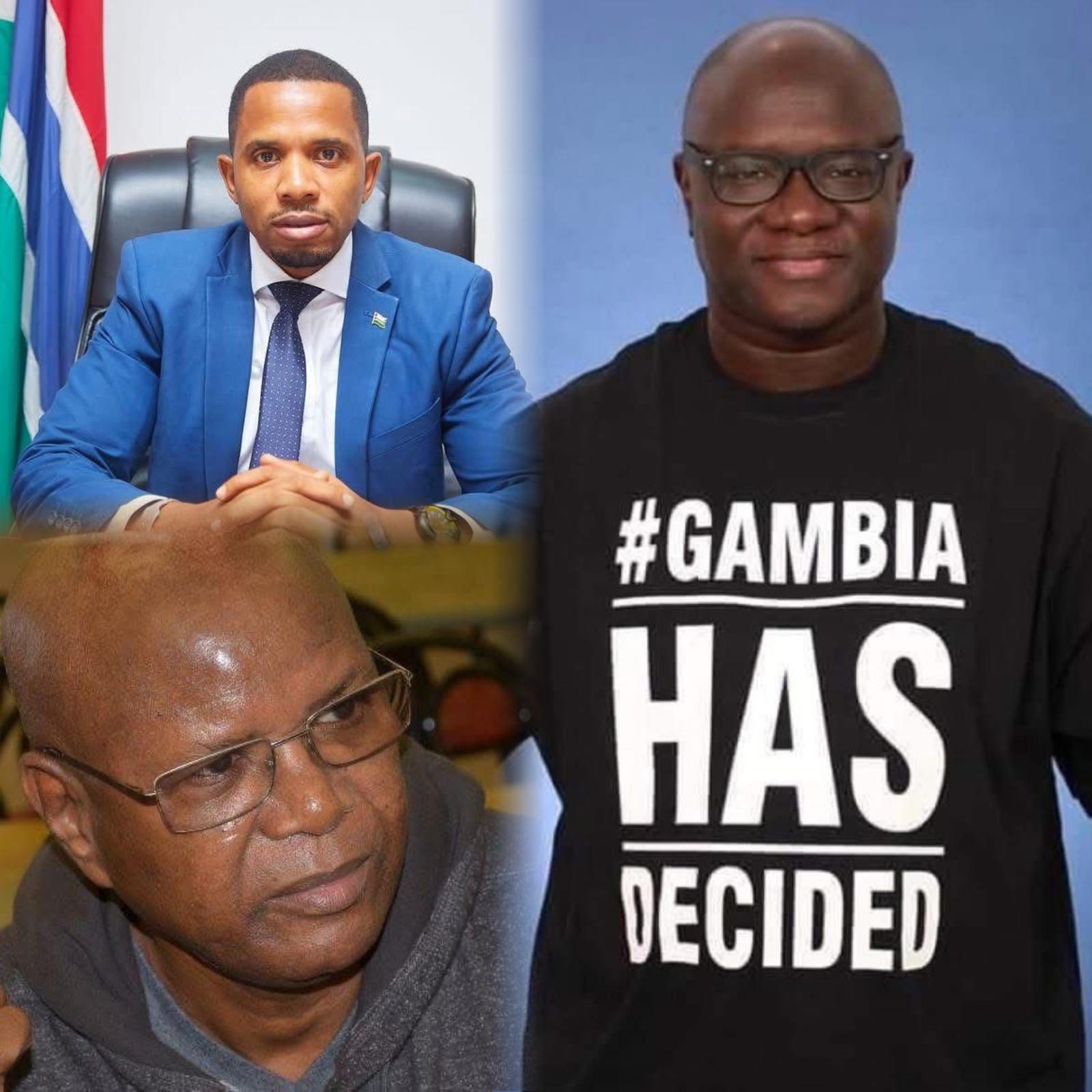
A public spat between current Minister of Information Dr. Ismaila Ceesay and his predecessor, veteran journalist Dembo A. Jawo (DA Jawo), has escalated into a broader debate on political civility, accountability, and the conduct expected of public officials in The Gambia.
The controversy began when DA Jawo, who served as Information Minister during the early years of the Barrow administration, posted a lengthy Facebook message titled “Advice to a nephew.” In it, he praised Dr. Ceesay as “one of the most effective ministers this country has ever had”. He acknowledged that the younger politician had outperformed all previous holders of the office, including himself. However, Jawo urged Dr. Ceesay to exercise greater restraint when responding to critics.
“As a cabinet minister, he should be quite measured in his utterances,” Jawo wrote, warning that personal attacks on citizens’ education, family background, or livelihoods were “out of character and public service decorum.” He reminded the minister that public attention stems from the office he holds, not personal animosity, and called on him to act as a unifier in Gambia’s closely knit society.
Dr. Ceesay responded swiftly and sharply on Saturday, rejecting the counsel outright. “DA Jawo can keep his advice,” the minister wrote, accusing the former minister of offering “hypocritical advice” possibly driven by “boredom or idleness or both.” He claimed Jawo had devoted excessive energy to criticism rather than leaving a stronger legacy during his own tenure, which Ceesay bluntly labelled “incompetent.”
“I don’t need his advice,” Dr. Ceesay continued. “Instead, he should direct his advice to those whose criticisms against government are personal and bereft of policy solutions. We are just reciprocating.”
The exchange quickly drew reactions from across Gambia’s polarized political landscape. Prominent human rights defender Madi Jobarteh entered the fray with a scathing rebuttal directed at DA Jawo, declaring the advice had been given to “the wrong person.”
“Your nephew has made insults his modus operandi,” Jobarteh wrote, arguing that Dr. Ceesay’s ministerial role had merely “exposed his true character as a person who lacks values and believes only in selfish interests.” He accused the current government, which the minister “so passionately defends unnecessarily,” of being “corrupt, incompetent and dishonest,” and warned that both President Barrow’s administration and Dr. Ceesay himself would eventually “be held accountable for corruption, abuse of office, violations of the constitution and human rights.”
Jobarteh invoked the fate of former dictator Yahya Jammeh, stating, “If public office gets into someone’s head to the point of becoming arrogant, rude, and corrupt, ask Yaya Jammeh how that power can be lost all of a sudden. Time will tell!”
The heated back-and-forth has reignited concerns about deteriorating public discourse in The Gambia, with critics arguing that personal insults from high-ranking officials undermine democratic maturity, while government supporters maintain that aggressive responses are justified when criticism crosses into personal attacks or lacks substance.
Neither Dr. Ceesay nor DA Jawo has issued further statements since the latest salvos. As the war of words plays out on social media, many Gambians are left wondering whether the country’s political class can rise above acrimony and focus on policy substance ahead of future elections.