By Ebrima Mbaye
In the heart of The Gambia’s Lower River Region, the dusty streets of Jarra Soma pulse with the rhythm of screeching tires and idling engines. For most travelers, this small town is a fleeting stopover on the road to Basse, Kombo, or Senegal. But for hundreds of vendors, many of them women and children, these brief moments of transit are the foundation of their survival. In Jarra Soma, bus stops are not just pauses—they’re livelihoods.
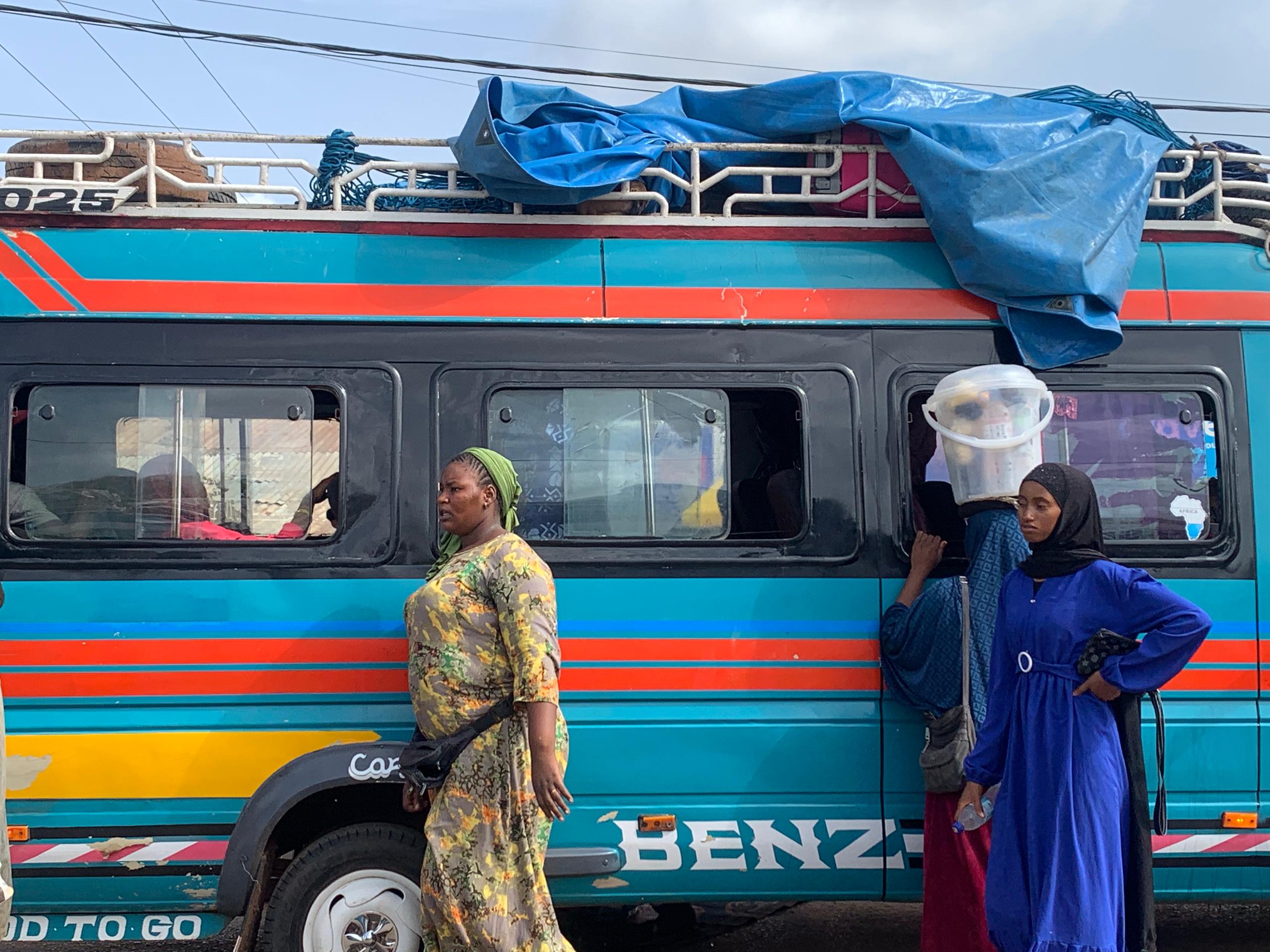
Every day, dozens of commercial vehicles—sprinters, ‘gele gelés’, vans, and GTSC buses—converge on Soma’s informal central stopover, a bustling hub distinct from the structured GTSC depot across the main road. Here, in the span of five to ten minutes, a vibrant roadside economy springs to life. Grilled chicken sizzles on charcoal stoves, tapalapa bread is stuffed with fillings, and juice bottles clink in buckets. Vendors weave through crowds, balancing trays of café Touba or calling out to passengers with drinks perched on their heads.
“If buses don’t stop, we don’t sell. And if we don’t sell, we don’t eat,” says Aja Kaddy Jabang, a 30-year-old vendor who hawks mangoes and oranges under a tattered umbrella near the garage. For Aja Kaddy and hundreds like her, these fleeting minutes are everything.
A Market Born of Movement
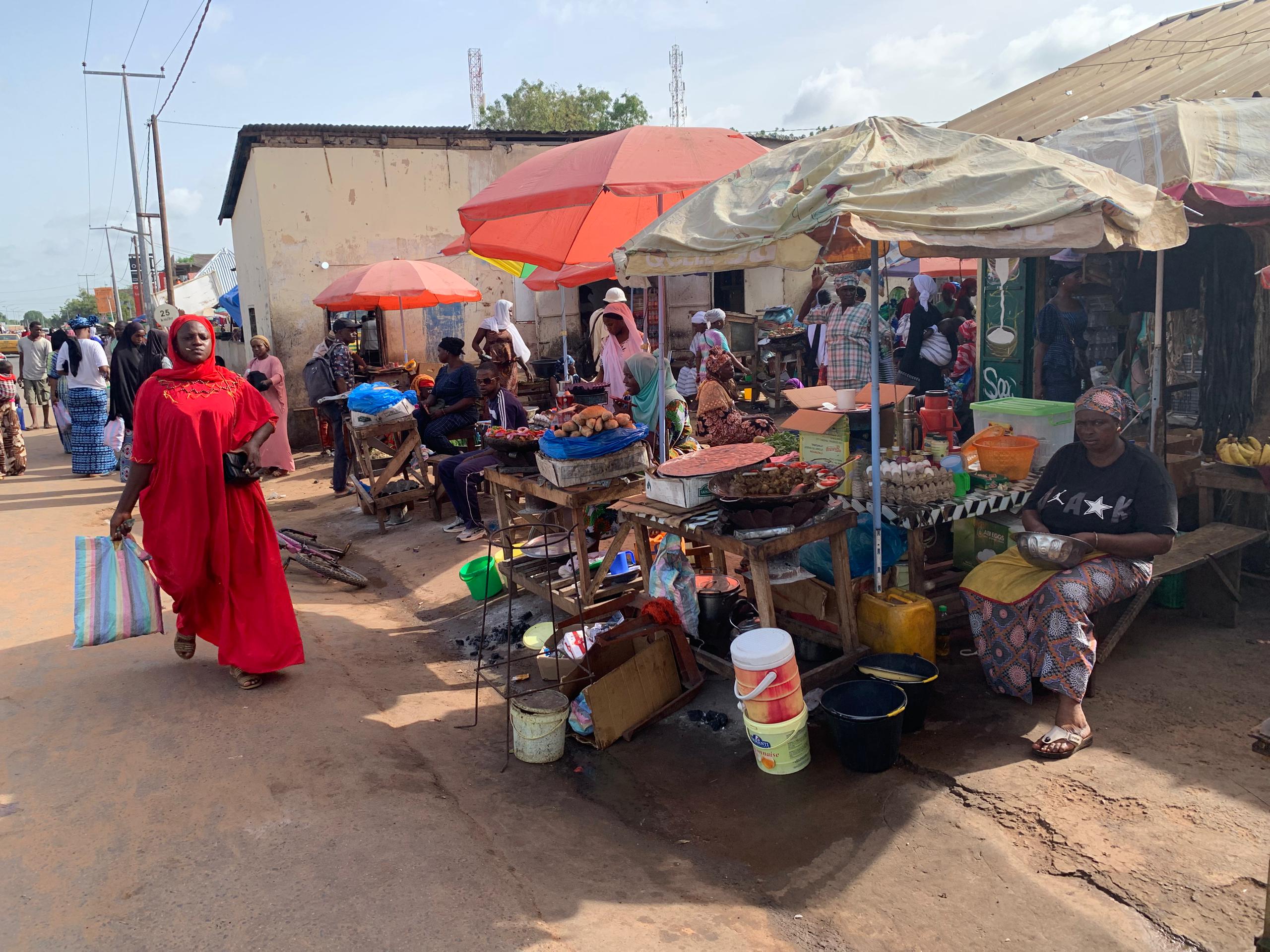
Soma’s roadside market is a study in resilience. With no formal shelter, running water, or toilet facilities, vendors endure dusty grounds and overflowing waste bins to keep their businesses alive. Women dominate the trade, selling everything from roasted chicken to cosmetics and charcoal. Mariama Jallow, a chicken and tapalapa vendor, can earn between D3500 and D4000 ($50-USD 57) on a good day. But the unpredictability of traffic takes a toll.
“Sometimes drivers tell passengers not to get down, or they skip the stop entirely,” Mariama says. “We lose everything that day.”
Vendors pay daily fees of D10 to D20 (about $0.14-USD 0.28) to the Soma Area Council, but many complain these contributions yield little in return. Infrastructure remains rudimentary, and services are scarce. Yet the market persists, driven by necessity and ingenuity.
Children in the Hustle
In Soma, childhood often gives way to economic responsibility. Fifteen-year-old Fatou Sowe wakes early to sell bottled water and homemade wonjo juice before and after school. “I make about D400 to D500 ($5.70-USD 7.14) a day,” she says. “It helps my mother buy fish or charcoal. Without this, we’d suffer.”
Boys like Modou Jatta, a teenage porter, carry heavy bags between vehicles for tips. “Sometimes I get D700 (USD 10) for a whole day,” he says. “It’s better than stealing or sitting at home.” For these young people, their earnings are not pocket money—they’re lifelines for their families.
Women at the Forefront
Soma’s market is a matriarchal powerhouse. Women like Mariama and Aja Kaddy run the show, stacking crates or sitting on plastic chairs to display their goods. Their resilience is matched only by their frustration at the lack of recognition or support. “We’re not protected, not recognized, but we keep showing up,” Mariama says.
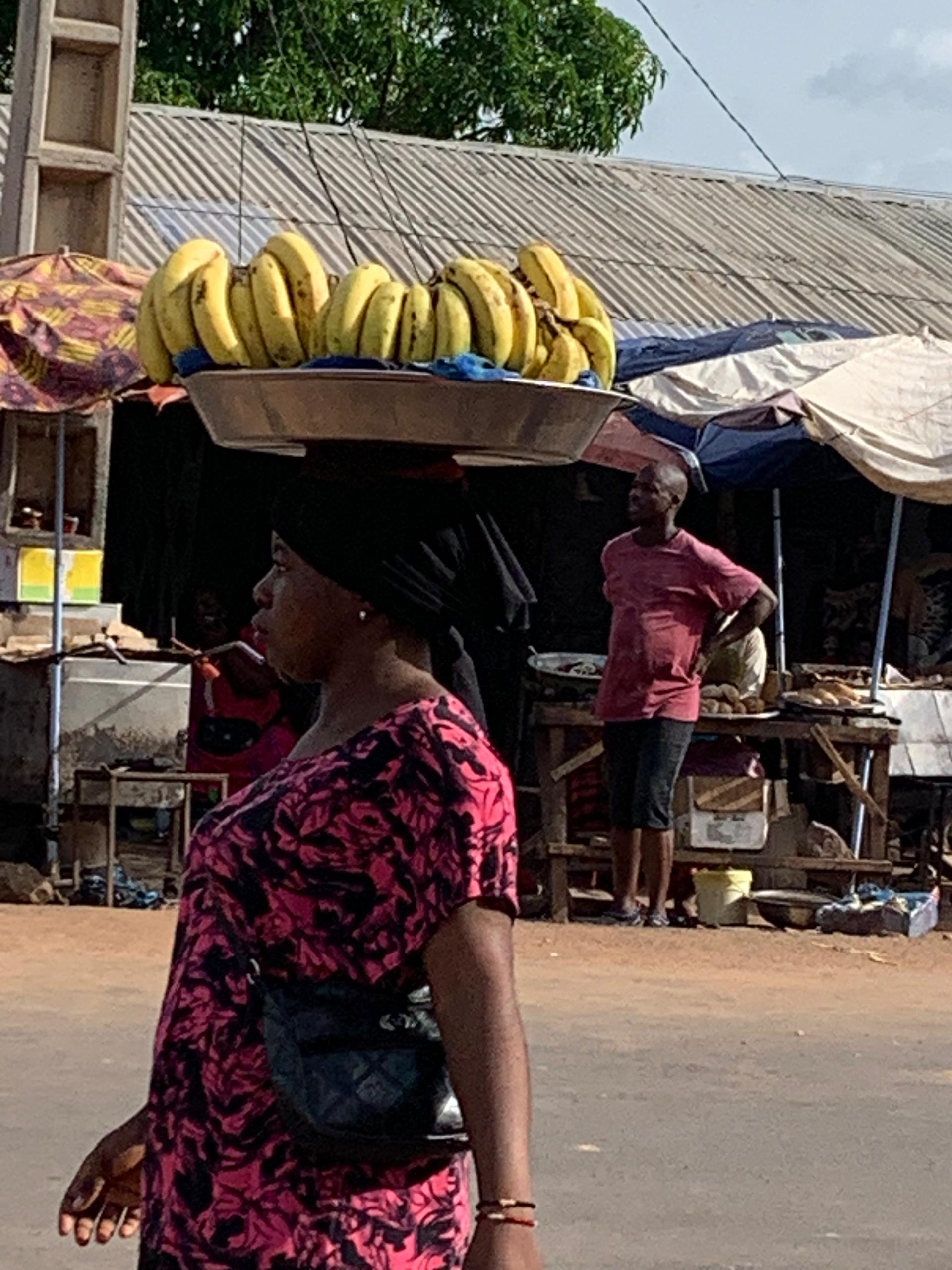
Isatou Cham, a businesswoman from Kombo who travels through Soma weekly, sees untapped potential in the town’s economy. “Soma is one of The Gambia’s most overlooked economic corridors,” she says. “It links regions, borders, and markets. With proper investment—market zoning, waste control, vendor training, microfinance, cold storage—it could be a model for rural trade and cross-border commerce.”
Dreams on the Roadside
Despite the grind, hope flickers in Soma. Lamin Ceesay, a young Senegalese vendor, sells café Touba from a kettle but dreams of opening a proper shop. “I just need a space,” he says. Fatou Sowe, the teenage juice seller, aspires to become a nurse. “Maybe one day, this will all change,” she says. “Maybe someone will see us.”
The Mansakonko Area Council has made efforts to improve conditions, recently deploying a tractor to clear street trash. A council revenue collector emphasized their commitment to a safer, healthier market environment, though they noted that few vendors consistently pay their dues. Still, these small steps fall short of the structural changes traders crave.
More Than a Stopover
To passing travelers, Jarra Soma is a brief interlude—a chance to stretch, eat, and move on. But to its vendors, it’s a lifeline. In those fleeting minutes between arrival and departure, children earn money for school lunches, women feed their families, and young men chase their futures. Soma’s roadside market is a testament to rural resilience, community commerce, and human potential.
If supported with investment and infrastructure, Soma could transcend its role as a survival market. It could become a national symbol of what’s possible when movement meets opportunity. Until then, the town will keep doing what it does best: trading in minutes, surviving in silence, and hoping for something better.