By Alieu Ceesay
Tensions are rising in Kartong, one of the oldest settlements in Kombo South, as village elders and community leaders voice strong opposition to the government’s recent land demarcation exercise, which they claim threatens their ancestral lands and livelihoods. The demarcation, intended to resolve longstanding land disputes in southern Kombo, has instead sparked outrage, with locals accusing authorities of excluding them from the process and encroaching on their farmlands.
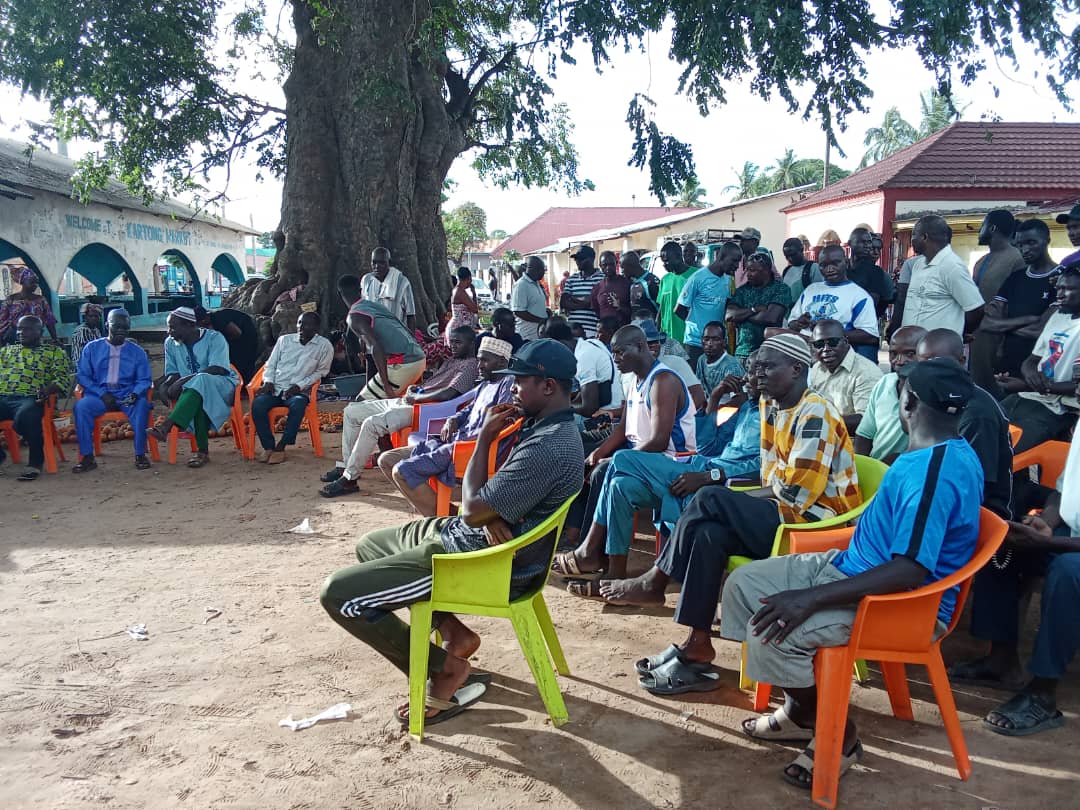
The unrest came to a head during a gathering at the compound of 94-year-old Alkalo Demba Jabang, a respected village elder. Jabang expressed deep dissatisfaction with the government’s approach, stating that Kartong’s leadership was neither informed nor consulted about the demarcation exercise. “I was just at home when someone came and told me that PIU officers were making demarcations for boundaries,” Jabang said, his voice heavy with frustration. “If the government wants to do a demarcation, they should inform us, and we should be part of this exercise.”
According to the elders, the demarcation has reassigned over two kilometers of Kartong’s ancestral lands, including areas used for farming in the settlements of Madina Salam and Berending, to the neighboring village of Gunjur. These lands are vital to the community, serving as a primary source of income and sustenance through agriculture. The loss of this territory, locals argue, could devastate their livelihoods.
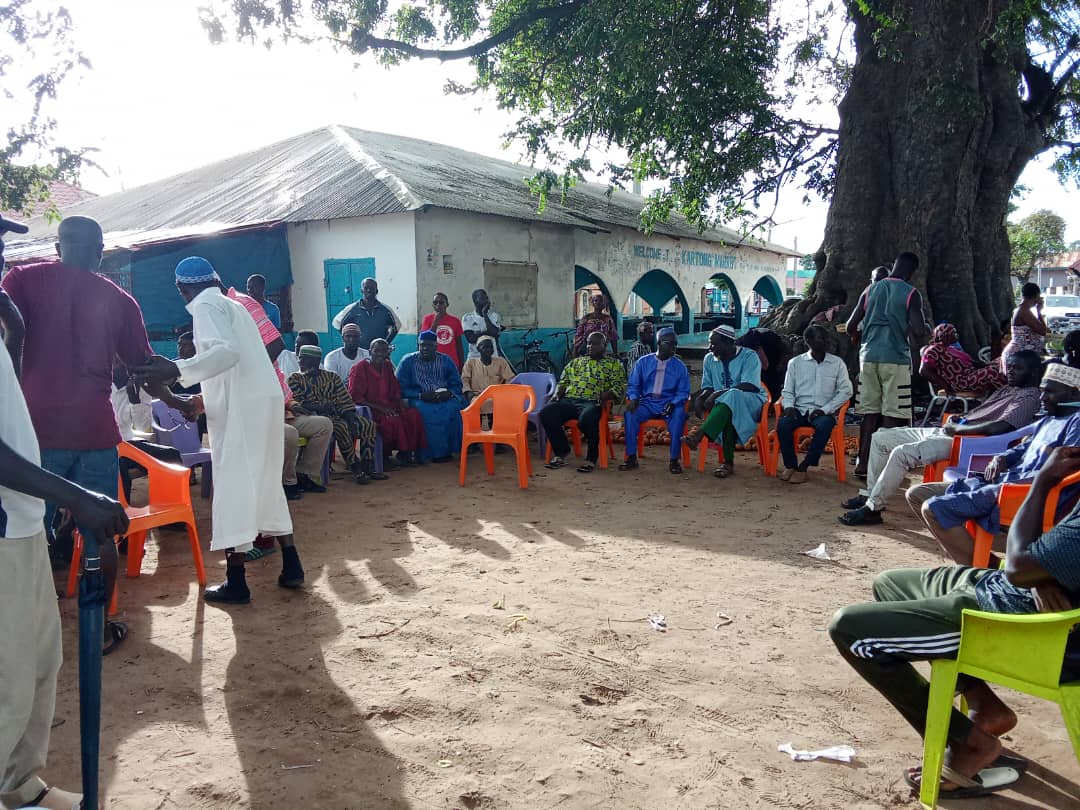
Bala Musa Manneh, a prominent community leader, described the situation as dire. “The land is our farms. If they forcibly take it from us, where are we going to farm? It’s like they’ve taken something our livelihoods depend on,” he said. Kartong’s geographical position, surrounded by water on three sides and bordered by Gunjur on the fourth, makes these lands even more critical, as they represent the community’s only viable agricultural space.
The sentiment in Kartong is one of defiance. Imam Kawsu Manneh, another elder, issued a stark warning to authorities: “Let the government come and remove its borderlines in our bush. We are not going to allow them to take our lands—whether by death or alive, we will take our lands back.” His words reflect the community’s resolve to protect their heritage, even at significant personal cost.
Kartong, a historic village near the Gambia-Senegal border, has long maintained a cordial relationship with Gunjur, according to Alkalo Jabang. He urged the government to act reasonably to preserve this harmony. “There has always been a strong relationship between Kartong and Gunjur. We call on the government to play fairly so this bond remains,” he said.
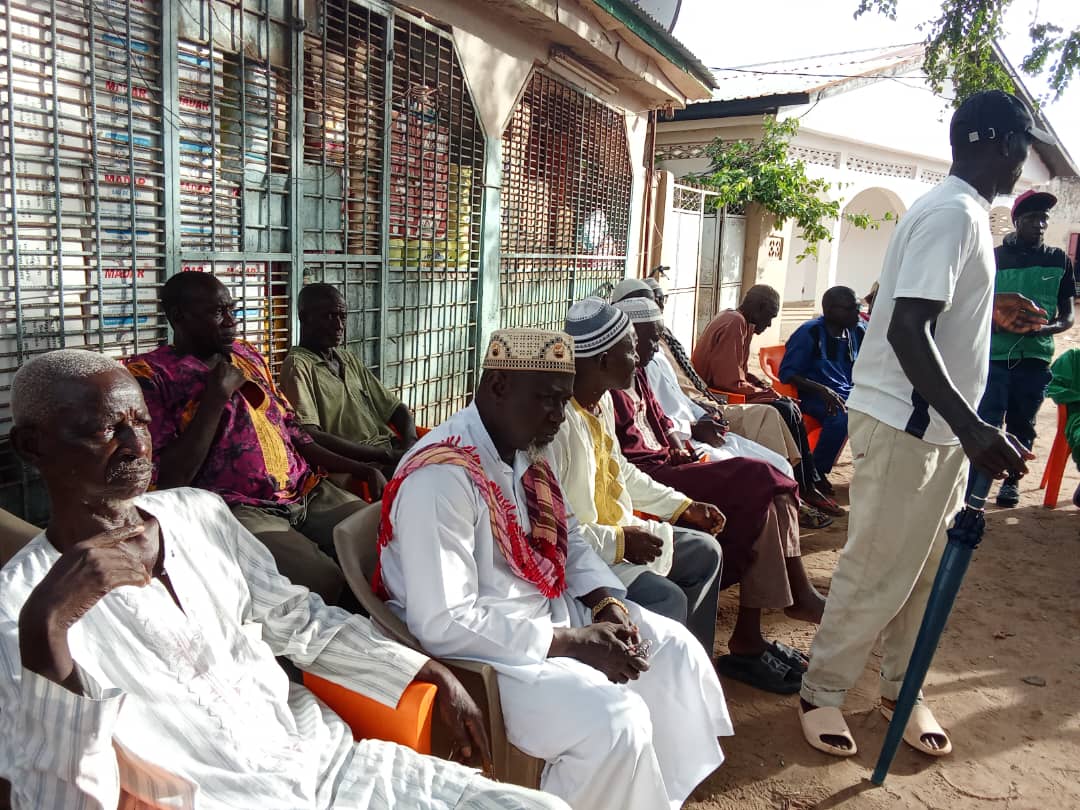
The elders also pointed fingers at estate land agents, accusing them of manipulating land conflicts nationwide for profit. With several land dispute cases still pending, the future of Kartong’s contested lands remains uncertain, leaving the community in a state of limbo.
The government’s demarcation initiative was launched to address escalating land disputes in southern Kombo, where conflicts have occasionally turned deadly. However, the lack of transparency and community involvement has only deepened mistrust in Kartong. Residents fear that without urgent action, their agricultural lifeline could be severed, which would threaten the village’s economic and cultural survival.
In response to the growing unrest, Kartong’s leaders are preparing to meet with officials from the Ministry of Lands in Banjul on Monday for further discussions. The community hopes this meeting will provide clarity and a path toward resolving the dispute. For now, the people of Kartong remain steadfast, vowing to defend their ancestral lands against what they see as an unjust overreach.