A 40-year-old Gambian national, Lamin Saho, also known as “Buck,” has been sentenced to six years in federal prison for his role as a prolific distributor in a major fentanyl trafficking organization operating in the greater Seattle region. The sentencing, handed down on Monday in U.S. District Court in Seattle, underscores the ongoing U.S. efforts to combat the deadly opioid crisis fueled by illicit fentanyl distribution.
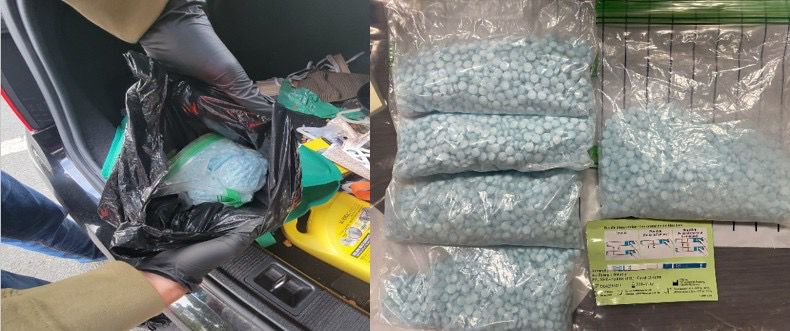
According to the U.S. Department of Justice and the Drug Enforcement Administration (DEA), Saho was a significant player in a drug trafficking ring that supplied thousands of fentanyl pills across areas from Kent to Everett, with key distribution points in Seattle’s University District. Investigators identified him through a year-long wiretap investigation, which revealed his access to as many as 10,000 pills at a time. Even after authorities seized 5,000 fentanyl pills from him during a traffic stop, wiretap intercepts showed he continued his operations undeterred.
Saho pleaded guilty to federal drug trafficking charges. U.S. District Judge John H. Chun, during the sentencing hearing, emphasized the devastating impact of fentanyl, stating, “Fentanyl is a dangerous drug that has devastated far too many lives. One has only to walk out on the streets of Seattle to see how it has devastated our community.”
The broader investigation, which began with arrests of 14 individuals in October 2024 and five more in late 2025, dismantled a violent network where members were often armed while guarding or distributing drugs. Law enforcement seized over 200,000 fentanyl pills, four kilograms of cocaine, 60 firearms (including Glock switches and suppressors), and $250,000 in drug proceeds. Other members of the ring have received sentences ranging from four to ten years.
Saho, a citizen of The Gambia without U.S. immigration status, faces deportation upon completion of his prison term. He was also ordered to serve four years of supervised release following his release.
U.S. Attorney Charles Neil Floyd highlighted the collaborative effort involving Homeland Security Investigations (HSI), DEA, Seattle Police Department, and other agencies in disrupting the supply chain of synthetic opioids. “DEA is committed to protecting the United States from synthetic opioids by disrupting the fentanyl supply chain, reducing its availability, and saving American lives,” a DEA spokesperson stated.
This case highlights the involvement of foreign nationals in aspects of the U.S. fentanyl epidemic, which continues to claim lives across communities. Authorities remain focused on holding distributors accountable amid rising overdose concerns in Washington State.