By: Abdoulie John
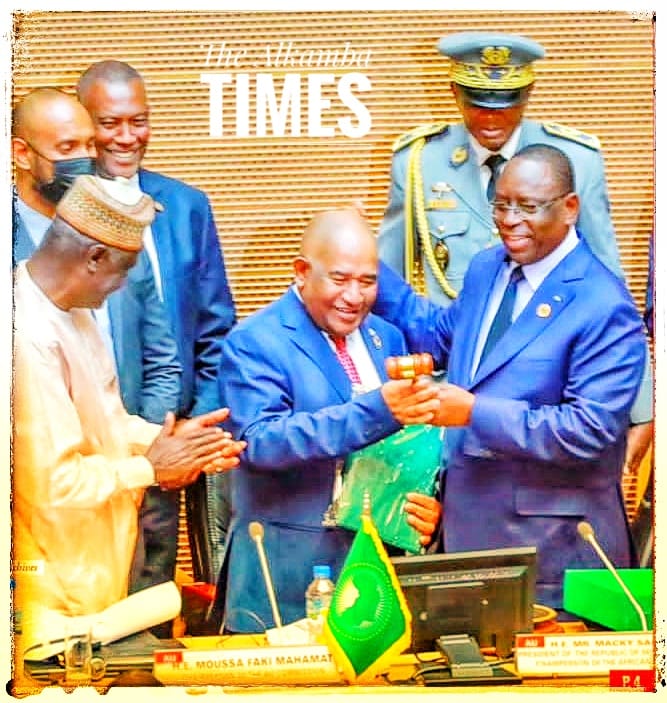
In a significant setback for Senegal’s former President Macky Sall, the African Union has declined to endorse his candidacy for the position of United Nations Secretary-General, dashing hopes that he would emerge as the continent’s unified candidate to succeed António Guterres.
The AU Commission announced on Friday that a draft decision supporting Sall’s bid failed under the “silence procedure,” a consensus-building mechanism that allows member states to object without open debate. By the close of business on March 27, 2026—the set deadline—20 member states broke the silence, preventing adoption of the proposal. The Commission explicitly debunked earlier media reports suggesting the continental body had approved his candidacy.
“The Commission wishes to inform esteemed Ministries and Permanent Missions that by close of business today, 27th March 2026, which was the set deadline for the silence procedure, twenty (20) Member States have broken the silence on the adoption of the draft decision. Therefore, the circulated draft on the UN Secretary General candidacy of H.E. Macky Sall… has not been adopted,” the statement read.
Sall, who served as Senegal’s president from 2012 to 2024 and chaired the AU from 2022 to 2023, was formally nominated on March 2, 2026, by Burundi, the current AU chair. His name was registered with the UN, making him one of three official candidates alongside former Chilean President Michelle Bachelet and Argentine diplomat Rafael Grossi, who heads the International Atomic Energy Agency. Guterres’ second term ends on December 31, 2026, with the new Secretary-General expected to take office on January 1, 2027.
However, the bid quickly faced internal resistance. Senegal’s current government, under President Bassirou Diomaye Faye, firmly distanced itself from the effort. In a statement issued through its Permanent Mission to the AU, Dakar declared it had “never supported or participated in any initiative” promoting Sall’s candidacy. It emphasized that the move originated from Burundi without Senegal’s consent.
“Senegal clearly distances itself from it and refuses to be considered involved,” the mission stated, underscoring a clear rift between the former leader and the new administration.
Sall’s communications team pushed back, arguing that the failure was not total. Of the 55 AU member states, they noted that only 14 raised outright objections while 6 requested extensions, leaving 35 that did not block the draft. They further claimed that Egypt had withdrawn its request for an extension and Liberia had dropped its objection, reducing active opposition to 13 objections and 5 extension requests. The team insisted that Sall’s UN-registered candidacy “remains valid” and thanked supportive states, the AU Bureau, and organizations such as United Cities and Local Governments of Africa (UCLG Africa).
The episode highlights deep divisions within Africa over Sall’s ambitions. Critics point to his record at home, where demands for accountability have grown. Opposition groups and civil society allege that between 2021 and 2024, his government cracked down on protests led by the PASTEF opposition movement, resulting in nearly 100 deaths and the jailing of around 2,000 demonstrators. Calls for justice from an estimated 3,000 victims have intensified since he left office.
The AU’s decision not to endorse Sall leaves Africa without a unified candidate for the UN’s top post at a time when many on the continent have pushed for greater representation in global leadership. While regional rotation is not strictly binding, African diplomats have long advocated for the position to reflect the organization’s growing influence.
As the UN selection process—involving nominations, General Assembly hearings, and an eventual recommendation by the Security Council—moves forward, Sall’s campaign continues independently. Whether he can build sufficient international support without continental backing remains uncertain. For now, the former Senegalese leader’s high-profile bid has exposed fault lines within the African Union and between Senegal’s past and present leadership.