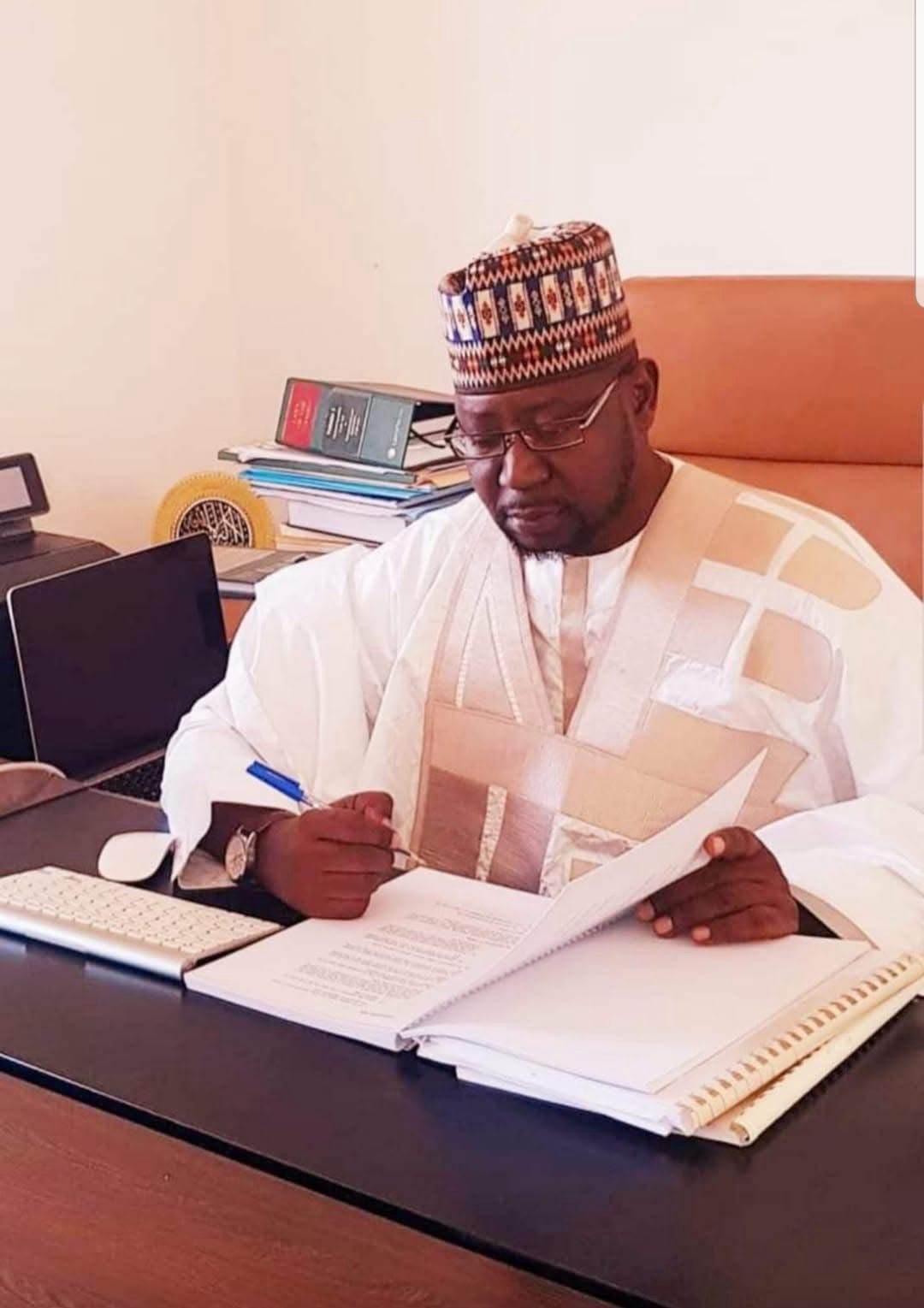
Mai Ahmad Fatty, leader of the Gambia Moral Congress and former Interior Minister, has addressed critics of his proposal to redirect millions of dollars from prosecuting former President Yahya Jammeh to providing reparations for victims of his alleged human rights abuses.
Fatty defended his stance in a statement, emphasizing progress, dialogue, and a shared vision for The Gambia’s future.
Facing backlash over his suggestion to prioritize victim support over the estimated $60 million (over 4.2 billion Dalasi) cost of a tribunal for Jammeh, Fatty urged detractors to engage in constructive dialogue. “I see you. I respect your right to question. That’s the essence of a free and thinking society,” he said, acknowledging the sensitivity of the issue. “My purpose is not power; it is progress,” he added, stressing that reparations—through healthcare, education, and economic aid—would better serve victims of Jammeh’s 22-year regime, marked by accusations of torture, extrajudicial killings, and enforced disappearances.
Fatty, a survivor of an assassination attempts under Jammeh’s rule, clarified that his position does not dismiss justice but seeks to prioritize healing. “Progress is a relative concept, and we will never all agree on priorities or goals,” he noted, encouraging Gambians to work together despite differences. He addressed accusations of political motives, particularly due to his party’s ties to Jammeh’s former allies, by asserting, “No one is an angel here or perfect. It is easy to keep second-guessing each other’s motives, but none of us has the right to claim superiority.”
In a nod to democracy, Fatty invited critics to listen objectively. “You don’t have to support my views. Yet, if you listen closely, you’ll hear not a man speaking for himself but for a future we all share,” he said. As a father, he expressed concern for the next generation, stating, “Some of my children are no longer teenagers, and I am concerned about the type of country we will hand over to them.”
The debate follows ongoing discussions about implementing the Truth, Reconciliation, and Reparations Commission (TRRC) recommendations, which include prosecuting Jammeh and 70 others. While some victims’ groups and activists insist on legal accountability, Fatty’s call for reparations has resonated with those who see immediate victim support as a form of justice. “The Gambia must work for everyone. That is my commitment. That is my purpose,” he concluded.