By Abdoulie John
As the 85th Ordinary Session of the African Commission on Human and Peoples’ Rights (ACHPR) progresses in Gambia, Mauritanian human rights defenders have issued a powerful call to action, urging their government to address the persistent issues of caste, slavery, and descent-based discrimination. The session, hosted at the Sir Dawda Kairaba Jawara Conference Center in Bijilo, approximately 12 kilometers from Banjul, has become a critical platform for highlighting systemic human rights challenges in Mauritania.
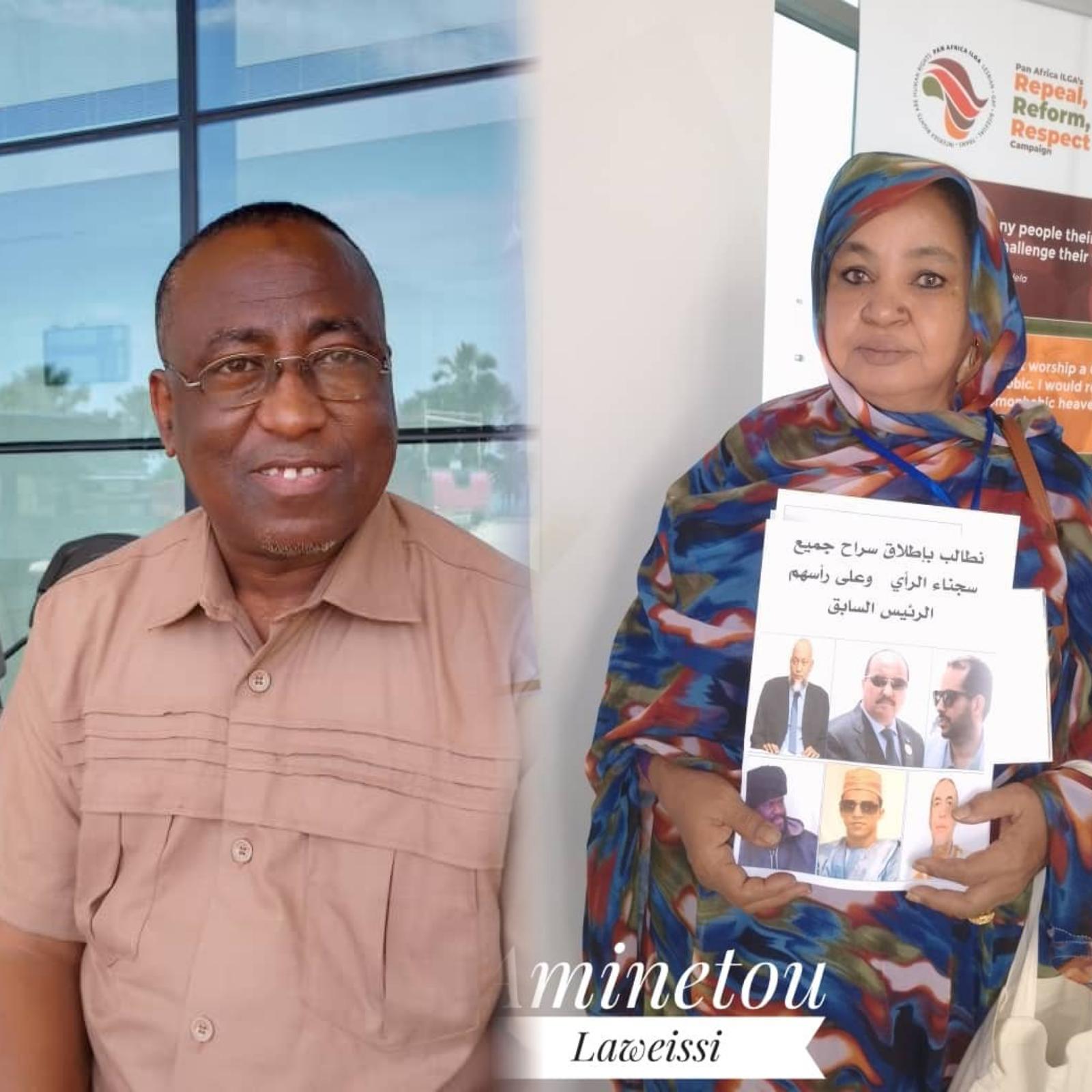
Cheikh Sidaty Hamady, a senior expert on discriminated communities and a member of the Italy-based Global Forum of Communities Discriminated (GFOD), described Mauritania as a “paradox” in an exclusive interview with Alkamba Times. “The country has endorsed major international treaties but has failed to turn this commitment into reality,” Hamady stated, pointing to the disconnect between Mauritania’s legal obligations and its domestic practices.
Despite the passage of a 2015 law criminalizing slavery, Hamady emphasized that the practice persists due to a lack of political will. “There is no serious effort from the authorities. They continue to turn a blind eye to this phenomenon,” he said, his voice tinged with exasperation. He noted that between 2015 and 2023, only five slavery cases were heard across Mauritania’s three Special Courts, a stark indication of inadequate enforcement.
In a concerning development, Hamady revealed that a new Special Court was established in 2024 to address a growing backlog of cases. However, only one case has been heard so far, which he suggested was a superficial effort to appease international donors, particularly the European Union, whose funding could be at risk if Mauritania fails to demonstrate progress on human rights.
Hamady’s critique extended to Mauritania’s entrenched caste system and descent-based discrimination, which he argued are incompatible with modern values. “This ancient social structure is the main challenge for the country. It cannot survive modernity,” he asserted, calling for its dismantlement to ensure equality and justice for all Mauritanians.
Echoing Hamady’s concerns, activist Aminetou Laweissi urged Mauritanian authorities to uphold human rights and the rule of law. She specifically called for the release of political detainees, emphasizing the need for accountability and transparency in governance. Laweissi’s remarks underscored the broader demand for systemic reforms to address Mauritania’s human rights violations.
The ACHPR session, which runs from October 18 to 31, 2025, follows the NGOs Forum held from October 18 to 20 at the same venue. The forum brought together a diverse array of human rights and civil society organizations, fostering critical discussions on pressing issues across the continent. For Mauritanian activists, the gathering has provided a vital opportunity to amplify their calls for change on an international stage.
The persistence of slavery and caste-based discrimination in Mauritania remains a contentious issue, drawing scrutiny from both regional and global human rights bodies. Despite legal frameworks aimed at eradicating these practices, activists argue that implementation remains woefully inadequate. The establishment of Special Courts, although a step in the right direction, has yet to yield meaningful results, as systemic barriers and political inertia hinder progress.
As the ACHPR session continues, the spotlight on Mauritania’s human rights record grows stronger. Activists like Hamady and Laweissi are resolute in their mission to hold authorities accountable, demanding not only the enforcement of existing laws but also a fundamental shift in societal structures that perpetuate inequality. Their voices, amplified by platforms like the ACHPR, underscore the urgency of addressing these deep-rooted issues to build a more just and equitable Mauritania.
The deliberations in Bijilo serve as a reminder of the power of collective advocacy. With the international community watching, the pressure is on Mauritanian authorities to translate their commitments into tangible action, ensuring that the principles of human dignity and equality are upheld for all.