By Ebrima Mbaye and Alieu Ceesay
The Network Against Gender Based Violence (NGBV) has issued a strong condemnation following the heartbreaking death of a one-month-old baby girl in Wellingara, reportedly due to complications from Female Genital Mutilation (FGM). The Gambia Police Force confirmed that the infant suffered severe bleeding after being subjected to the procedure, leading to her untimely death.
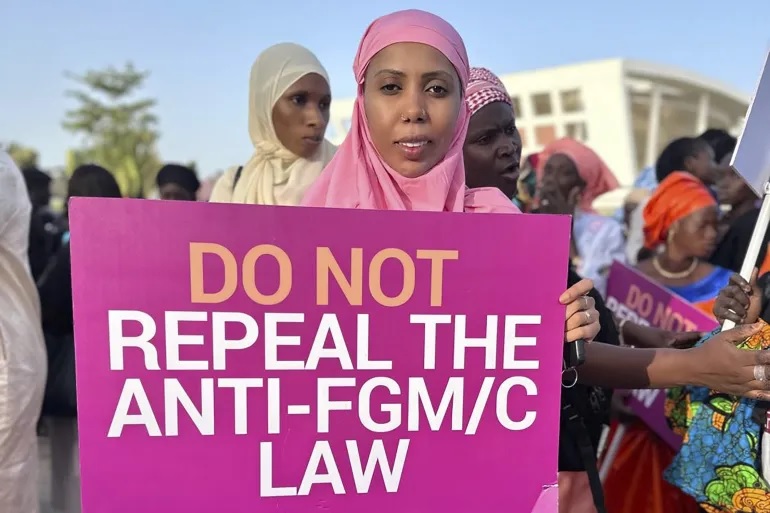
In a press statement released on Monday, August 11, 2025, the NGBV expressed profound shock and sorrow, describing the incident as “a stark reminder of the deadly consequences of this harmful traditional practice.” The organization highlighted that FGM continues to endanger the lives, health, and dignity of girls across The Gambia, despite its criminalization under the Women’s (Amendment) Act of 2015.
The NGBV, in partnership with the CSO Coalition Against FGM, reiterated its unwavering call for the complete eradication of FGM, labeling it “a gross violation of human rights.” The group emphasized the urgent need for zero tolerance to safeguard the lives and reproductive health of future generations. “This tragedy is a painful wake-up call,” the statement read, urging immediate action to prevent further loss of life.
The organization called on the Government of The Gambia to rigorously enforce the 2015 legislation banning FGM, noting that weak enforcement, particularly in rural areas, has allowed the practice to persist. Rights groups have long warned that cultural and traditional beliefs continue to drive FGM, despite its known risks, including severe bleeding, infections, and long-term health complications.
In addition to stricter enforcement, the NGBV urged communities to remain vigilant and report suspected cases of FGM. The group also appealed to religious and community leaders to take a firm stand against the practice, leveraging their influence to shift cultural attitudes. “Religious leaders have a critical role in speaking out against FGM and promoting the dignity and rights of girls,” the statement noted.
The NGBV further demanded a “thorough, impartial, and transparent investigation” by the Gambia Police Force to ensure that those responsible for the infant’s death are held accountable. “Justice must be served to deter others from perpetuating this dangerous practice,” the group asserted, emphasizing the need for swift and decisive action.
FGM, which involves the partial or total removal of external female genitalia for non-medical reasons, was outlawed in The Gambia a decade ago. However, enforcement challenges and deeply rooted traditions have hindered progress in eliminating the practice, particularly in rural regions where awareness of the law remains low.
The tragic loss of the infant has reignited calls for stronger measures to combat FGM. The NGBV and its partners are pushing for increased education, community engagement, and legal accountability to protect vulnerable girls. “We cannot allow another life to be lost to this preventable tragedy,” the NGBV concluded, vowing to intensify efforts to end FGM in The Gambia.
As the investigation unfolds, the nation mourns the loss of a young life, with advocates hoping this tragedy will galvanize action to ensure no more girls suffer the consequences of FGM.