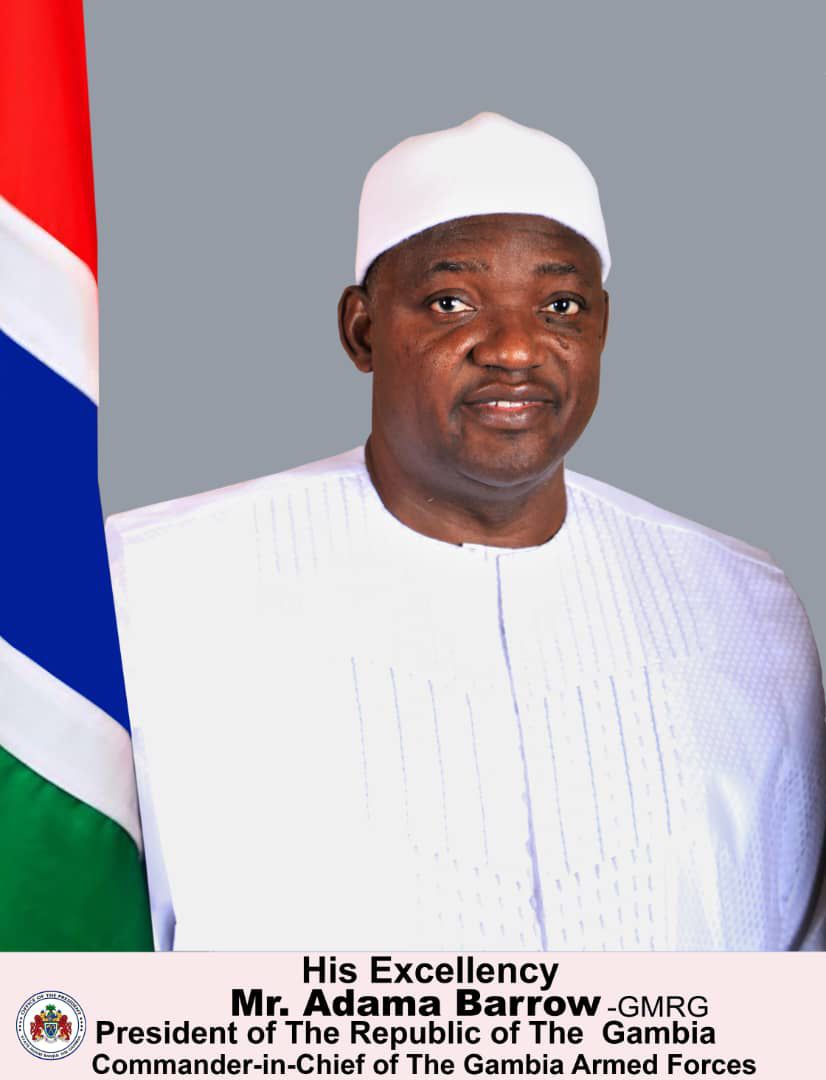
As the United States and Israel press their intensive aerial campaign against Iran into its sixth day, Gambian President Adama Barrow, in his role as Chair of the 15th Islamic Summit of the Organisation of Islamic Cooperation (OIC), has issued a stark warning about the dangers of further escalation in the Middle East.
The conflict erupted on February 28, 2026, when joint US-Israeli forces launched coordinated strikes codenamed “Operation Epic Fury” (US) and “Operation Roaring Lion” (Israel). The attacks targeted Iranian leadership, military command structures, nuclear-related facilities, ballistic missile sites, and air defenses. Israeli and US officials described the operations as preemptive and aimed at neutralizing existential threats from Iran’s nuclear and missile programs, while also seeking to destabilize the Islamic Republic’s regime. Early strikes reportedly killed Supreme Leader Ayatollah Ali Khamenei, along with dozens of senior officials, including IRGC commanders and defense ministry figures, creating a leadership vacuum now filled by an Interim Leadership Council.
Iran responded rapidly with Operation True Promise IV, launching hundreds of ballistic missiles and drones at Israel and US military bases across the region. Retaliatory strikes have hit targets in Jordan, Kuwait, Bahrain, Qatar, the United Arab Emirates, Saudi Arabia, and Iraq—nations hosting American forces—causing civilian casualties, damaging infrastructure, including airports and oil facilities, and rattling Gulf Arab states. Iranian proxies, notably Hezbollah in Lebanon, have intensified attacks on northern Israel, prompting renewed Israeli bombardments in Lebanon. The conflict has spilled beyond immediate borders, with reports of Iranian drone strikes in Azerbaijan, threats to close the Strait of Hormuz, and a US submarine sinking an Iranian warship near Sri Lanka.
Casualty figures remain fluid and contested. Iranian sources report over 1,000 deaths—including significant civilian tolls—and thousands wounded from sustained US-Israeli airstrikes, now in their 11th wave on Tehran alone. Israel and the US have reported dozens of their own casualties and losses, while emphasizing the degradation of Iranian capabilities.
In his communiqué from State House in Banjul on March 4, President Barrow expressed deep concern over the “unfolding developments” that risk plunging an already fragile region into broader instability, with severe threats to civilian lives, critical infrastructure, and global security. He called on all parties—the United States, Israel, Iran, and their allies—to exercise maximum restraint, halt further military actions, and fully respect the UN Charter, international law, state sovereignty, and international humanitarian law protections for civilians.
Reaffirming the OIC’s longstanding commitment to peaceful resolutions, Barrow stressed that dialogue, diplomacy, and constructive engagement offer the only viable path to de-escalation and sustainable peace. He urged reliance on United Nations mechanisms and other international forums, pledging the OIC’s readiness to mediate and support genuine efforts toward resolution.
President Barrow concluded by reiterating The Gambia’s dedication to peace, justice, and the rule of international law, while appealing to the global community to intensify diplomatic pressure to prevent catastrophe and preserve regional and worldwide stability.
The statement reflects mounting alarm among OIC member states and the broader international community as the war widens, oil prices surge, and fears grow of a prolonged multi-front conflict with unpredictable global repercussions.