By: Fatou Dahaba
The Gambia’s Office of the Ombudsman is facing intense scrutiny from lawmakers following a series of audit revelations that exposed administrative oversights, questionable payments, and significant unspent public funds.
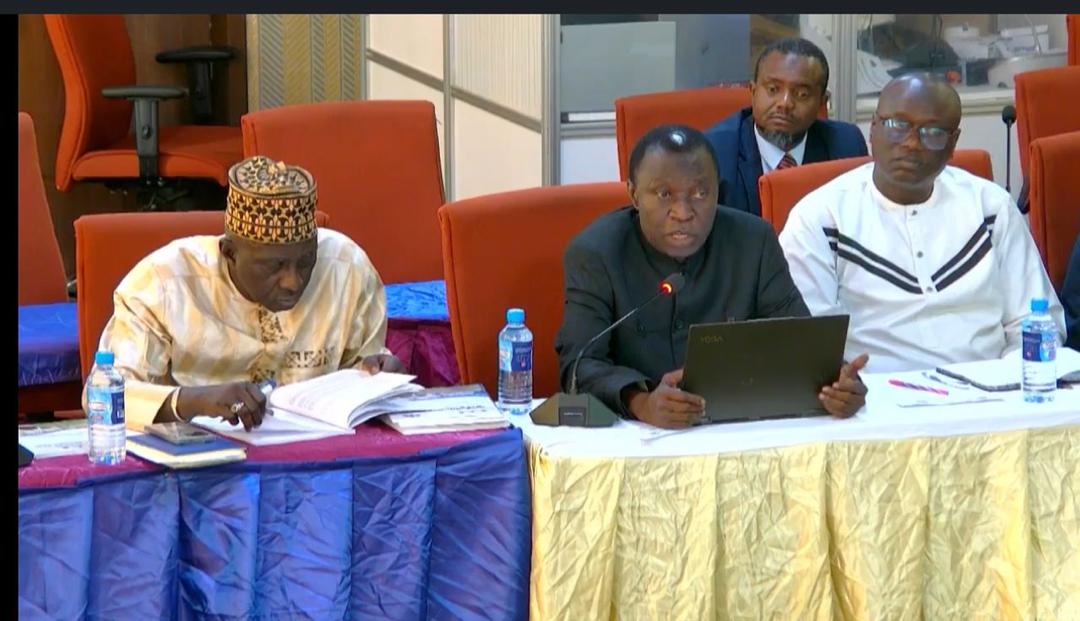
During a recent session of the National Assembly’s Standing Committee on Finance and Public Accounts, auditors presented findings from the review of the institution’s financial statements and operations for 2023 and 2024. The probe uncovered multiple irregularities that have raised questions about accountability within the anti-corruption and oversight body.
Among the key issues, auditors reported that a staff member on approved leave of absence to work abroad failed to remit mandatory pension contributions totaling D320,062, in violation of government regulations. The audit team recommended immediate recovery of the amount and its remittance to the Treasury.
The Ombudsman’s office also came under criticism for failing to produce mandatory annual reports as stipulated in the Office of the Ombudsman Act 1997. Despite repeated demands from auditors, no such documents were submitted for the periods under review.
Financial discrepancies extended to fuel allowances. In November 2023, the Ombudsman received an additional D10,000, and each of the two deputies received D5,500, beyond their standard monthly entitlements, without any documented justification or approval. Auditors called for the recovery of the excess amounts and urged the adoption of a formal fuel management policy to prevent future occurrences.
A particularly striking concern was the idle use of public funds. Approximately D1.5 million budgeted for staff medical insurance since 2022 remained completely unutilized, while another D19.9 million had accumulated in the office’s bank account from prior years. Auditors advised that these funds be surrendered to the Ministry of Finance for reallocation.
Further irregularities included a 50 percent across-the-board increase in staff allowances, implemented without supporting documentation or proper authorization. The audit warned that such payments should be suspended and recovered unless a valid justification is provided.
Operational shortcomings were also highlighted. Of the office’s twelve vehicles, only seven remained roadworthy, with five in severely deteriorated condition and unused. The auditors recommended disposing of unserviceable assets and procuring replacements to address mobility constraints that hamper complaint investigations.
Despite these findings, the auditors granted an unqualified opinion on the financial statements, confirming compliance with the Public Finance Act 2014 and international public sector accounting standards.
Ombudsman officials defended the institution’s record, noting the opening of a new regional office in 2024, achieving nationwide coverage, alongside ongoing prison visits and complaint handling. They acknowledged, however, persistent operational difficulties at detention facilities due to limited funding.
The committee adjourned deliberations to allow a deeper review of the audit recommendations, with indications that the Ombudsman’s office may be recalled for further clarifications.
The developments have sparked renewed calls for stronger internal controls and transparency in public institutions charged with upholding good governance.