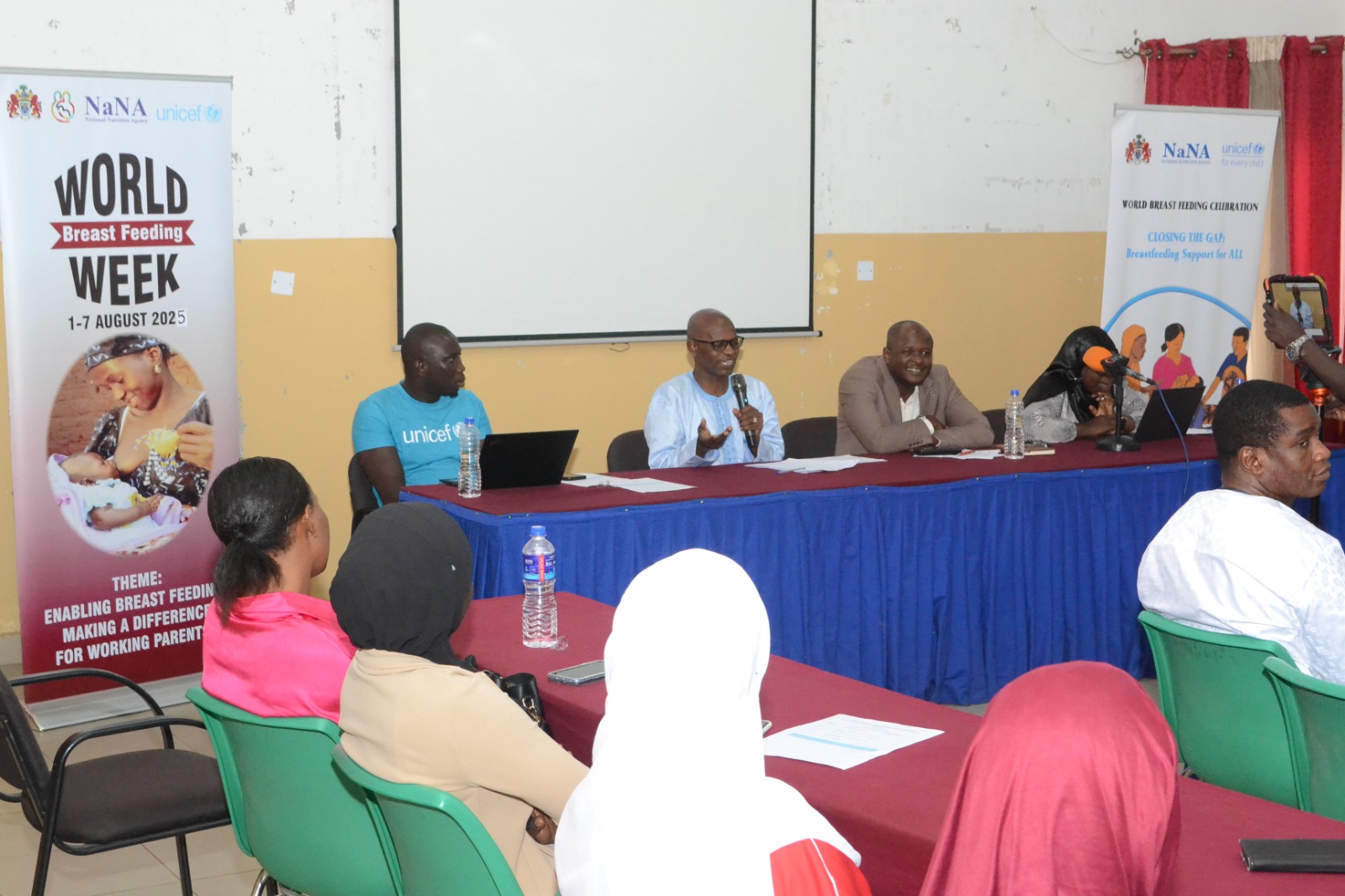
Approximately 820,000 children’s lives could be saved each year if all children aged 0-23 months were optimally breastfed, according to Bakary Jallow, Deputy Executive Director of the National Nutrition Agency (NANA). Speaking at a press briefing on Thursday, August 7, 2025, at NANA’s conference hall to mark World Breastfeeding Week, Jallow highlighted the critical role of breastfeeding in combating child mortality and undernutrition. He noted that in 2022, 45% of global child deaths were linked to undernutrition.
Jallow cited World Health Organization (WHO) data, revealing that 149 million children under five are stunted, 45 million are wasted, and 37 million are overweight or obese. These alarming statistics underscore the urgency of improving breastfeeding practices worldwide. In The Gambia, exclusive breastfeeding rates for the first six months have risen from 48% in 2013 to 54% in 2019/20. However, Jallow stressed the need for increased support to achieve the World Health Assembly’s target of 70% exclusive breastfeeding by 2030.
World Breastfeeding Week, observed annually from August 1 to 7, is a global initiative led by the World Alliance for Breastfeeding Action, WHO, and UNICEF. It promotes exclusive breastfeeding for the first six months of life, followed by continued breastfeeding with complementary foods up to two years or beyond. Jallow emphasized that breastfeeding provides essential nutrients, protects infants from deadly diseases like pneumonia, reduces food insecurity, and supports healthy growth and development. “Every child should be breastfed exclusively for the first six months, regardless of background or status,” he said.
The Gambia has made significant strides in promoting breastfeeding through policies like the Nutrition Act 2024, the National Nutrition Policy, and the Multi-Sectoral Nutrition Strategic Plan. Other efforts include enforcing the Breastfeeding Regulations 2006 and implementing the Baby Friendly Hospital Initiative, which led to the Baby Friendly Community Initiative. High-level stakeholder engagement has further bolstered these efforts, ensuring breastfeeding is prioritized across sectors.
Fatou Darboe, a Nutrition Officer from the Health Promotion and Education Directorate at the Ministry of Health, echoed Jallow’s sentiments, urging that breastfeeding be recognized as a public health priority rather than just a personal choice. “Breastfeeding is the foundation of food security, disease prevention, and emotional bonding,” Darboe said. “It’s nature’s first vaccine, the first food system, and the first act of love and protection. But it cannot thrive in isolation.” She called for investments in policies and programs to support breastfeeding at all levels, from households and workplaces to national laws.
This year’s World Breastfeeding Week theme, “Prioritise Breastfeeding: Create Sustainable Support Systems,” emphasizes the link between breastfeeding and environmental sustainability. By promoting breastfeeding, The Gambia aims to reduce the environmental impact of artificial feeding while fostering a healthier, more sustainable future for its children. As the nation continues its efforts, the call for collective action to protect and promote breastfeeding remains stronger than ever.