By Sainabou Sambou
In a gripping session at the Banjul High Court on Wednesday, prosecution witness Tamsir Jasseh, a senior police adviser with a distinguished international law enforcement background, delivered detailed testimony about his arrest and repeated alleged torture in March 2006, directly implicating accused ex-Jungler Sanna Manjang in acts of violence during the Yahya Jammeh era.
Justice Sidi K. Jobarteh presided over the proceedings as the trial of Sanna Manjang, a former member of the notorious “Junglers” paramilitary unit, continued. Deputy Director of Public Prosecutions E.R. Dugan led the state’s case, while defence counsel Sheriff K. Jobe represented Manjang, who was present in the dock.
The state formally dropped two counts of conspiracy to commit a misdemeanour following an earlier court ruling requiring clearer identification of alleged co-conspirators. Manjang now stands charged with two counts of murder and two counts of assault causing actual bodily harm. He pleaded not guilty to all four charges.
According to the amended indictment:
Count One: On or about 2006 at Kanilai in the West Coast Region, Manjang, with malice aforethought, unlawfully caused the death of Kajali Jammeh, also known as “Le Cock,” by cutting his neck with a knife.
-Count Two: In the same year and location, he allegedly unlawfully caused the death of Samba Wurry by stabbing him in the chest with a knife.
Count Three: In March 2006 at the National Intelligence Agency (NIA) premises and other locations in Banjul, Manjang is accused of assaulting Tamsir Jasseh by beating and kicking him, causing actual bodily harm.
Count Four: Also in March 2006 in Banjul, Manjang allegedly assaulted military officer Yaya M.S. Darboe by beating him with sticks, pouring melted plastic on his body, tying him in a sack, and winching him up.
The charges stem from events linked to the aftermath of the failed 2006 coup attempt led by Colonel Ndure Cham, during which the Jammeh regime unleashed a wave of arrests, detentions, and alleged extrajudicial abuses.
Tamsir Jasseh, the third prosecution witness (PW3), took the stand and outlined his impressive credentials before delving into the harrowing events of his arrest. Now an adviser to the Inspector General of Police, Jasseh focuses on institutional policy formulation and modernisation of the Gambia Police Force as part of ongoing security sector reforms aimed at strengthening the rule of law in post-Jammeh Gambia.
Born in Banjul, Jasseh attended St. Augustine’s High School. He briefly worked at Gambia Airways in 1983 before travelling to the United Kingdom for higher education, earning a Bachelor’s degree in Criminal Justice and a Master’s degree in Justice Services. He served ten years in the United States Navy, including participation in the First Gulf War, and later worked as a parole officer in the UK.
In 1999, the Gambian government invited him to help transform the police force. He was appointed Deputy Inspector General of Police in 2002 but was dismissed without explanation. He returned to the UK, worked for the British High Commission, and was later re-appointed Director of Immigration in 2005, only to be dismissed again. He then ventured into business, opening a restaurant on Independence Drive in Banjul that operated until his arrest on March 26, 2006.
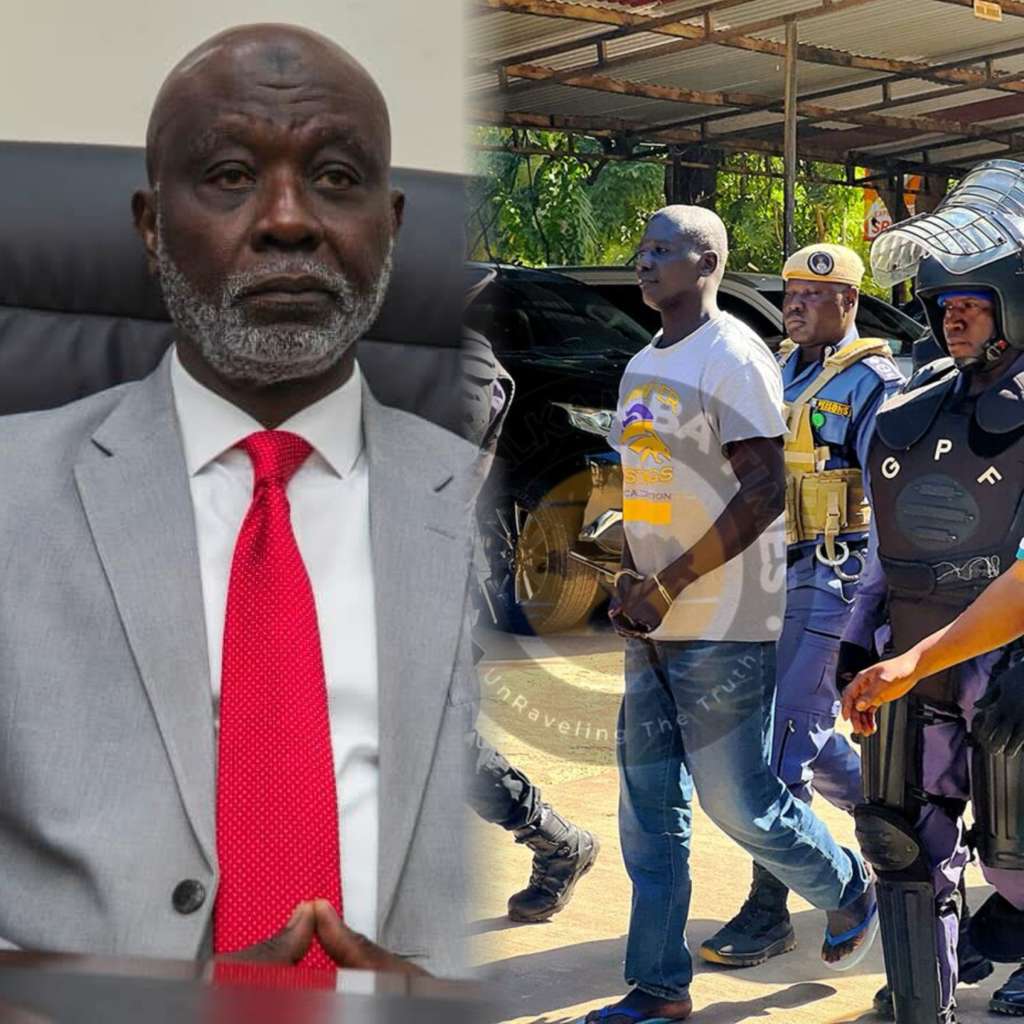
Jasseh told the court he recognised the accused, Sanna Manjang, and described their first encounter during his arrest at his Kotu residence. A team of Gambia Armed Forces personnel, including Manjang, Michael Correa, Malick Jatta, Alieu Ceesay, Musa Jammeh, and Tumbul Tamba, took him into custody and transported him to Mile 2 Prison, where he arrived around 10:00 p.m.
At approximately 3:00 a.m., he was removed from his cell by Omar Colley and handed over to military personnel dressed in black, including Manjang, and taken to the NIA. There, he faced a chaotic panel of military officers who fired rapid questions about the Ndure Cham coup plot, giving him little time to respond.
When asked about his involvement, Jasseh said he had no detailed knowledge. He requested a lawyer, naming Malien Denton (who was later arrested), and initially refused to write a statement. However, hearing screams from adjacent rooms suggesting torture, he relented out of fear and provided one.
He was returned to Mile 2 Prison, only to be brought back to the NIA later that day for alterations to his statement. The following day, the late Musa Jammeh allegedly informed detainees that President Yahya Jammeh would drop charges if they appeared on national television to admit involvement in the coup and beg for forgiveness. Failure to comply, they were warned, would bring severe consequences.
The group was filmed as instructed and returned to prison. That same night, around 3:00 a.m., Jasseh was again taken out, severely beaten outside by officers, including Manjang, and transported to the NIA, where the beating continued for hours. He sustained injuries to his face, arms, and back. Upon return to Mile 2, medical treatment was denied.
Similar cycles of nighttime removal, beating, and interrogation followed. On one occasion, Michael Correa allegedly placed a plastic bag over Jasseh’s head while he was being assaulted; Jasseh said he punched holes in it to breathe. He clearly identified Sanna Manjang among his tormentors.
In another incident, Jasseh was handcuffed, forced to kneel outside, and had cold water poured on him while Manjang held him down and Malick Jatta beat him with a banana branch. He was also threatened with a pistol pressed to his head.
Jasseh listed fellow detainees at Mile 2, including Alieu Ceesay, Alieu Lowe, Ebrima Sanyang, Wassa Camara, Bubacarr Darboe, Pierre Mendy, Yaya Darboe, and Abdoulie Njie. He recounted how an inmate, Alieu Bah (sentenced to death over the Farafenni attack), provided access to a phone, allowing Jasseh to contact the former US Ambassador. He later heard that the ambassador had raised the issue with President Jammeh, though he could not confirm the details.
The group remained at Mile 2 for over 18 months. Jasseh was eventually tried and sentenced to 20 years’ imprisonment with hard labour for treason. On September 17, 2012, after serving six years and six months, he learned via radio of a US delegation securing the release of two American citizens. That day, he received a presidential pardon, was escorted to the airport by the then-Minister of Justice, and flown to the United States with his family. He returned to The Gambia in 2017 and was re-appointed to the police service.
Under cross-examination by defence counsel Sheriff K. Jobe, Jasseh confirmed he had given a statement about a week before testifying and that its contents aligned with his oral evidence. He identified the document shown in court as his own, signed it, and it was tendered and admitted as Defence Exhibit 1.
He acknowledged that detainees were held in separate cells but transported in groups to the panel. The alleged torture occurred during the investigation phase, and his injuries were visible, though he did not mention them to the panel. Some panel members, including Musa Jammeh and Foday Barry, were aware; Foday Barry reportedly tried to intervene and was later dismissed and detained.
Jasseh admitted to telling the panel he helped Ndure Cham leave the country, but insisted this admission came only after beatings. He maintained he had not known Manjang before the arrest and stood by his identification of the accused as one of those who tortured him.
The case was adjourned to Thursday, April 24, 2026, at 9:30 a.m. for continuation.
Jasseh’s testimony paints a vivid picture of the climate of fear and impunity that characterised security operations in 2006. As a key witness linking Manjang to both the murder charges at Kanilai and the assaults in Banjul, his account is expected to play a central role as the trial proceeds.