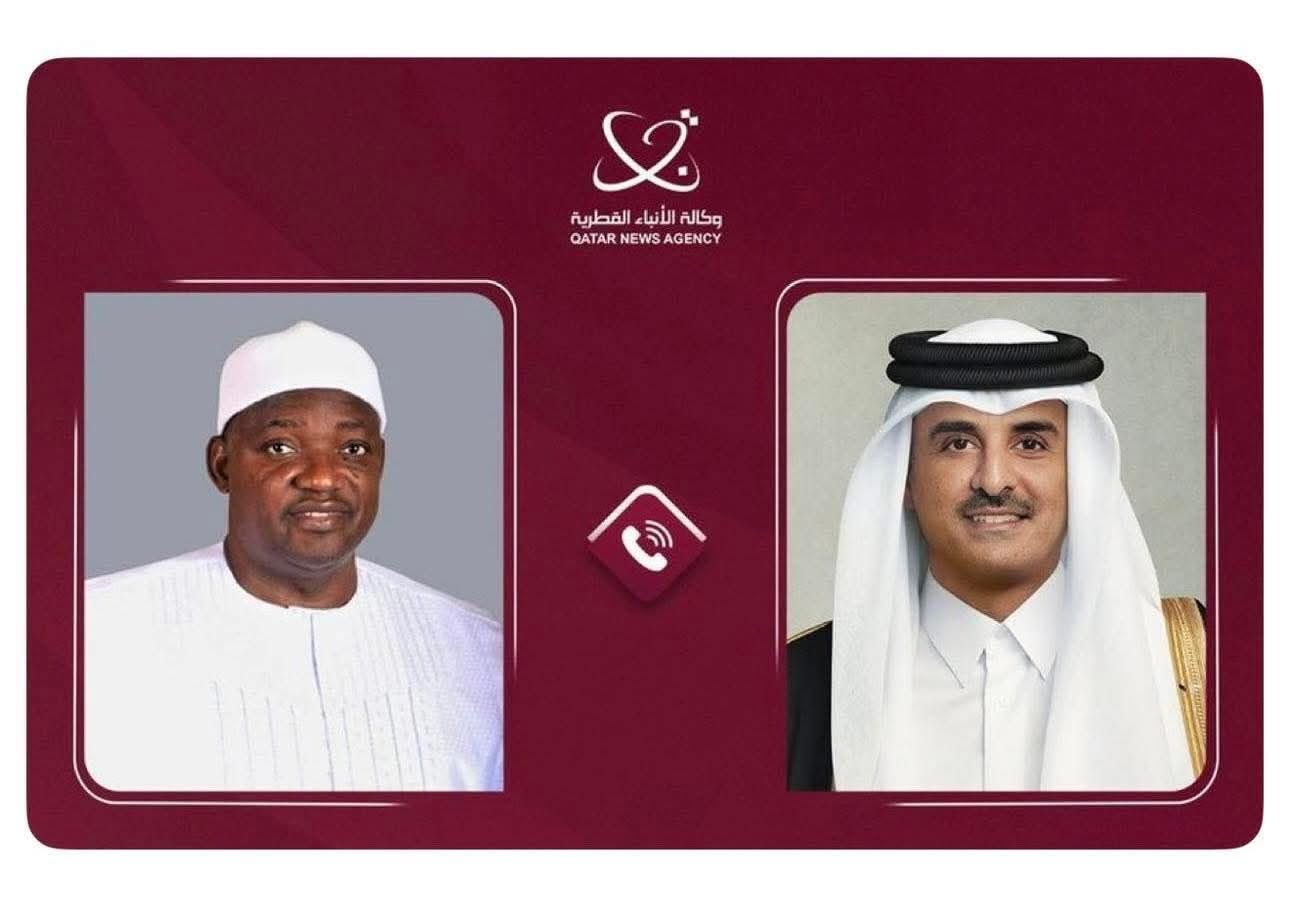
In a show of diplomatic support amid escalating conflict in the Middle East, President Adama Barrow of The Gambia held a telephone conversation Sunday with Qatar’s Amir, His Highness Sheikh Tamim bin Hamad Al-Thani.
The call, announced by The Gambia’s Ministry of Foreign Affairs, International Cooperation, and Gambians Abroad, comes as Qatar faces ongoing retaliatory strikes from Iran. These attacks form part of a broader regional crisis that erupted after joint U.S.-Israeli military operations against Iran began on February 28, 2026. Reports indicate Iran has launched multiple waves of missiles and drones targeting Qatar, including barrages intercepted over Doha, strikes near key sites like Hamad International Airport, and incidents at Al Udeid Air Base, the largest U.S. military facility in the region. Qatari defenses have reportedly downed Iranian aircraft and intercepted most projectiles, though some have caused damage and injuries.
President Barrow, speaking as Chair of the 15th Summit of the Organisation of Islamic Cooperation (OIC), voiced grave concern over the continued Iranian attacks on Qatar. He firmly denounced the aggression and conveyed The Gambia’s full solidarity with the Qatari government and its people during this challenging period.
His Highness Sheikh Tamim expressed sincere appreciation for President Barrow’s outreach and for The Gambia’s principled stance in supporting Qatar at a time of heightened vulnerability.
The two leaders stressed the critical importance of dialogue and diplomatic channels to de-escalate tensions and prevent further conflict. They highlighted the need for unified regional and international efforts to foster peace, security, and stability across the Middle East.
The Ministry reiterated The Gambia’s longstanding commitment to the peaceful resolution of disputes and its backing of global initiatives aimed at upholding regional and worldwide stability.
This conversation underscores The Gambia’s active role within the OIC amid the crisis, building on President Barrow’s March 4 communiqué, which urged restraint amid the intensifying U.S.-Israel-Iran conflict. As attacks persist into their second week—with impacts rippling through Gulf energy markets and airspace closures—the call highlights growing calls from Muslim-majority nations for diplomacy over escalation.
Qatar, home to major U.S. bases and a key energy exporter, has described the Iranian actions as violations of sovereignty, while broader Gulf states face similar threats. The Gambia’s expression of support adds a voice from West Africa to the chorus urging an end to hostilities.